
Sleep health education
Best Bedroom Environment for Better Sleep
Quick answer
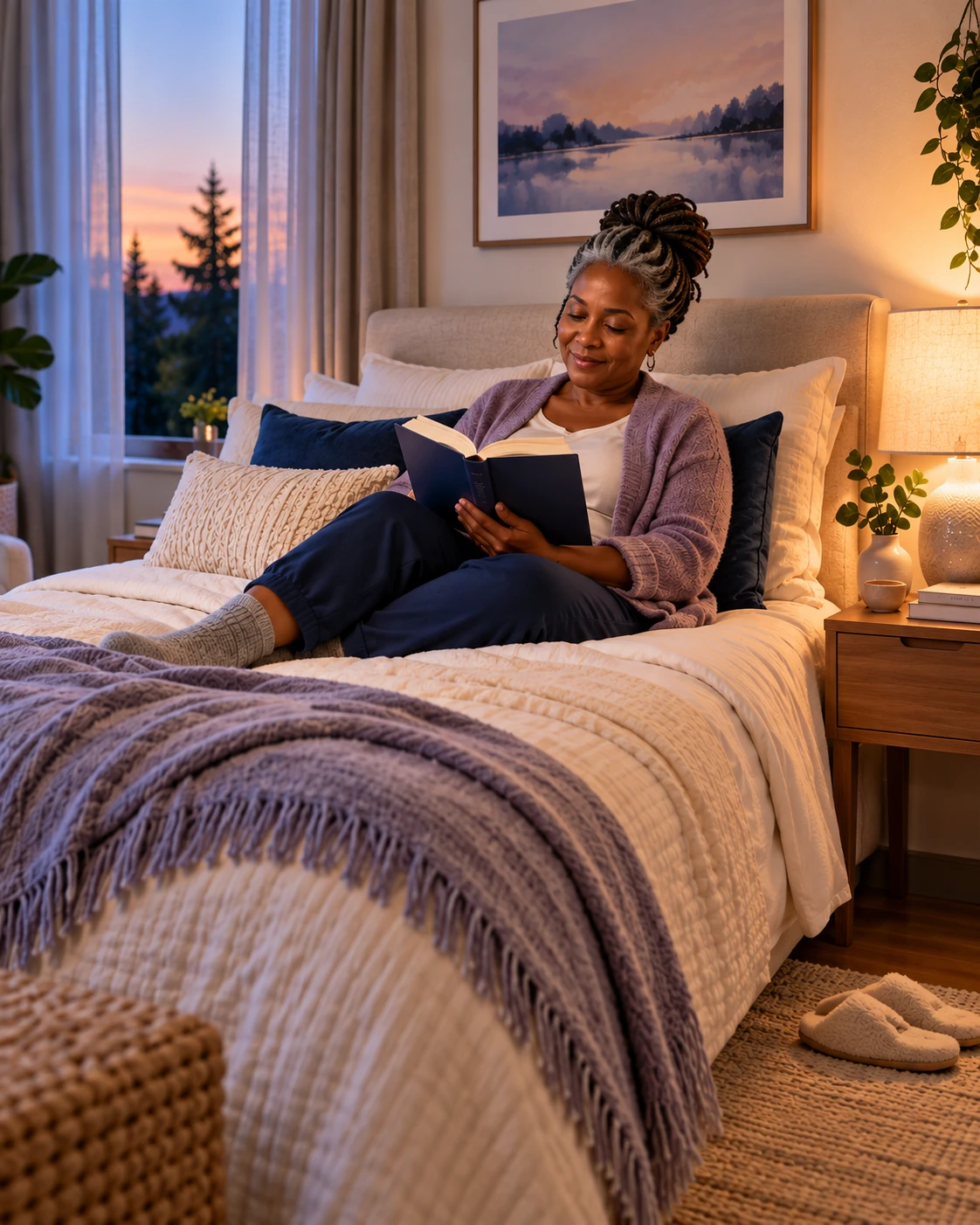
For most adults, a cool bedroom of about 18 to 20 °C (65 to 68 °F) supports sleep (Sleep Foundation). A sleep-supportive bedroom is generally dark, quiet, comfortable and cool, with safe access to the bed and any essential medical or caregiving equipment. Individual preferences vary, and there is no universal mattress or sound solution. Reduce disruptions you can control, preserve alarms and accessibility needs, and judge changes by a repeated pattern—not one night.
What makes a bedroom sleep supportive?
The room should reduce unnecessary alerting cues while remaining safe and practical. Light, noise, temperature, bedding, air quality, device placement and the activities associated with the room can all matter. The goal is not an Instagram-perfect bedroom; it is an environment that supports adequate, reasonably continuous sleep for the person using it.
Start by identifying the actual disruption. Buying blackout curtains will not solve noise, and a new mattress will not treat sleep apnea, persistent insomnia or severe daytime sleepiness.
Light and darkness
Darkness supports the nighttime light signal used by the circadian system. Reduce outdoor light, bright clocks, indicator lights and screen glow that reach the eyes during sleep. Blackout curtains, an eye mask or repositioning a light source can help when appropriate.
Complete darkness is not safe or practical for everyone. A dim, warm-coloured pathway light may reduce fall risk, support nighttime caregiving or help someone manage equipment. Position it low and away from the face when possible. Daytime sleepers may need stronger window coverings and a clear household plan to protect their sleep period.
Morning or wake-time light is a separate issue: bright light after waking can help anchor a daytime schedule. See Circadian Rhythm: Understanding Your Body Clock and Blue Light and Sleep for timing guidance.
Noise and sound
Address controllable sources first: alerts, television, doors, pets, equipment vibration and household routines. Soft furnishings, a closed door or a conversation about quiet hours may help. Earplugs or neutral background sound can reduce the contrast of intermittent noise for some people.
Sound masking should not be uncomfortably loud and must not prevent awareness of smoke or carbon-monoxide alarms, children, caregiving needs or medical-device alerts. Anyone with hearing concerns or who depends on an audible alarm may need visual, vibrating or bed-shaker alert options selected for the situation.
Temperature, airflow and bedding
Many people sleep comfortably in a room that feels somewhat cool, but there is no single evidence-based thermostat setting for everyone. Climate, humidity, bedding, clothing, age, menopause symptoms, illness, mobility and another person sharing the room all change thermal comfort.
Use breathable layers that can be adjusted without fully waking. Address drafts, overheating and unsafe heaters or cords. Fans may improve comfort or provide steady sound, but keep airflow from causing eye or airway dryness and place equipment so it cannot be knocked over.
Mattress, pillow and sleep position
A mattress and pillow should support comfort, movement and safe transfers. Marketing terms such as “orthopaedic” or “sleep technology” do not guarantee better sleep, and price alone does not establish suitability. Persistent pain, numbness, reflux or mobility difficulty deserves appropriate assessment rather than repeated bedding purchases.
People using positional therapy or following postoperative or medical positioning advice should follow the prescribed plan. A bed pillow can also push a CPAP mask sideways; a suitable pillow edge or hose arrangement may reduce contact without forcing an unsafe position.
A CPAP-friendly bedside setup
Place the CPAP machine on a stable surface with adequate ventilation, following the manufacturer’s instructions. Keep the air intake and intentional mask vents clear. Route tubing to reduce pulling and tripping without sharply bending it, trapping it under bedding or creating a strangulation hazard.
Keep water away from electrical connections, fill and clean the humidifier as directed, and position the machine as recommended to reduce the consequences of water entering the tubing. Do not place the device inside a closed drawer or cover it to hide light or noise. Review CPAP Mask Leaks, Dry Mouth With CPAP or CPAP Troubleshooting when equipment is disrupting sleep.
Technology, work and notifications
Silence nonessential notifications and keep late work or highly activating content out of the immediate sleep routine where practical. The problem is not only blue light: messages, games, news and work can extend wakefulness and keep attention engaged.
Health devices, accessibility technology, baby monitors and caregiving communication are reasonable exceptions. Configure essential alerts deliberately rather than applying a blanket “no technology in the bedroom” rule. A separate alarm clock may help someone who repeatedly stays on a phone after checking the time, but it is not mandatory for good sleep.
Air quality, allergens and scents
Smoke, strong scents, dust, mould and allergens can disturb comfort or breathing. Follow local public-health advice for smoke or poor outdoor air, address visible dampness or mould safely and use heating, cooling and humidification equipment according to instructions.
Essential oils and scented products are not required for sleep and may irritate airways, trigger headaches, harm pets or damage CPAP components. Do not put oils or fragrances into a CPAP machine, tubing, filter or humidifier.
Accessibility, falls and caregiving
A sleep-supportive room must remain usable. Keep a clear route to the bathroom, secure loose rugs and cords, place mobility aids within reach and ensure the bed height supports safe transfers. Medication, water, communication devices and emergency alerts should be accessible as appropriate.
Someone who is blind, has low vision, is Deaf or hard of hearing, has limited dexterity or uses mobility equipment may need a different room arrangement or alert system. Environmental advice should adapt to the person—not require the person to give up essential supports for an idealized dark and silent room.
A practical bedroom audit
Review the room during the actual sleep period, including daytime for shift workers.
Try a seven-night room experiment
Avoid changing several variables or purchasing expensive products at once. A room experiment can identify comfort barriers; it cannot diagnose a sleep disorder.
- Choose the environmental problem most likely to be disrupting sleep.
- Record the usual condition for one or two nights without deliberately worsening it.
- Make one specific, affordable change.
- Keep the sleep opportunity and schedule as consistent as practical.
- Note sleep onset, long awakenings, morning comfort and daytime sleepiness.
- Continue long enough to see whether the pattern is repeatable.
- Keep, revise or stop the change based on usefulness and safety.
When the bedroom is not the main problem
Seek professional advice for persistent insomnia, loud snoring, gasping, witnessed breathing pauses, unusual behaviour during sleep, uncomfortable leg sensations or severe daytime sleepiness. Do not drive or perform safety-sensitive work when struggling to stay awake.
If sleep remains poor despite adequate opportunity and a workable environment, review the broader Sleep Health guide or Sleep Apnea Symptoms instead of continuing to optimize the room indefinitely.
References
Create a sleep-supportive bedroom
Use the seven-night audit to test one practical change. Then explore Sleep Hygiene or How to Build a Bedtime Routine for the habits around the room, and seek assessment when persistent symptoms or safety concerns suggest the environment is not the full explanation.
Medical disclaimer
This information is educational and does not replace individualized assessment, diagnosis, treatment, equipment instructions or emergency care from an appropriately qualified professional.
Could this be sleep apnea?
Healthy habits help most people sleep better, but they will not fix sleep apnea. Consider getting checked if you have any of these:
- loud snoring, or someone has noticed you stop breathing or gasp in your sleep;
- you wake unrefreshed or with a headache, even after enough hours in bed;
- you doze off easily during the day, especially while driving.
Take the 2-minute sleep apnea quiz or order a home sleep test ($165, no referral needed).