
Sleep health education
Blue Light and Sleep: What Screens Really Do
Quick answer: Bright evening light, including light from screens, can delay the body's signals for sleep. Reduce bright light before bed and give yourself a regular wind-down period. The CDC recommends turning off electronic devices at least 30 minutes before bedtime. Seek advice if sleep difficulties persist despite changes to your routine.
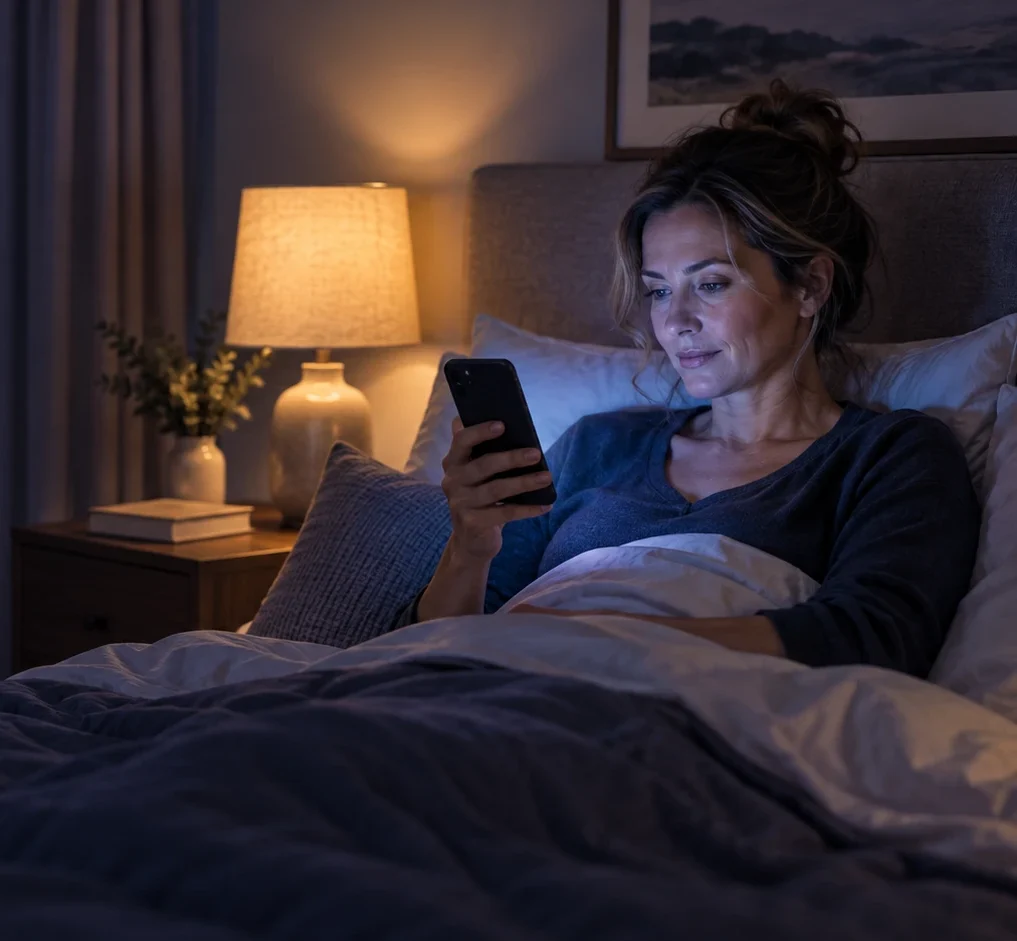
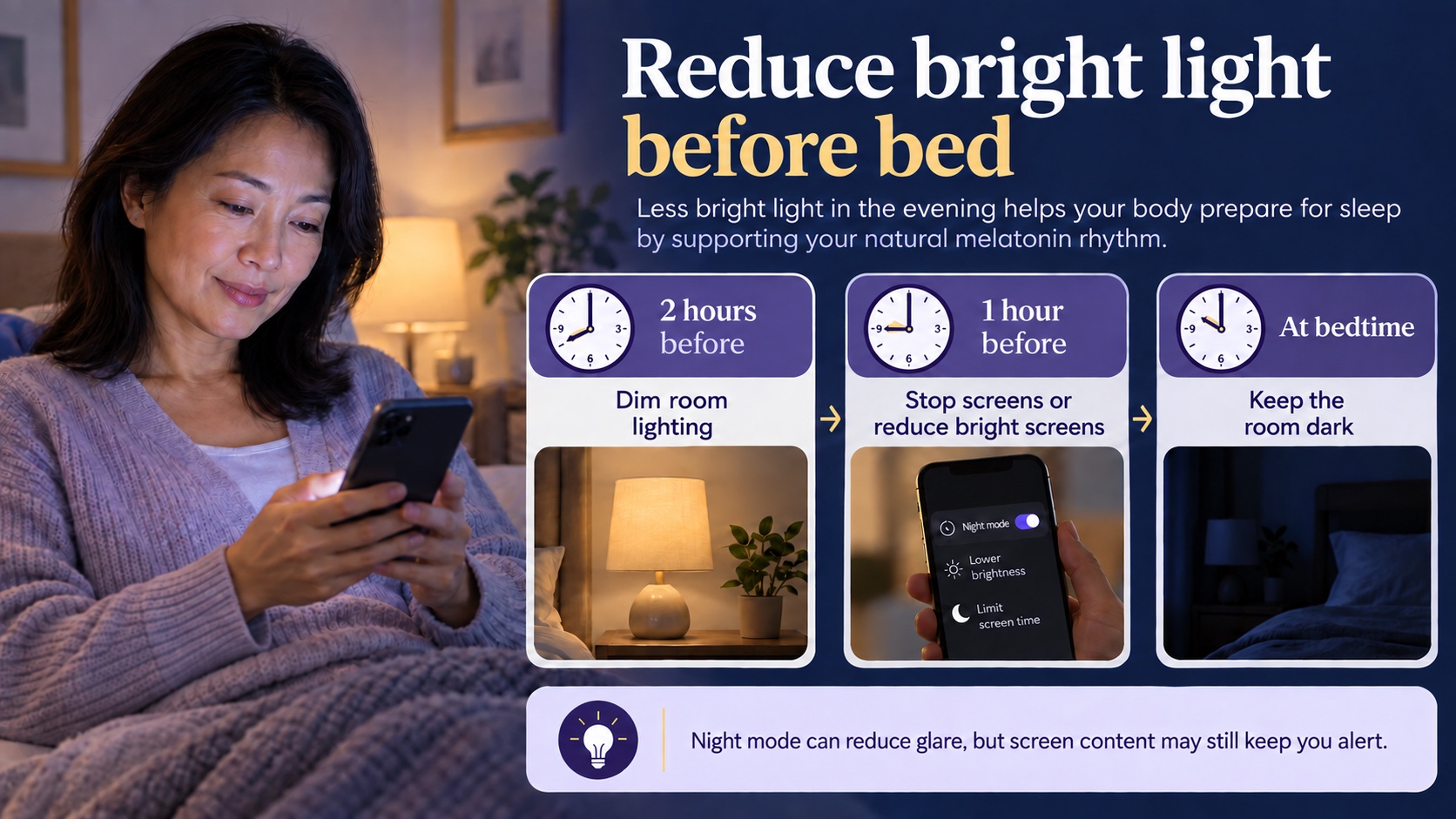
What blue light actually means
Blue light is the short-wavelength portion of visible light. It occurs naturally in daylight and is also produced by indoor lighting and electronic displays. Specialized light-sensitive cells in the retina help send light information to the brain’s circadian system, which coordinates the timing of sleep, alertness and melatonin release.
Blue-enriched light is especially effective at influencing this system, but “blue” does not automatically mean harmful. Bright light during the day—particularly in the morning—helps reinforce daytime alertness and a stable body clock. The concern for sleep is light exposure at a biological time when the brain is preparing for darkness and sleep.
Screens can affect sleep in four different ways
Focusing only on blue wavelengths misses several parts of the real screen-and-sleep relationship:
This helps explain why a dim e-reader used briefly for calm reading may affect someone differently from an hour of bright, emotionally charged phone use in bed. Device type matters less than the combination of timing, light, duration and activity.
- Light timing: Evening light can delay circadian signals and make sleepiness arrive later.
- Brightness and distance: A bright phone held close to the eyes generally creates more relevant exposure than the same display dimmed and viewed farther away. Room lighting contributes to the total light environment too.
- Time displacement: One more video, message or task can push bedtime later even when the screen’s light output is low.
- Mental and emotional activation: Work, competitive games, upsetting news and social interaction can maintain alertness, worry or anticipation when you are trying to wind down.
Is all evening screen use equally disruptive?
No. Individual sensitivity and context vary. A person’s circadian timing, usual bedtime, age, recent daylight exposure, screen brightness, viewing distance and the content being viewed can all influence the effect. Research consistently links greater screen use with poorer sleep outcomes, but not every association proves that light alone caused the problem.
The goal does not need to be a rigid “no screens ever” rule. It is to protect enough sleep time and create a repeatable transition from alert daytime activity to sleep. If a device is needed for accessibility, caregiving, work or health management, adapt the light and content rather than treating the device itself as a failure.
It’s not only the blue light
Recent research looks beyond blue light to when and how much you use screens, especially in bed.
- A 2025 review of 21 long-term studies (over 548,000 people) found each extra hour of daily screen time was linked to only about 3–5 fewer minutes of sleep, but to 25% higher odds of short sleep (He et al., Frontiers in Psychiatry, 2025).
- In a survey of 45,202 Norwegian students, each extra hour of screen use after going to bed was linked to 59% higher odds of insomnia symptoms and about 24 minutes less sleep. This held whatever people were doing on the screen (Hjetland et al., 2025).
- These studies show links, not proof that screens cause poor sleep.
Streaming, autoplay and “one more episode”
Features like autoplay, cliffhangers and whole seasons released at once make it easy to keep watching. Binge-watching has been linked to poorer sleep quality, largely because an absorbing show keeps your mind active when you try to sleep (Exelmans & Van den Bulck, J Clin Sleep Med, 2017). In a 2023 Korean study, late-night streaming was linked to bedtimes about 18 minutes later and about 18–20 minutes less sleep. Not all studies agree: US data suggest that in the streaming era, many adults stop watching TV and go to bed earlier.
Practical steps:
- Turn off autoplay.
- Decide on a number of episodes before you start.
- Finish viewing at least 30–60 minutes before bed.
- Keep the phone out of bed.
What night mode can and cannot do
Night mode or a warmer colour setting can reduce short-wavelength light from a display. Lowering overall brightness, increasing viewing distance and reducing surrounding room light can further reduce evening light exposure.
These settings do not stop a device from delaying bedtime, delivering notifications or keeping the mind engaged. A warm, dim screen used for another hour can still cost an hour of sleep. Treat night mode as one layer of a broader plan, not permission to scroll without a stopping point.
Do blue-light glasses improve sleep?
Blue-light-filtering glasses reduce some short-wavelength light, but products differ substantially in how much and which wavelengths they filter. The 2023 Cochrane review found that effects on sleep quality were indeterminate because trials were small and results were mixed across different populations.
Glasses also do not address screen duration, delayed bedtime, stressful content or bright room lighting. They may be one optional tool for a person with a specific light-management plan, but current evidence does not support presenting ordinary blue-light glasses as a guaranteed sleep treatment. Persistent insomnia needs a fuller assessment, and sleep hygiene alone is not considered adequate treatment for chronic insomnia.
A practical screen wind-down plan
Start with changes that protect sleep without making the routine unnecessarily complicated:
These steps fit naturally within a consistent bedtime routine and broader evidence-informed sleep habits.
- Choose a screen stopping point that preserves your intended sleep opportunity. A 30- to 60-minute screen-light period before bed is a reasonable experiment, not a universal medical cutoff.
- During the last hour, dim the display and room lights and use a warmer screen setting if available.
- Move demanding work, competitive games and emotionally activating content earlier when practical.
- Silence non-essential notifications and use “do not disturb” or a scheduled focus mode.
- Charge the phone outside arm’s reach—or outside the bedroom—if checking it in bed repeatedly extends wakefulness.
- Replace the final scroll with a low-stimulation activity such as paper reading, quiet audio, gentle stretching or preparing for the next day.
Run a one-week screen experiment
If you are unsure whether screens matter for your sleep, change a few measurable features for seven nights rather than buying a product immediately. Keep your wake time reasonably consistent and record:
Compare the pattern with your usual week. If ending screens completely is unrealistic, test a narrower change such as moving work off the phone, lowering brightness or keeping the device out of bed. The purpose is to identify a workable pattern, not to produce a perfect night.
- when active screen use ended;
- the type of activity—work, social media, video, gaming or reading;
- approximate brightness and whether night mode was used;
- bedtime and estimated time to fall asleep;
- nighttime awakenings and how rested you felt the next day.
Daytime light belongs in the plan
A healthy light routine is not only about avoiding light at night. Regular daytime light exposure supports circadian timing and alertness, while an overly dim day can make the contrast between day and evening less clear. Combine a darker, calmer evening with appropriate daytime light and a regular wake time. Learn more about how the circadian rhythm regulates sleep.
People who work nights, rotate shifts, have jet lag, or have a diagnosed circadian rhythm sleep-wake disorder may need light at times when others are dimming it. Poorly timed bright-light therapy can shift the body clock in the wrong direction, so a personalized plan may be more appropriate. See sleep strategies for shift work for that context.
When screens are probably not the whole problem
Reducing evening screen use will not treat every sleep problem. Look beyond screens when difficulty falling or staying asleep persists, when there is too little time available for sleep, or when symptoms include restless legs, loud snoring, gasping, witnessed breathing pauses or severe daytime sleepiness.
Chronic insomnia is usually treated with structured behavioural and psychological care rather than sleep hygiene as the only intervention. Sleep-disordered breathing requires its own assessment. Review sleep apnea symptoms if breathing or daytime-alertness concerns are present.
Do not drive or perform safety-sensitive work when struggling to stay awake. Seek professional advice when sleep problems persist, affect daily functioning or safety, or are accompanied by concerning symptoms.
Could this be sleep apnea?
Healthy habits help most people sleep better, but they will not fix sleep apnea. Consider getting checked if you have any of these:
- loud snoring, or someone has noticed you stop breathing or gasp in your sleep;
- you wake unrefreshed or with a headache, even after enough hours in bed;
- you doze off easily during the day, especially while driving.
Take the 2-minute sleep apnea quiz or order a home sleep test ($165, no referral needed).
Medical disclaimer
This content is educational and does not replace assessment, diagnosis or advice from a licensed healthcare provider.
Choose your next step
Complete guide: Sleep Health Guide: How to Sleep Better