
Sleep health education
CPAP Mask Leaks: Causes and Practical Fixes
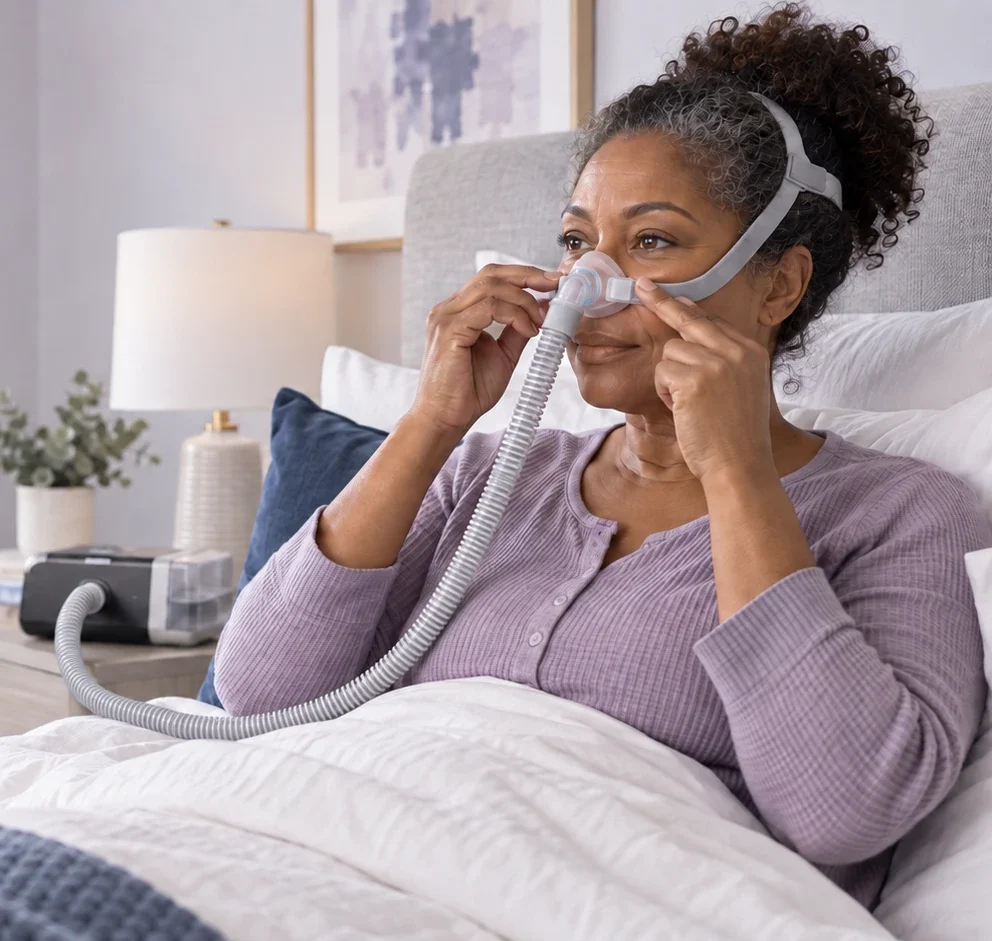
Quick answer
Some air from a CPAP mask vent is normal: the vent is designed to flush out exhaled air. Unintended leak, such as air escaping around the cushion, blowing into your eyes or making noise, is what needs fixing. On a ResMed AirSense 11, a leak below 24 L/min is shown as a good mask seal (ResMed AirSense 11 user guide). Other brands calculate and display leak differently, so use your own machine’s mask-fit or leak indicator. Most leaks improve by refitting the mask in your usual sleep position, replacing a worn cushion or trying a different size or style.
Expert perspective
A mask should feel secure without needing to be overtightened. Persistent leaks, pressure points or dry mouth are useful signals to review the mask style, size, fit and therapy setup rather than simply trying to tolerate the problem.
Solving common mask leaks
A better CPAP seal starts with the fit
Small changes to the cushion, straps and bedside setup can improve comfort.
Tightening more is not always the answer.
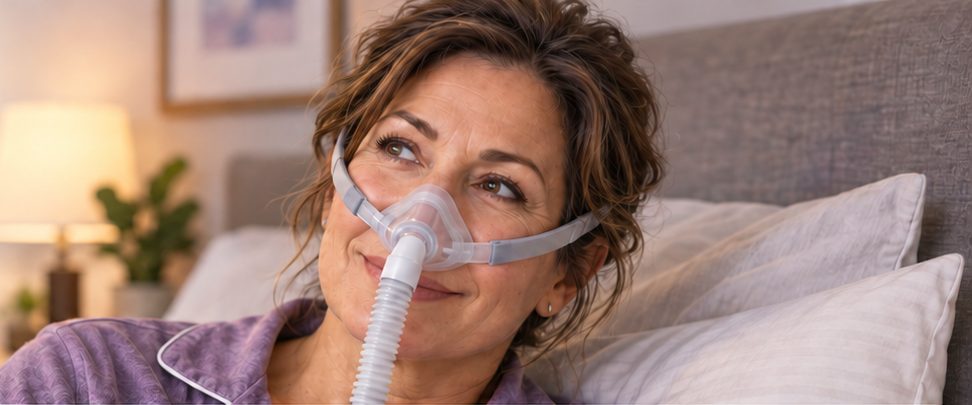
Re-seat the cushion
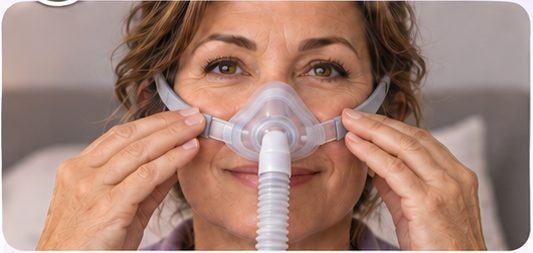
Gently lift and settle the cushion so it sits comfortably on your nose.
Adjust evenly
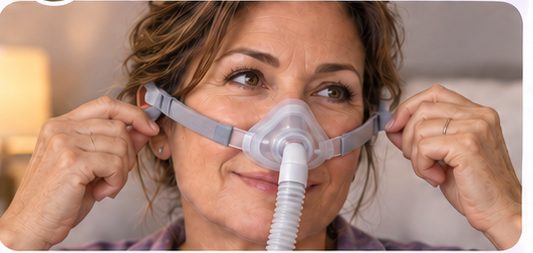
Adjust both side straps in small, equal steps for a balanced fit.
Check the setup
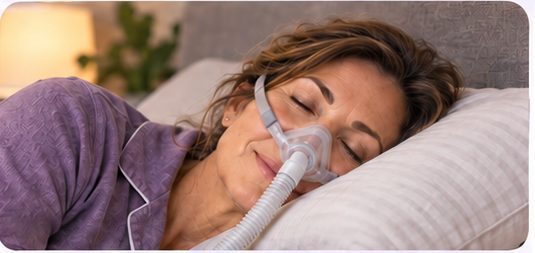
Make sure the cushion is clean, the hose is routed properly, and your pillow supports your position.
Persistent leaks, discomfort or dry mouth may mean the mask style, size or settings need review with our respiratory care team.
Intentional venting and unintended leak are different
Every vented CPAP mask releases air through specific openings to clear exhaled carbon dioxide. Do not cover these vents. The flow is usually steady and comes from the same place by design.
Unintended leak may occur between the cushion and skin, through an open mouth while using a nasal mask or nasal pillows, or anywhere in the circuit between the device, humidifier, tubing, swivel and mask. It may be intermittent and change when you move, or it may appear suddenly after a component becomes loose or damaged.
Why mask leak matters
Unintended leak can create noise, dry or irritated eyes, dry mouth, skin discomfort, awakenings and a sense that therapy is harder to tolerate. Larger or persistent leaks can also affect treatment delivery and make machine-estimated leak, pressure and residual event data less reliable.
A leak number is not meaningful by itself. Some manufacturers report total leak, which includes the mask’s intentional vent flow, while others estimate unintended leak. Definitions and thresholds vary by device and mask. Review the exact report and manufacturer guidance rather than applying one universal litres-per-minute cutoff.
Where is the leak coming from?
Use the location, timing and pattern as clues. The possible cause is not a diagnosis; if the problem persists, bring the mask and data report to a fitting or follow-up.
A step-by-step mask leak check
- Find the source. With clean hands, follow the air path from the device to the mask. Keep fingers away from the designed vent so normal flow is not mistaken for a leak.
- Inspect the circuit. Check that the humidifier chamber, tubing, elbow, swivel, frame and cushion are assembled as the manufacturer directs. Look for cracks, tears, stiffness or distortion.
- Clean the sealing surface. Wash your face and clean the cushion using the manufacturer’s instructions. Skin oils, cosmetics or residue can interfere with the seal. Do not use unapproved cleaners or ozone- or ultraviolet-light devices unless the manufacturer specifically permits them.
- Refit in your sleep position. Lie down, start airflow and allow the cushion to inflate. Centre the mask and adjust both sides in small, even steps. Move your head and try your usual sleep positions.
- Avoid overtightening. A mask should be secure, not painful. Excess tension may distort an inflatable cushion, worsen leaks or contribute to pressure marks and skin injury.
- Check for mouth leak and nasal symptoms. If you use a nasal interface, note dry mouth, air escaping from the lips, congestion or a bed partner seeing the mouth open. Do not begin mouth taping or change mask type based only on online advice; ask your provider about safe options for your circumstances.
- Review the trend, not one number. Note when the leak occurs, whether it wakes you, and whether the device flags a persistent large leak. Compare several representative nights when possible.
- Ask for help early. Persistent leak may require a different cushion size, headgear adjustment, replacement component or mask style. Do not change prescribed pressure settings to solve a leak without qualified direction.
Fit, sleep position and tubing pull
Fit can change after you lie down because facial tissues and jaw position shift. A bedside fitting done only while sitting may therefore miss a leak that appears during sleep. Side sleeping can push a mask against the pillow, while tubing hanging from the bedside can pull the mask out of position.
Try the mask in the position in which the leak usually occurs. Route the tubing so it moves freely and cannot wrap around you. A CPAP pillow or compatible hose-management accessory may help some people, but it does not replace correct sizing and safe setup.
Cushion wear, facial hair and skin comfort
Cushions, nasal pillows, headgear, seals, tubing and connectors change with cleaning and use. Replace a part when it is cracked, torn, permanently stretched, stiff, distorted or no longer seals after correct fitting. Manufacturer schedules and benefit plans are not universal replacement rules.
Facial hair, facial shape, sensitive skin and previous skin injury can affect fit. Do not place unapproved material over the mask vent or improvise repairs to damaged tubing or connectors. If a liner or barrier is being considered, confirm that it is compatible with the exact mask and does not interfere with the seal or safety features.
Mouth leak and dry mouth
Dry mouth can be a clue to mouth leak with a nasal mask, but it does not prove the cause. Nasal congestion, medications, hydration, room conditions and humidification may also contribute. Mouth leak may happen for only part of the night and can vary with sleep stage or position.
A clinician or respiratory therapist can review nasal symptoms, mask style, humidification, jaw movement and therapy data together. A chin strap or full-face interface may help selected people, but each has tradeoffs and should be chosen with fitting and safety in mind. Do not tape the mouth closed without individual clinical advice.
How much CPAP mask leak is normal?
Some leak is built in: every mask has a vent that lets exhaled air escape. What matters is unintended leak. On a ResMed AirSense 11, a leak below 24 L/min is shown as a good mask seal, and the myAir app gives a mask seal score each night (ResMed AirSense 11 user guide). Other brands measure and display leak differently, so compare your numbers only with your own machine’s guidance, and look at the trend over several nights rather than one reading.
How to use CPAP leak data
Look at leak alongside usage, pressure, residual AHI, symptoms and whether the mask stayed on. A machine-generated value is an estimate, and a high-leak period can reduce confidence in other estimates. A low reported leak does not automatically mean treatment is effective, and a single unusual night does not necessarily mean the mask has failed.
For a useful follow-up, record the machine and mask model, cushion size, leak location, sleep position, dryness or eye symptoms, when the problem began, and any recent component change. If remote data sharing is available, it can help identify patterns, but it is not continuous monitoring and does not replace individualized review.
Read CPAP Adherence, Usage Data and Follow-Up for help interpreting leak with the rest of a therapy report.
When a different mask may help
A different mask is worth discussing when the current interface repeatedly shifts, causes pressure injury, cannot accommodate facial features or required sleeping positions, or when mouth leak remains unresolved with a nasal interface. Smaller is not automatically better, and a full-face mask is not a failure; the goal is a compatible interface that supports prescribed therapy and can be used consistently.
Use the CPAP Mask Guide to compare breathing route, sleep position and fit factors, or review CPAP Mask Types for a category-level explanation. Confirm compatibility before purchasing a replacement mask or component.
When to contact your care team
Ask for help when leak persists after careful refitting, repeatedly interrupts sleep, causes eye irritation, significant skin injury or mouth dryness, prevents you from using therapy, or appears with worsening symptoms or consistently concerning device data. Stop using a visibly damaged component and contact the equipment supplier or care team for compatible replacement guidance.
Seek urgent medical care for severe difficulty breathing while awake, chest pain or another acute concern. If sleepiness makes driving or safety-sensitive work unsafe, do not drive or continue the task; seek prompt clinical advice.
Medical disclaimer
This content is educational and does not replace assessment, prescription, fitting instructions or advice from a licensed healthcare provider. Follow the instructions for your exact mask and CPAP device.
Choose your next step
Complete guide: CPAP Therapy: A Complete Guide for Canadians