
Sleep health education
Dry Mouth With CPAP: Causes & Solutions
Quick answer
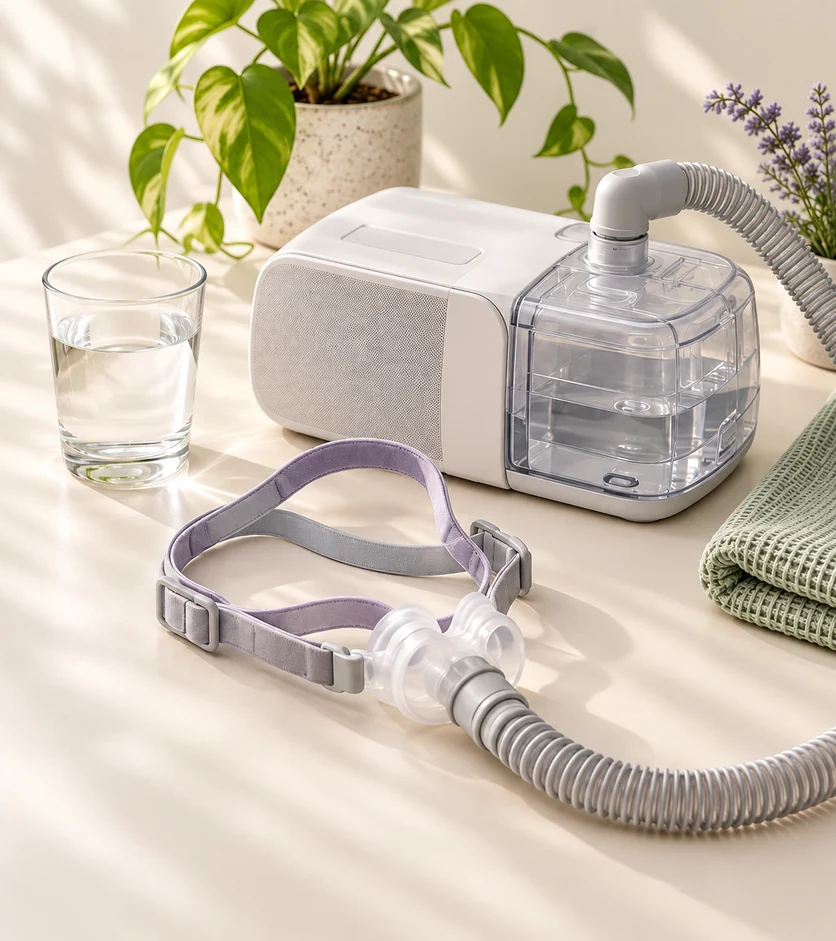
Dry mouth on CPAP usually comes from breathing through the mouth or mouth leak, humidity that is set too low, or causes unrelated to CPAP such as some medications. Heated humidification often helps. On a ResMed AirSense 11, humidity can be set from Off or 1 to 8 and the heated tube from 16 to 30 °C, and the automatic Climate Control setting aims for a 27 °C tube temperature and 85% relative humidity (ResMed AirSense 11 user guide). Change one setting by one step at a time, because too much humidity can cause water in the tube (rainout). Other machines use different scales, so check your manual, and ask your care team about a mask review if dryness continues.
Expert perspective
CPAP works best when the prescribed therapy, equipment fit and everyday routine work together. Comfort problems are worth reviewing early because small adjustments can make treatment easier to use consistently.
Comfort troubleshooting
Dry mouth with CPAP: what to check
Several factors can contribute to dry mouth during CPAP therapy.
Do not change prescribed pressure settings on your own.
Mask leaks
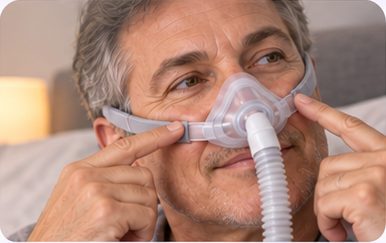
Check for air escaping around the cushion.
Mouth breathing
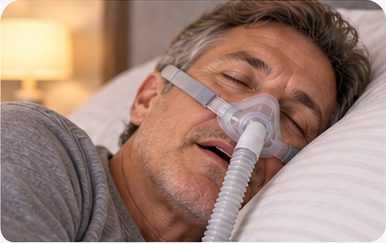
A nasal mask may not suit every breathing pattern.
Humidification
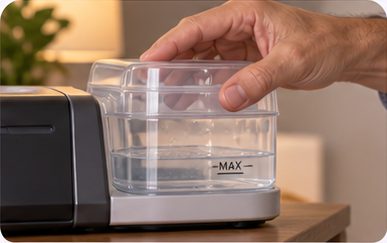
Review the water chamber and prescribed comfort settings.
Room and routine
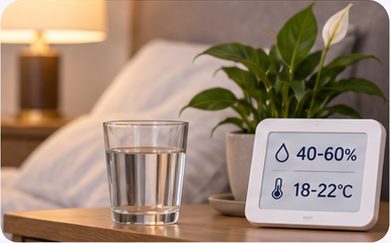
Hydration, nasal comfort and bedroom conditions may contribute.
Persistent dry mouth, leaks, pain or breathing discomfort should be reviewed with our respiratory care team.
First confirm the pattern
Note whether dryness began after starting CPAP, occurs only with therapy, is worse in certain positions, follows a mask leak, appears with nasal blockage or continues during the day. Record the mask style, humidifier setting, room conditions, water use, medications and any recent equipment change. A bed partner may notice mouth opening, leak noise or mask movement that you do not remember.
If dry mouth occurs without CPAP or is part of a broader symptom pattern, read Waking With a Dry Mouth or Sore Throat. That page addresses the symptom more generally; this page focuses on PAP-related comfort and troubleshooting.
Common contributors and what to review
Check for mouth leak without guessing
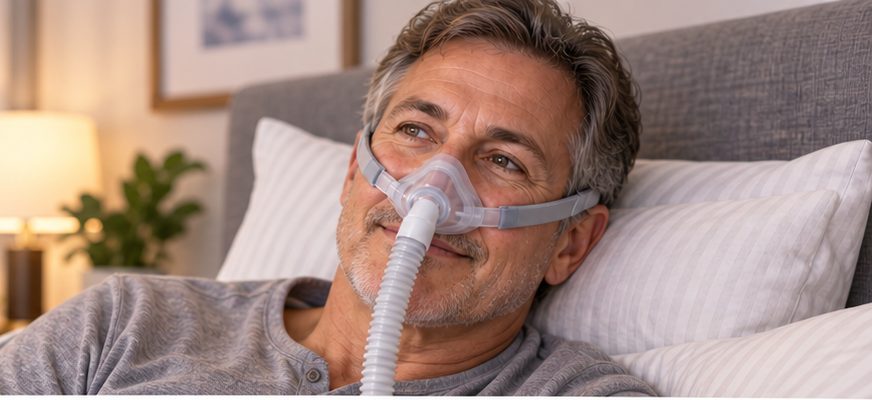
A nasal or nasal-pillow mask can work well for many people, including some who occasionally open their mouth. Dryness alone does not prove a mouth leak. Useful clues include a leak that begins when the jaw relaxes, air felt at the lips, a partner hearing air escape, a dry mouth with relatively comfortable nasal passages, or device data showing leak during the same period.
Mouth leak can reduce comfort and may affect delivered therapy or the reliability of some device estimates. Use the CPAP Mask Leaks guide to distinguish mouth leak from a cushion, tubing or chamber leak.
What humidity setting should I use for dry mouth?
Start with your machine’s automatic setting, then change one thing at a time. On a ResMed AirSense 11 in manual mode, humidity runs from Off or 1 to 8 and tube temperature from 16 to 30 °C (tube temperature needs the heated tube); in Climate Control Auto the machine adjusts both itself, aiming for 27 °C and 85% relative humidity (ResMed). If your mouth is dry, raise humidity one step and try it for a few nights. If you then get water in the tube or mask (rainout), raise the tube temperature or lower humidity one step. Yuwell and Philips machines use different scales, so check your manual or ask us.
Review humidification and condensation together
Heated humidification can improve nose or mouth comfort for some people, but the useful setting depends on the device, tubing, room and individual. Increasing humidity without considering temperature can produce water in the tube or mask. Lowering it too far may worsen dryness. Use only the patient-adjustable controls and accessories authorized for your equipment, and ask for help when you are unsure which settings are clinical versus comfort settings.
Use the water type, fill line, cleaning method and chamber instructions specified by the manufacturer. A cracked chamber, damaged seal, blocked filter or incorrect heated-tube connection can look like a comfort problem but requires equipment attention.
Address nasal symptoms safely
Blocked or irritated nasal passages can make nasal breathing difficult and encourage mouth opening. Persistent congestion, repeated nosebleeds, pain, fever, facial pressure, reduced smell or symptoms linked to a medicine deserve clinical review. Ask before starting a medicated nasal product; some products are not appropriate for everyone, and overuse of certain decongestant sprays can worsen congestion.
Saline or another comfort option may be discussed with a clinician or pharmacist, but it should not be presented as a universal treatment. The cause of the nasal symptoms matters.
Consider the mask without treating full-face as failure
A fit review may consider a nasal-pillow, nasal or full-face interface, but the goal is not to choose the smallest mask or escalate automatically to more coverage. Breathing route, congestion, pressure, sleep position, facial features, claustrophobia, skin sensitivity and mask warnings all matter.
Do not overtighten a mask to stop dryness. If the seal changes when you lie down or the jaw relaxes, use the CPAP Mask Fitting guide and compare styles in the CPAP Mask Guide.
Avoid unsafe shortcuts
Do not tape your mouth based only on an article, video or social-media suggestion. Mouth taping may delay recognition of nasal obstruction, vomiting risk, breathing difficulty, panic, skin injury or an unsuitable mask and pressure setup. Chin straps and other accessories are not appropriate for everyone and should not be treated as automatic solutions.
Do not change prescribed pressure to reduce dryness. Pressure comfort, leak and humidification can interact, so changes should occur within the authorized care pathway.
Protect oral comfort and dental health
Saliva helps protect oral tissues and teeth. The Canadian Dental Association notes that medicines and health conditions can contribute to dry mouth and that persistent dryness can worsen dental problems. Continue routine oral care and tell a dentist when dryness persists, especially with sores, burning, cracked lips, bad breath, altered taste, difficulty chewing or swallowing, or more cavities.
Avoid compensating with frequent sugary or acidic drinks. Ask a pharmacist, dentist or clinician before using a saliva substitute or oral product if you have medical conditions, allergies or swallowing concerns.
A seven-step dry-mouth check
- Record when dryness occurs and whether it continues during the day.
- Identify the exact machine, mask, tubing and humidifier setup.
- Check the full circuit and mask seal with therapy running while lying down.
- Note nasal congestion, mouth opening, leak noise and sleep position.
- Review only approved humidification, heated-tube and room-condition options.
- List medicines and health or dental factors that may contribute; do not stop prescribed medicine independently.
- Bring several representative nights of symptoms, leak and usage data to CPAP or clinical follow-up.
When to seek help
Ask for support when dryness persists, reduces therapy use, causes sores or bleeding, affects swallowing or dental health, or occurs with significant congestion, pain, recurrent nosebleeds or treatment concerns. Contact the equipment provider for a leaking chamber, damaged tubing or humidifier fault; use the clinical provider for persistent symptoms, mask or pressure questions, and non-CPAP causes.
Seek urgent care for severe breathing difficulty while awake, facial or tongue swelling, inability to swallow, chest pain or another emergency. If you are dangerously sleepy, do not drive.
Medical disclaimer
This information is educational and does not replace equipment instructions, assessment, prescription, dental care or individualized advice from a licensed healthcare professional.
Choose your next step
Complete guide: CPAP Therapy: A Complete Guide for Canadians