
Sleep health education
CPAP Troubleshooting: Problems & Solutions
Quick answer: Start CPAP troubleshooting by checking mask fit, tubing connections and the manufacturer's setup instructions. Leaks, dryness and discomfort may need different adjustments, so tell your respiratory therapist what happens and when. Ask your care team to review persistent symptoms or pressure concerns rather than changing prescribed therapy settings yourself.
Expert Perspective
CPAP works best when the prescribed therapy, equipment fit and everyday routine work together. Comfort problems are worth reviewing early because small adjustments can make treatment easier to use consistently.
Start With The Exact Problem
Avoid beginning with “CPAP is not working.” Record when the issue starts, how often it happens, whether it wakes you, what position you are in, what changed recently and whether the device displays a message. If possible, note the machine and mask models, settings shown to you, leak location and several representative nights of usage data.
This page is the cluster overview. Use CPAP Mask Leaks for a seal problem, CPAP Side Effects for discomfort or symptoms, CPAP Pressure for setting terminology, and CPAP Cleaning and Maintenance for equipment care.
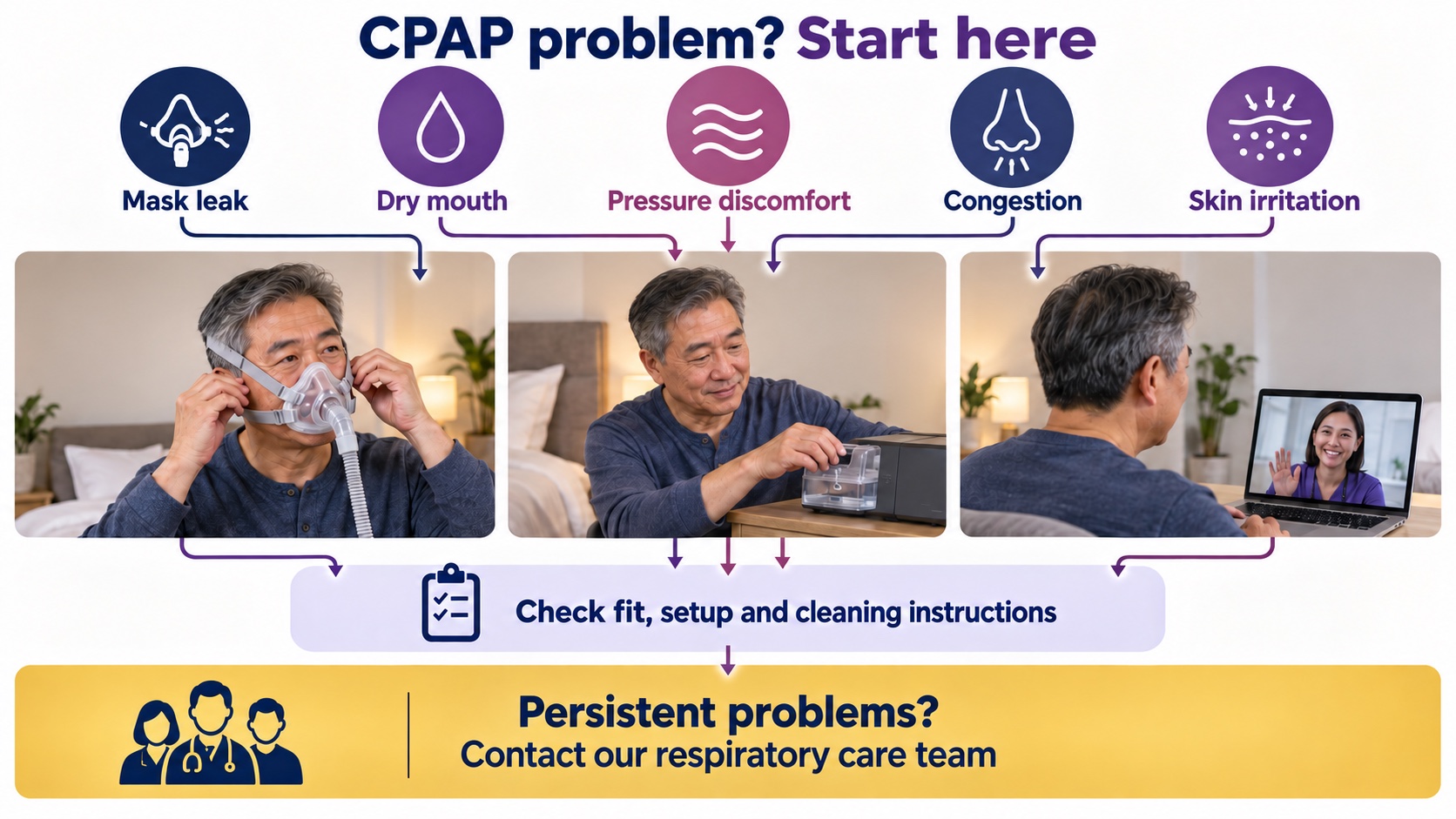
CPAP Problems: Likely Category And Safe First Check
Use A One-Change Troubleshooting Sequence
Never open or repair the flow generator, tape damaged tubing, seal a cracked chamber, block the mask vent or install an incompatible accessory.
- Confirm the machine is on a stable surface with its air intake clear.
- Check the correct filter is installed as directed and is not blocked, wet or overdue for permitted care.
- Remove and reseat the humidifier chamber, seals and tubing with the machine off and dry hands.
- Inspect tubing, elbows, cushions and connections for cracks, twisting, water, wear or a loose fit.
- Put the mask on according to its instructions, start therapy and check it while lying down.
- Change only one approved comfort or setup variable, then observe the result over a representative period.
- Record what happened and contact the appropriate provider if the problem persists.
Mask Leaks, Fit And Skin Comfort
Some airflow from the mask vent is intentional and must remain unobstructed. Unintentional leak may occur around the cushion, from the mouth or elsewhere in the circuit. Overtightening can distort a cushion and increase pressure on the skin. A fit review should consider breathing route, sleep position, facial hair, congestion, jaw movement, cushion condition and therapy pressure.
Pain, numbness, swelling, broken skin or persistent eye irritation warrants prompt reassessment. The CPAP Mask Fitting guide explains how to check the seal under real sleep conditions.
Dryness, Congestion And Humidity
Dry mouth or nose is not always solved by increasing humidity. Leak, mouth breathing, nasal symptoms, medication effects and the room environment may contribute. Too much humidity or cooling along the tubing can produce condensation, sometimes called rainout. Use only comfort settings and accessories approved for your device and care plan.
If congestion, bleeding, pain or dryness continues, ask a clinician or CPAP provider to review the full pattern rather than repeatedly changing several settings.
Noise, Odour And Machine Messages
Locate whether noise comes from the mask, vent, tubing, humidifier, machine or bedside surface. A new whistle may indicate a seal or connection problem; grinding, burning odour, heat, smoke, damaged wiring or repeated unexplained shutdown is different. Turn off and unplug equipment when the manufacturer instructions or safety situation require it, and contact the supplier rather than opening the machine.
Follow the exact manual for error messages. Do not perform a factory reset, erase an SD card or clear data unless instructed; the information may be useful for clinical review, troubleshooting, warranty or coverage.
Pressure Discomfort And Persistent High Event Numbers
A displayed pressure or residual event estimate needs context. Fixed CPAP, auto-adjusting ranges, ramp and expiratory comfort do different jobs, and leak or wakefulness can affect reported data. Do not chase a nightly score or change clinical settings based on a single number.
Bring several representative nights of use hours, leak, residual events and pressure trends to follow-up. Review CPAP Adherence, Usage Data and Follow-Up to prepare a more useful conversation.
Using CPAP But Still Tired?
Check your machine data first. Four things explain most ongoing tiredness:
- Hours of use. More hours usually mean more benefit. In one study, gains in sleepiness scores tended to level off after about 4 hours a night, while daily functioning kept improving up to about 7.5 hours, and the more hours people used CPAP, the more of them reached normal levels (Weaver et al., SLEEP, 2007).
- Leak. A large leak can make therapy less effective; see how much leak is normal.
- Taking the mask off in your sleep, often because of discomfort, dryness or pressure.
- Residual AHI. Your care team will usually aim for a low number of remaining events; a persistently high number needs review.
If the data look good and you are still tired, other causes may be involved, such as too little sleep, insomnia, medications, low mood or another sleep disorder. Talk to your care team rather than stopping CPAP. Water in your tube or mask? See condensation (rainout).
Decide Who To Contact
Virtual support may help review setup and data, but it is not continuous monitoring and cannot physically inspect every component. Visit CPAP Support for a preparation checklist and care-navigation routes.
- Equipment supplier | Mechanical failure, error messages, damaged components, warranty, replacement parts or model compatibility
- CPAP support or respiratory professional | Setup, mask fitting, leak, humidification, routine, equipment education and available data review
- Prescriber or sleep clinician | Persistent symptoms, pressure intolerance, treatment response, residual events or a possible change to prescribed therapy
- Primary care or another relevant clinician | Nasal, skin, eye, dental, gastrointestinal or other symptoms that may not be explained by equipment alone
- Emergency services | Severe breathing difficulty while awake, chest pain, fainting, smoke or fire, severe allergic reaction or another emergency
Medical Disclaimer
This information is educational and does not replace equipment instructions, assessment, prescription, emergency care or individualized advice from a licensed healthcare professional.
Choose your next step
Complete guide: CPAP Therapy: A Complete Guide for Canadians