
Sleep health education
CPAP Side Effects: Common Problems and Safe Fixes
Quick answer: Common CPAP problems include a dry mouth or nose, mask discomfort, leaks and bloating. Many improve with help adjusting mask fit, humidification or other comfort features. Tell your care team about persistent or worsening symptoms. Do not change prescribed pressure settings yourself; ask for a review of your treatment.
Sources: NHLBI
Expert perspective
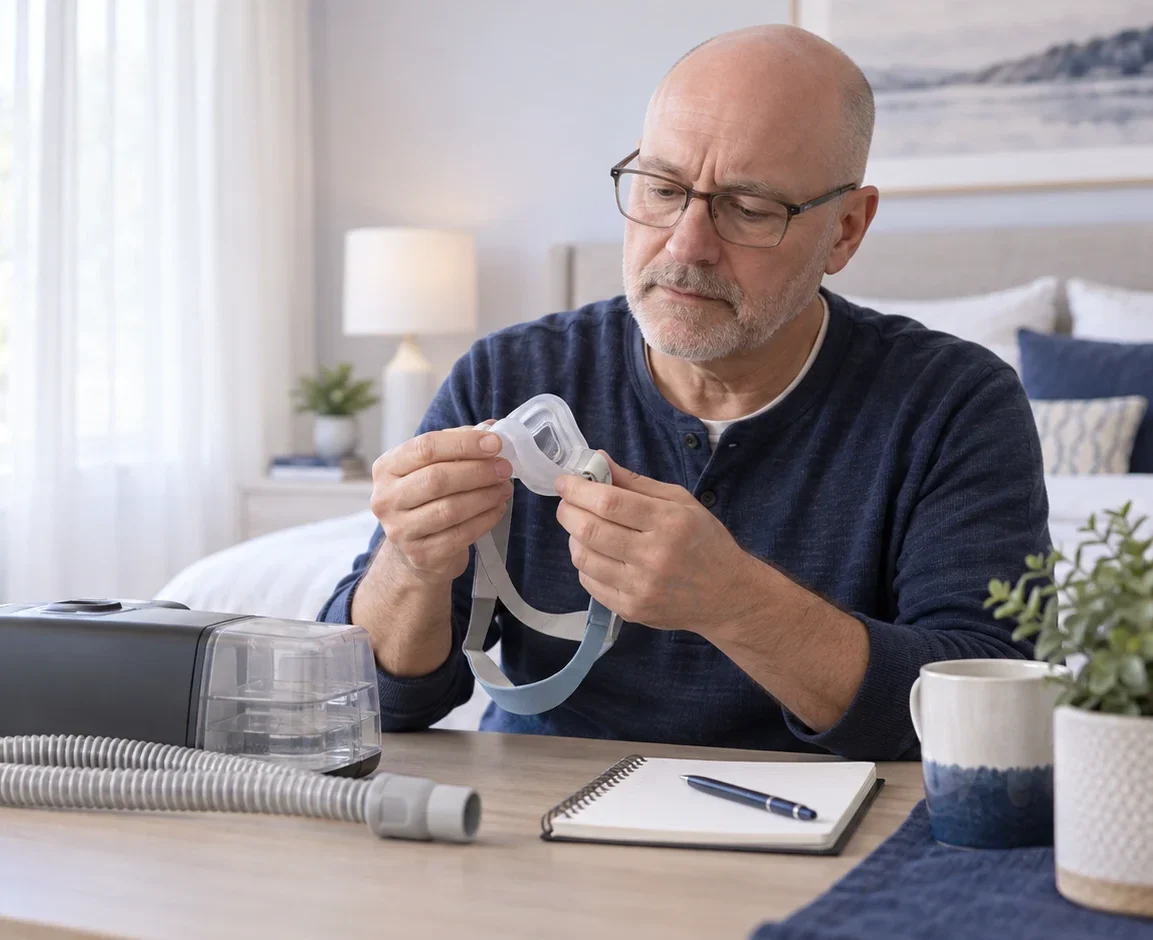
CPAP works best when the prescribed therapy, equipment fit and everyday routine work together. Comfort problems are worth reviewing early because small adjustments can make treatment easier to use consistently.
CPAP problems and safe first checks
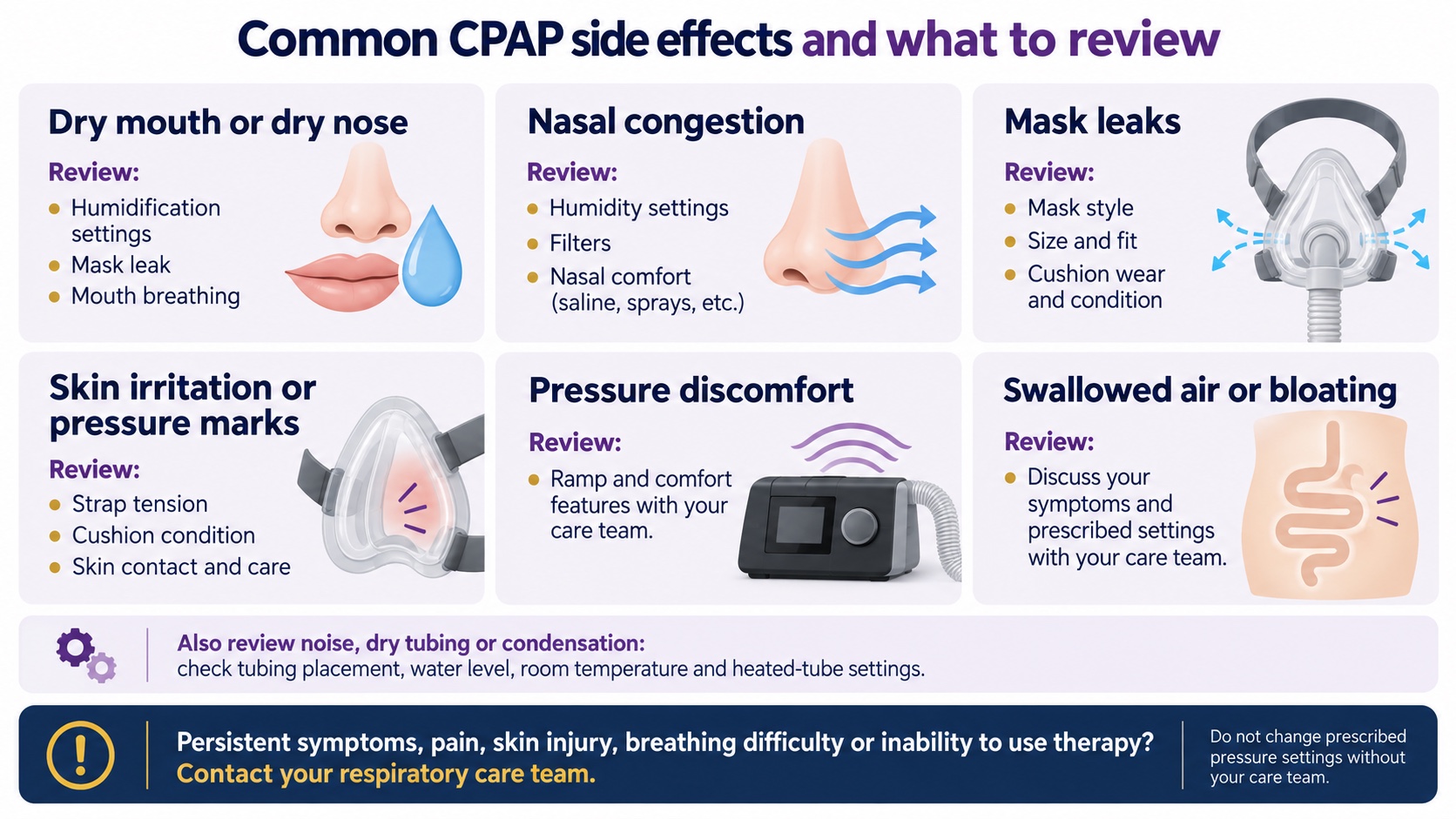
Use this table to organize what you notice. It cannot diagnose the cause or authorize changes to prescribed settings.
Mask discomfort, pressure marks and skin injury
A mask should be secure enough to maintain a seal without causing pain. Red marks that fade soon after removal differ from persistent redness, broken skin, blistering, swelling or a sore. Overtightening can distort an inflatable cushion and create both pressure injury and more leak.
Check that the mask is assembled correctly and is the intended size. Fit it with airflow running while lying in the usual sleep position, then adjust both sides in small, even steps. Facial hair, dentures, facial shape, side sleeping and pillow contact can change stability. Do not place an unapproved dressing or liner where it could block the vent or compromise the seal.
Stop pressure on injured skin and contact the equipment or clinical team for a prompt fitting plan. Seek urgent care for rapidly worsening swelling, severe pain, signs of serious infection or an allergic reaction affecting breathing.
Use the CPAP Mask Guide to compare fit factors and CPAP Masks Canada to review current mask categories.
Air leaks and irritated or dry eyes
Every vented mask releases air through designed openings to clear exhaled carbon dioxide. Do not cover these vents. Unintended leak may escape around the cushion, through the mouth with a nasal interface, or from a loose or damaged connection. Leak toward the eyes can cause dryness or irritation and may reduce therapy comfort.
Reseat the mask while lying down and check whether turning, jaw movement, pillow contact or tubing pull changes the leak. Inspect the cushion, frame, elbow, swivel, tubing and humidifier connection. Persistent pain, redness, swelling, discharge, vision change or an eye condition should be assessed rather than treated only as a mask problem.
Follow the detailed CPAP Mask Leaks troubleshooting guide to locate the source safely.
Dry mouth, dry nose and congestion
Dry mouth during CPAP can be related to mouth leak, insufficient humidification, nasal congestion, room conditions, hydration, medications or another health issue. It does not prove that pressure is too high or that a full-face mask is required. Dryness without a high reported leak also does not rule out intermittent mouth leak.
Nasal dryness, stuffiness or a runny nose can make nasal breathing and mask use harder. Confirm that the humidifier chamber is seated correctly, that water and cleaning follow the device instructions, and that leak is controlled. Humidification settings and heated-tube features are device-specific. Too much humidity or cooling in the tube can create condensation, while too little may not relieve dryness.
Do not begin mouth taping, nasal medication or major humidity or pressure changes based only on online advice. A clinician or respiratory therapist can review nasal symptoms, medicines, leak, mask route and device data together. Read Waking With a Dry Mouth or Sore Throat for causes beyond PAP.
Condensation or “rainout”
Condensation occurs when warm humidified air cools inside the tubing or mask. It can create gurgling, water droplets, awakenings and unstable comfort. Check that the chamber is not overfilled, the machine and tubing are positioned as the manufacturer directs, and the room, humidifier and compatible heated-tube settings are considered together.
Do not place the machine where water could drain toward electrical components or create a fall hazard. Empty and clean the chamber as directed. A compatible heated tube or insulating cover may help some setups, but confirm that it is approved for the exact machine and does not obstruct connections or venting.
Aerophagia, belching and bloating
Aerophagia means swallowing air. It may cause belching, abdominal fullness, gas or discomfort during PAP therapy. Leak, mouth opening, sleep position, pressure delivery and gastrointestinal factors can contribute, and the symptom alone cannot identify the correct solution.
The National Heart, Lung, and Blood Institute advises people with stomach discomfort or bloating during PAP therapy to stop using the machine and contact their healthcare provider. Seek prompt individual advice, especially for significant, persistent or painful symptoms. Do not lower pressure, narrow an APAP range or switch modes yourself. Severe or rapidly worsening abdominal pain, persistent vomiting, marked swelling, chest pain or breathing difficulty needs urgent medical assessment.
Pressure intolerance and difficulty exhaling
Pressure may feel strongest when ramp ends, when APAP responds to breathing signals, when a mask leaks or when congestion and anxiety increase breathing discomfort. A sense of too little air can also occur with a low ramp start or an unsuitable interface. Neither sensation proves which setting should change.
Record whether the problem occurs at startup, while awake, after falling asleep or after a leak. Note the displayed pressure, mask, position and associated symptoms. Ramp and expiratory pressure relief are comfort functions with manufacturer-specific behaviour; expiratory relief is not the same as prescribed bilevel pressure support.
Read CPAP Pressure: What Your Settings Mean before a follow-up, but use it to prepare questions rather than change settings.
Claustrophobia, panic and difficulty falling asleep
New equipment can feel unfamiliar even when it is working correctly. Begin with short, calm practice while awake: handle the mask, wear it without straps if the instructions allow, then wear it correctly with airflow while sitting and later lying down. Stop before distress escalates and repeat at a manageable pace. The goal is gradual familiarity, not forcing an entire night as a pass-or-fail test.
A lower-profile mask or a different field of vision may help some people, but fit and breathing route still matter. Persistent panic, trauma-related symptoms or severe anxiety deserves individualized support. Do not use alcohol or an unprescribed sedative to tolerate PAP.
Noise and sleep disruption
First identify the source. A steady flow from the mask vent is expected. Whistling or hissing may come from an unintended seal leak, cracked tube, loose elbow or incorrectly seated chamber. Gurgling often suggests condensation. A changed motor sound, error message, burning smell or damaged power equipment should be assessed by the supplier or manufacturer.
Do not block mask vents, tape damaged tubing, open the machine housing or use an unapproved power supply. If the sound is new, record when it occurs and inspect only the user-serviceable parts described in the manual.
Headaches or ongoing sleepiness are not automatically side effects
Morning headaches and daytime sleepiness may persist because PAP was not used for all sleep, leak or residual events remain, sleep duration is insufficient, or another sleep, medication or health issue is present. Mask pressure, fragmented sleep, congestion or another headache disorder may also contribute. An app score cannot determine the cause.
Review usage, leak, pressure and residual-event trends with actual sleep time and symptoms. Do not respond by raising pressure yourself. Persistent or worsening sleepiness needs clinical assessment, and anyone struggling to stay awake should not drive or perform safety-sensitive work.
Clean and inspect the equipment
Skin oils and residue can affect the seal, while an incorrectly seated chamber or damaged circuit can create leak and noise. Follow the exact manufacturer instructions for cleaning, rinsing, drying, inspection and replacement. Cleaning does not repair a torn cushion, punctured tube, cracked chamber or worn connector.
Avoid unapproved chemicals and add-on ozone or ultraviolet-light cleaners. The U.S. Food and Drug Administration states that such devices do not replace manufacturer-recommended cleaning and may damage CPAP accessories. Read CPAP Cleaning and Maintenance and use verified CPAP Replacement Parts when a component is damaged.
Prepare a useful CPAP follow-up
Bring specific information rather than only saying that CPAP is uncomfortable:
Remote data can help identify patterns when connectivity, consent and a care relationship are in place. It does not mean someone is monitoring continuously or that a setting will be changed automatically. CPAP Adherence, Usage Data and Follow-Up explains how to interpret the report in context.
- the machine, mask and cushion model and size;
- current prescribed mode and settings, without changing them;
- when the problem begins and whether it occurs while awake or asleep;
- sleep position, mouth or nasal symptoms, skin or eye findings and abdominal symptoms;
- usage, leak, pressure and residual-event data from several representative nights;
- recent equipment, medication, weight, health or sleep-schedule changes; and
- which fitting, cleaning or manufacturer-approved comfort steps have already been tried.
When to seek help
Contact the care team promptly when a side effect prevents prescribed use, persists after safe fitting or equipment checks, causes skin breakdown or eye symptoms, or includes significant bloating, painful air swallowing, recurrent nosebleeds, severe congestion or marked pressure intolerance. Ask before stopping therapy for a routine comfort problem; many issues can be addressed without abandoning treatment.
Seek urgent medical care for severe difficulty breathing while awake, chest pain, fainting, a severe allergic reaction, sudden vision change, severe or rapidly worsening abdominal pain, persistent vomiting, or another acute concern. Do not rely on CPAP troubleshooting for emergency symptoms.
Medical disclaimer
This content is educational and does not replace assessment, diagnosis, prescription, device instructions or advice from a licensed healthcare provider.
Choose your next step
Complete guide: CPAP Therapy: A Complete Guide for Canadians