
Sleep health education
CPAP Mask Guide: Choose the Right Mask in Canada
Quick answer
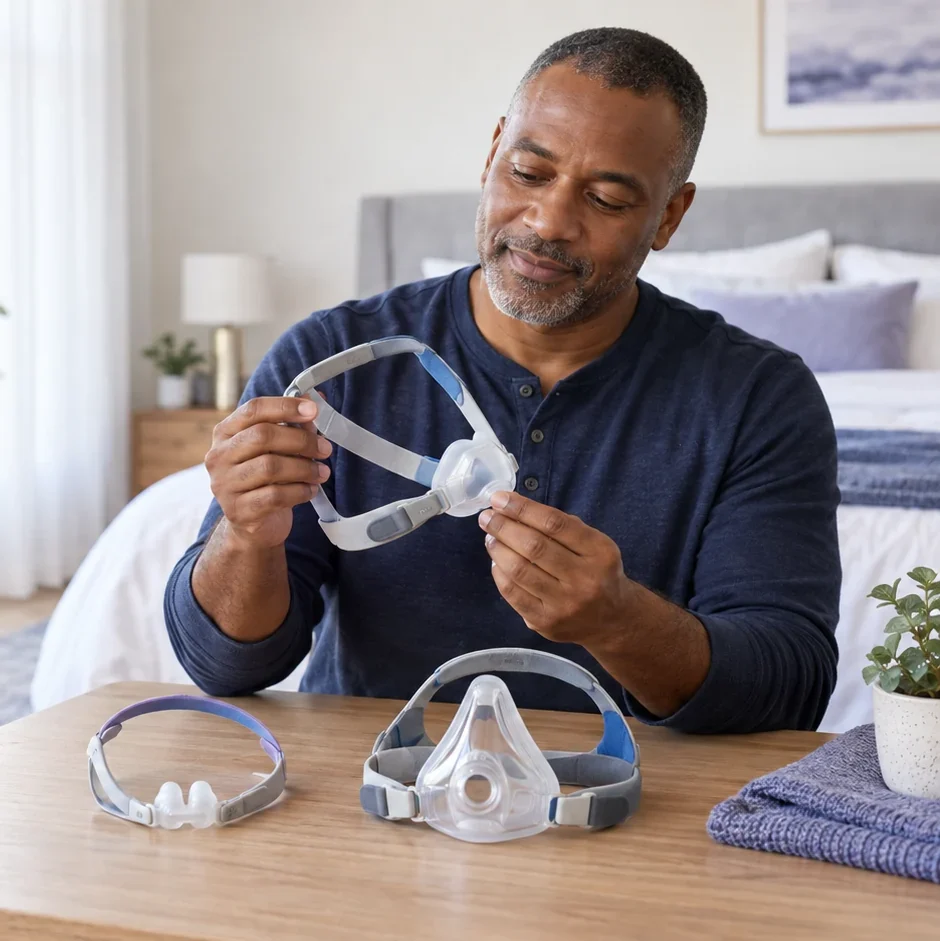
The best CPAP mask is one that delivers your prescribed therapy with a stable seal and acceptable comfort. Start with your breathing route, nasal congestion, sleep position and facial comfort; then check fit, compatibility and support. Nasal pillows, nasal or under-the-nose masks, and full-face masks each suit different needs.
The three main CPAP mask families
Nasal-pillow masks sit at or just inside the nostrils and have the smallest facial footprint. Nasal masks cover the nose or cradle it from below. Full-face masks deliver air to both the nose and mouth. Some manufacturers also offer hybrid or nasal-cradle designs.
This guide focuses on the practical choice: breathing route, sleep position, fit, comfort and buying considerations. For a category-by-category explanation of nasal pillows, nasal masks and full-face masks, see CPAP Mask Types.
Browse nasal masks, nasal pillow masks and full face masks, or compare styles side by side in our CPAP mask comparison.
Choose by breathing route, sleep position and movement
People who reliably breathe through the nose may prefer nasal pillows or a nasal mask. A full-face mask may be considered for persistent mouth breathing, frequent nasal obstruction, or mouth leak. Mouth breathing can also signal congestion or another issue worth discussing with a provider.
Side sleepers often benefit from compact cushions, flexible frames, and tubing that does not pull when they turn. Back sleepers may tolerate a wider range of designs. Stomach sleeping can be challenging and may require a low-profile mask and careful pillow positioning.
For named, priced options, see our guides to the best CPAP masks for side sleepers and the best CPAP masks for mouth breathers.
Fit is more important than tightness
A mask should seal at the prescribed pressure without painful tightening. Over-tightening can distort the cushion, increase leaks, and cause marks. Fit the mask while lying in your usual sleep position and with airflow on when possible. Do a “mask fit test” if available on your CPAP machine.
Skin comfort, facial hair, glasses and magnets
Cushion material, contact area and headgear placement affect comfort. Facial hair can interfere with some seals. People who read or wear glasses before sleep may prefer an under-the-nose or nasal-pillow design with less material near the bridge of the nose.
Some modern masks use magnetic clips. Magnetic components can be a concern for people with certain implanted medical devices or metallic implants such as pacemakers. Read the specific manufacturer warning for the mask you are considering and ask your care team if you are unsure.
Which CPAP masks contain magnets?
Several popular masks use magnetic headgear clips. In 2022 Health Canada issued an advisory about magnets in certain Philips masks, and in 2023–2024 Health Canada and the US FDA published recalls updating the warnings for ResMed masks with magnets. Manufacturers now advise keeping these magnets at least 6 inches (150 mm) away from implants such as pacemakers, defibrillators, neurostimulators, brain shunts, aneurysm clips, embolic coils, some stents and cochlear implants, and not using them if you or anyone sharing your bed has an affected implant (ResMed; Health Canada).
| Mask | Type | Contains magnets? |
|---|---|---|
| ResMed AirFit F20 / F20 for Her | Full face | Yes |
| ResMed AirFit F30 | Full face | Yes |
| ResMed AirFit F30i | Full face | Yes |
| ResMed AirFit F40 | Full face | Yes |
| ResMed AirFit N20 / N20 for Her | Nasal | Yes |
| ResMed AirTouch N20 / N20 for Her | Nasal | Yes |
| Philips DreamWear Full Face | Full face | Yes |
| Philips Wisp | Nasal | Yes |
| ResMed AirFit N30, N30i, AirTouch N30i | Nasal cradle | No |
| ResMed AirFit P10, P10 for Her, P30i | Nasal pillows | No |
| ResMed Mirage Quattro | Full face | No |
| Philips DreamWear Nasal, DreamWear Silicone Pillows, Pico | Nasal / pillows | No |
| F&P Brevida, Eson 2, Evora Full, Evora Nasal, Nova Micro, Nova Nasal, Solo, Vitera, Simplus | Various | No |
| ResMed AirFit F10 | Full face | Not confirmed by ResMed; ask us |
| Yuwell BreathWear masks | Various | No |
Sources: US FDA, Health Canada (ResMed), Health Canada (Philips), ResMed AirFit F40, F&P. ResMed also makes non-magnetic versions of some masks. We don’t currently sell ResMed masks; they are listed because many people already use them.
CPAP masks for beards
Facial hair can stop a cushion from sealing, so the best mask for a beard is usually the one with the least contact with it.
- Nasal pillows sit in the nostrils and barely touch a beard or moustache: for example the F&P Brevida, Solo Pillows, Nova Micro and DreamWear Silicone Pillows.
- Under-the-nose cradles, such as the Philips DreamWear Nasal, sit above most moustaches.
- If you breathe through your mouth, a full-face mask is harder to seal over a full beard. A well-fitted full-face mask, or pillows with a chinstrap, may work; check your leak data after a week.
- Grooming helps: keeping the area where the cushion sits short and clean often improves the seal.
See the best masks for side sleepers and for mouth breathers, or take the mask fit quiz.
When to change mask style
Consider a refit if you have persistent leaks, pain, skin injury, frequent awakenings, claustrophobia, dry mouth or difficulty maintaining therapy. First rule out worn cushions, incorrect assembly and sizing. Mask components wear over time; follow the manufacturer’s replacement schedule and replace worn parts when fit or seal performance declines.
Mask-selection checklist
Explore CPAP masks, learn more about CPAP therapy, review the mask-family reference in CPAP Mask Types, or compare the broader equipment considerations in the CPAP Buying Guide.
- Confirm the prescribed therapy and device compatibility.
- Identify whether you usually breathe through your nose, mouth, or both.
- Note congestion, allergies, sleep position, and movement.
- Use the manufacturer’s sizing guide and test the mask at therapy pressure.
- Review magnet warnings and implant precautions for masks with magnetic clips.
- Confirm replacement cushion, headgear and part availability before purchase.