
CPAP masks in Canada
CPAP Masks Canada
Compare nasal pillow, nasal and full-face CPAP masks by breathing route, fit, sleep position, comfort, safety features and access to compatible replacement parts.
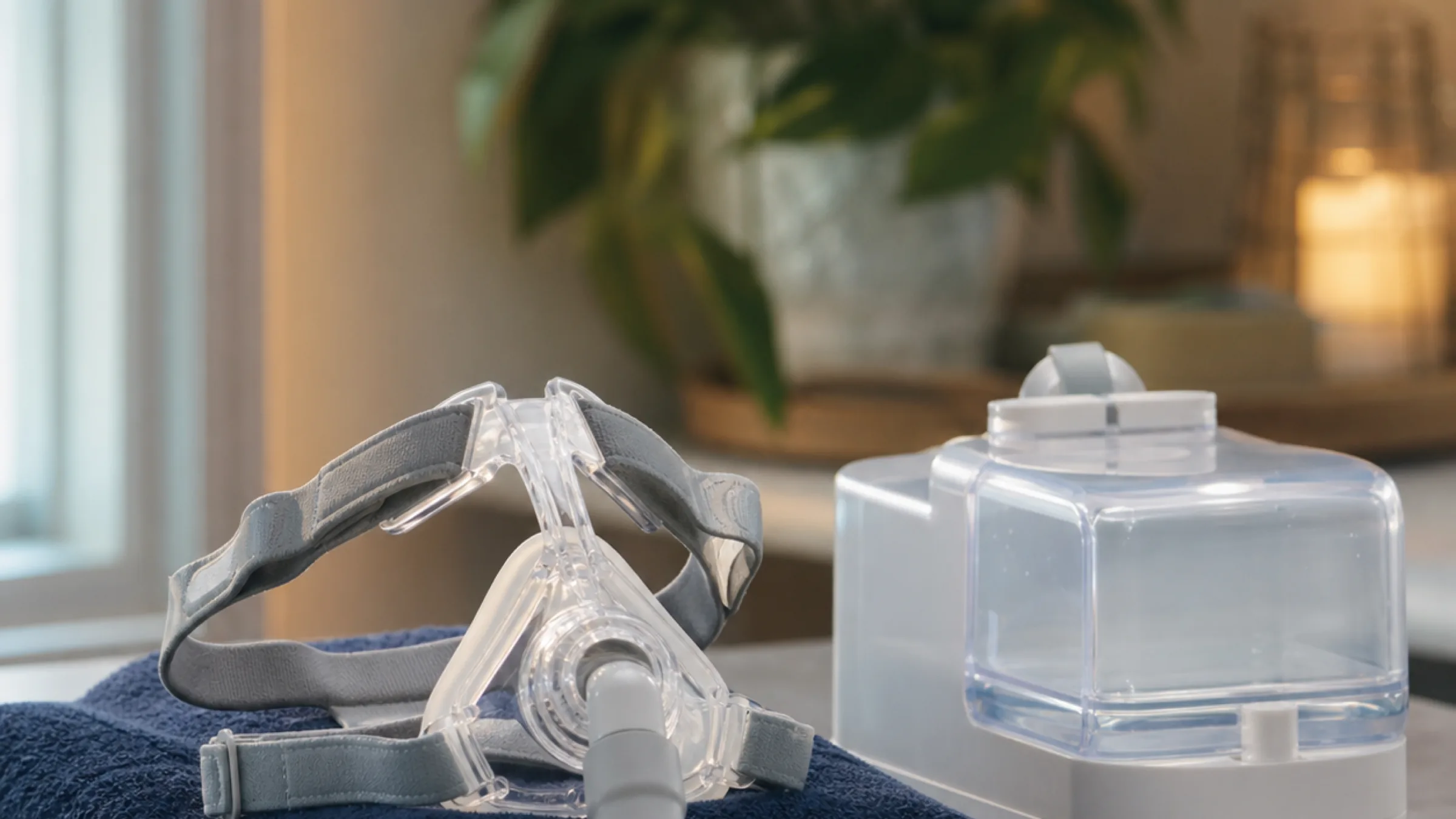
Find and compare CPAP masks
Answer six quick questions for a suggested style, or filter every mask we stock.
Find your CPAP mask in 6 questions
Answer a few questions and we’ll suggest a mask style and models to consider. This is a starting point, not a fitting; a respiratory therapist can confirm the right mask for you.
Browse masks
Prices in Canadian dollars. Magnet status from manufacturer and Health Canada notices; see magnet safety. Every mask we sell has a 30-day exchange.
Nasal pillow, nasal and full-face masks compared
Mask category is a starting point, not a ranking. A smaller mask is not automatically more comfortable, and needing a full-face mask does not represent treatment failure. Read CPAP Mask Types for a fuller clinical comparison.
Expert perspective
A mask should feel secure without needing to be overtightened. Persistent leaks, pressure points or dry mouth are useful signals to review the mask style, size, fit and therapy setup rather than simply trying to tolerate the problem.
A seven-point fitting check
- Start with breathing route: discuss recurring mouth breathing, nasal obstruction and dryness rather than choosing by appearance alone.
- Use the sizing guide: follow the guide for the exact model; sizes are not standardized across brands or mask families.
- Fit with airflow: assemble the mask as directed and test it with the machine running at the prescribed setup.
- Lie down: check the seal in your usual sleep positions and move your head as you would overnight.
- Adjust evenly: make small changes on both sides. A mask should be secure, not painful, and overtightening can distort some cushions.
- Protect the vent: identify the intentional exhalation openings and keep bedding, liners and hands from blocking them.
- Recheck comfort: look for air near the eyes, pressure marks, nostril soreness, jaw movement, mouth leak and tubing pull before deciding the fit works.
Sleep position, facial features and everyday comfort
Side sleeping can push the frame or cushion against a pillow, while tubing that hangs from the bedside can pull the seal out of place. Facial hair, dentures, jaw movement, sensitive skin, previous skin injury and changes in weight can also alter fit. These factors do not automatically require one mask category; they are reasons to test stability and comfort under realistic conditions.
Glasses, reading and feelings of claustrophobia may make an open field of vision valuable, but a low-profile design still has to seal and deliver the prescribed therapy. If removing the mask quickly matters because of mobility or nighttime care needs, practise the release method in the product instructions while awake.
Leaks, dry mouth and nasal symptoms
Every vented mask releases a designed flow of air to clear exhaled carbon dioxide. Unintended leak occurs around the cushion, through the mouth with a nasal interface, or from a loose or damaged connection. Air into the eyes, repeated hissing, dryness, awakenings or a persistent high-leak flag deserve troubleshooting rather than more strap tension by default.
Dry mouth does not prove mouth leak, and mouth breathing does not automatically mean a full-face mask is the only option. Nasal symptoms, humidification, medications, mask fit and therapy data may all need review. Do not tape the mouth closed or change prescribed pressure based on general online advice. Use CPAP Mask Leaks: Causes and Practical Fixes for a source-by-source checklist.
Compatibility means more than a 22 mm connection
A common connector can allow many masks to attach to standard CPAP tubing, but that does not establish complete compatibility. Confirm the machine and tubing connection, intentional venting, mask-type setting if the device uses one, pressure range, anti-asphyxia features for a full-face interface and any manufacturer-specific requirements.
Also confirm which cushions, pillows, frames, elbows, clips and headgear belong to the exact model and generation. Similar-looking parts may not seal or function correctly. Do not block vents, modify connectors or combine components unless the manufacturer identifies the combination as compatible.
Cleaning, wear and replacement parts
Follow the instructions for the exact mask. Cleaning removes skin oils and residue that may affect the seal; it does not restore a cushion, headgear or connector that is torn, stiff, stretched, distorted or damaged. Inspect vent openings and detachable parts as directed and let washable components dry completely before reassembly.
Replacement schedules differ by manufacturer, part, use and benefit plan. An insurer’s claim interval is not a universal clinical rule. Before purchase, check whether individual cushions, pillows, headgear, clips, frames and elbows can be obtained in Canada and whether replacing several pieces would cost more than an appropriate complete mask.
Canadian licence, seller, price and coverage checks
Health Canada requires Class II, III and IV medical devices to hold an appropriate licence before sale in Canada. Search the Medical Devices Active Licence Listing using the exact manufacturer, device family and licence information; authorization does not mean every mask fits every person. Check recalls and confirm that the seller supplies original labelling, instructions, all advertised parts, warranty and access to replacements.
Compare the full package rather than the headline price. Ask whether the quote includes the frame, cushion or pillows, headgear, elbow, clips, all fitpack sizes, fitting assistance, delivery, returns and follow-up. Hygiene rules can limit returns after a package is opened, so understand the fitting or exchange policy first.
Provincial programs and private plans differ. Confirm whether the mask and replacement components are eligible, whether a prescription or approved supplier is required, how often claims are accepted and what documentation is needed. Coverage and Canada Revenue Agency eligibility are separate questions and should not be assumed.
Common questions
CPAP mask FAQs
Sources and verification
- American Thoracic Society workshop report on CPAP mask selection and outcomes
- U.S. Food and Drug Administration safety communication on CPAP mask magnets and implanted devices
- Health Canada Medical Devices Active Licence Listing
- Health Canada guidance for buying medical devices online
- Yuwell YP-06, YN-06 and YF-06 instructions, Canadian licence records and controlled product records reviewed for this collection. The exact instructions supplied with a mask remain the primary source for fit, compatibility, warnings, cleaning and replacement.
Fit and product support
Choose a mask you can use consistently
Bring the machine model, prescribed setup, usual breathing route, sleep position and current comfort problems to a fitting conversation. Virtual Sleep Care can help organize product and support questions but does not guarantee a particular fit, insurance coverage or treatment outcome.
Choose your next step
Complete guide: CPAP Buying Guide: Choose a CPAP Machine in Canada