
CPAP education and care navigation
CPAP Support in Canada
Find a practical starting point for CPAP setup, mask leaks, dryness, pressure comfort, equipment care, usage data and follow-up.
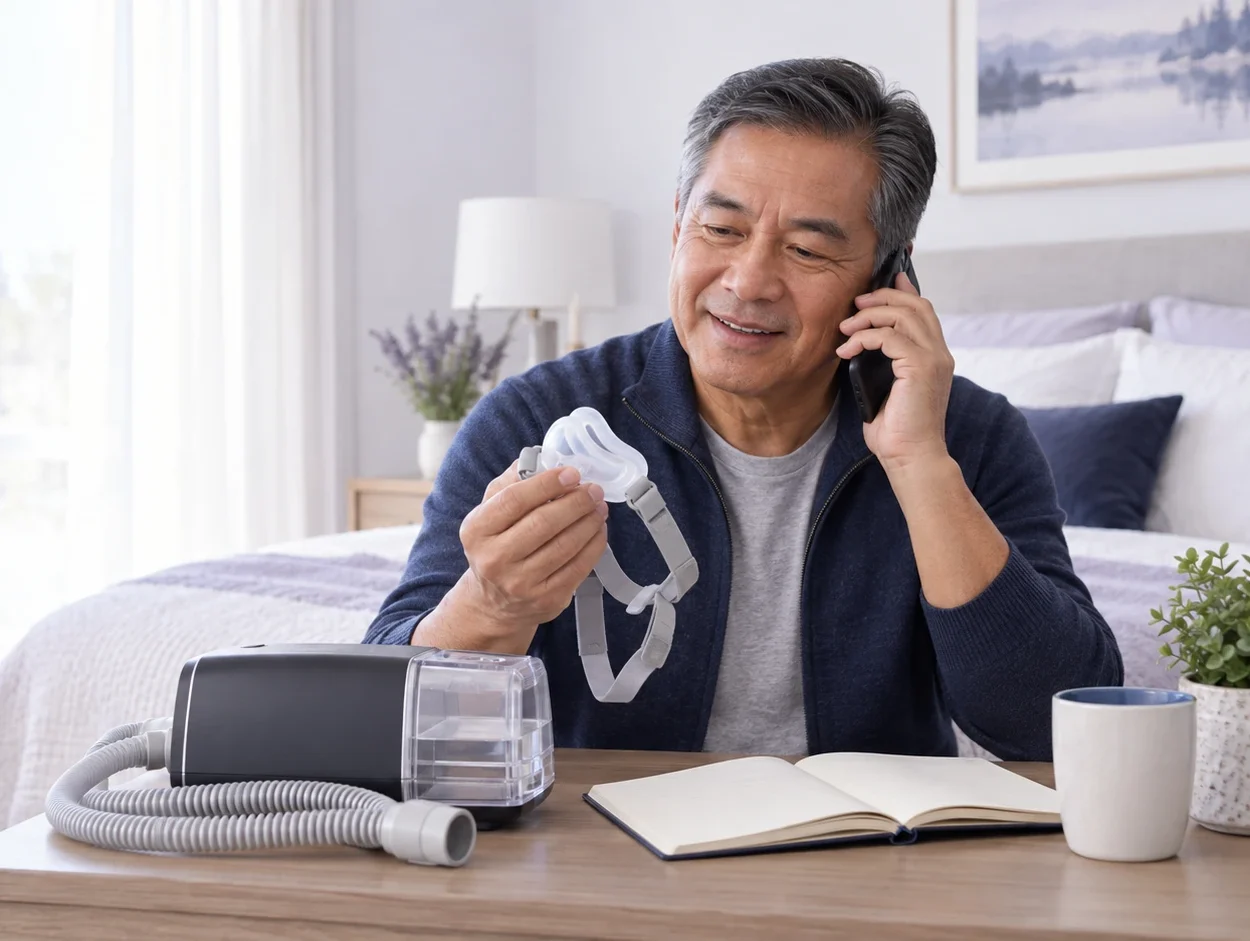
Quick answer
CPAP support can help you identify why therapy feels difficult and what to do next. Common topics include first-time setup, mask fit and leaks, dry mouth or congestion, condensation, pressure discomfort, cleaning, replacement parts, travel and usage-data review. Safe support starts with the problem you are experiencing and your prescribed setup; it does not mean changing prescribed pressure on your own.
Choose the CPAP support you need
You do not need to diagnose the problem before asking for help. Start with the route that most closely matches what is happening.
Starting or restarting CPAP
Learn what the first nights may feel like and how consistent practice, realistic expectations and early follow-up can help.
Mask fit, style or leaks
Review breathing route, sleep position, seal, sizing, headgear and signs that a cushion or another part may be worn.
Dryness, congestion or rainout
Consider mask leak, mouth breathing, room conditions, humidification and equipment setup without guessing at a pressure change.
Pressure comfort
Understand fixed pressure, an auto-adjusting range, ramp and expiratory comfort before discussing a persistent concern.
Usage data and follow-up
Learn how use hours, leak, residual events and pressure trends may inform a review without replacing clinical interpretation.
Cleaning, parts and compatibility
Use the manufacturer instructions and confirm the exact machine or mask model before buying or replacing a component.
Learn how to clean CPAP equipment or identify replacement parts.
A safe troubleshooting sequence
- Name the problem precisely. Note when it starts, how often it occurs and whether it prevents you from using therapy.
- Confirm the setup. Check that the mask, tubing, water chamber, filter and power connections are assembled according to their instructions.
- Look for a visible cause. Inspect the cushion, headgear, tubing and chamber for wear, damage, twisting or a poor connection.
- Repeat the check in sleep position. A seal that looks fine while sitting may change when you lie down or move.
- Record what you tried. Avoid changing several things at once; the pattern is easier to interpret when you know what changed.
- Ask for support if it persists. Bring the details below and do not change prescribed pressure without qualified guidance.
What to prepare for a CPAP follow-up
A useful review starts with more than “CPAP is not working.” If available, have the following information ready:
- machine brand and exact model;
- mask brand, model, style and size;
- prescribed fixed pressure or auto-adjusting range, if known;
- when therapy started and how many nights or hours you can use it;
- the specific symptom, leak location, noise or comfort problem;
- what changed recently, including parts, medicines, weight, congestion or sleep position;
- device messages and recent usage or summary data; and
- photos of the assembled equipment when a connection or compatibility issue is suspected.
Do not post a device serial number, insurance identifier or other personal information in a public forum.
Already diagnosed?
CPAP Support That Doesn’t Disappear After Setup
New to CPAP or years into therapy with equipment from elsewhere, Angela Hoffman, RRT, CRE explains how it works: upload your prescription, meet our clinical team, find equipment that fits, and get ongoing follow-up, troubleshooting and adjustments. (45 s, captioned)
Read the video transcript
If you’ve already been diagnosed, maybe you’re brand new to CPAP, or maybe you’ve been at it for years with equipment you got elsewhere and you’re just looking for support, either way, we’ve got you. It’s as simple as uploading your prescription and our clinical team will meet with you, help you find the equipment that fits best, and then you can shop masks, machines, and supplies right in our online shop. And I’ll say this: we don’t just hand you a machine and disappear. We’re here for the long haul, we’re here to follow up, we’re here to troubleshoot, and we’re here to make adjustments to your therapy until it’s working right for you. Better sleep is figureoutable. So let’s figure this out together.
What virtual CPAP support can add
Virtual support can make follow-up available without requiring every question to wait for an in-person visit. Depending on the service and equipment, a review may include listening to the problem history, checking mask and machine details, reviewing available usage trends, demonstrating a safer setup or fit check, and deciding whether the issue belongs with an equipment provider, prescriber or another clinician.
Remote data are not the same as continuous monitoring, and a virtual review cannot physically inspect every component or manage an emergency. Service eligibility, response times, provincial availability and whether a particular device shares data should be confirmed before relying on a virtual pathway.
When to ask for help
Contact your CPAP or sleep-care team when a leak, sore area, dryness, congestion, condensation, bloating, pressure intolerance, equipment warning or persistent sleepiness interferes with therapy. Ask sooner if you cannot use treatment, symptoms are worsening, or the equipment appears damaged. Do not stop prescribed therapy or change its pressure solely on the basis of a website or consumer device.
Severe breathing difficulty while awake, chest pain, fainting, signs of a severe allergic reaction or another emergency needs urgent medical care. If you are struggling to stay awake, do not drive or operate hazardous equipment.
Products, prescriptions and coverage in Canada
Equipment availability, prescription requirements, support services and public or private coverage can vary across Canada. Before purchasing a machine, mask or replacement part, confirm the exact model compatibility, return or fit policy, warranty, seller authorization and any documents your insurer requires. Health Canada advises consumers to check that a medical device is authorized for sale in Canada and to be cautious about unsupported claims.
Compare CPAP machine considerations, explore CPAP masks, or review insurance and prescription questions.
Medical disclaimer
This information is educational and does not replace assessment, diagnosis, prescribing, emergency care or individualized advice from a licensed healthcare professional.