
Nasal masks in Canada
Nasal CPAP Masks Canada
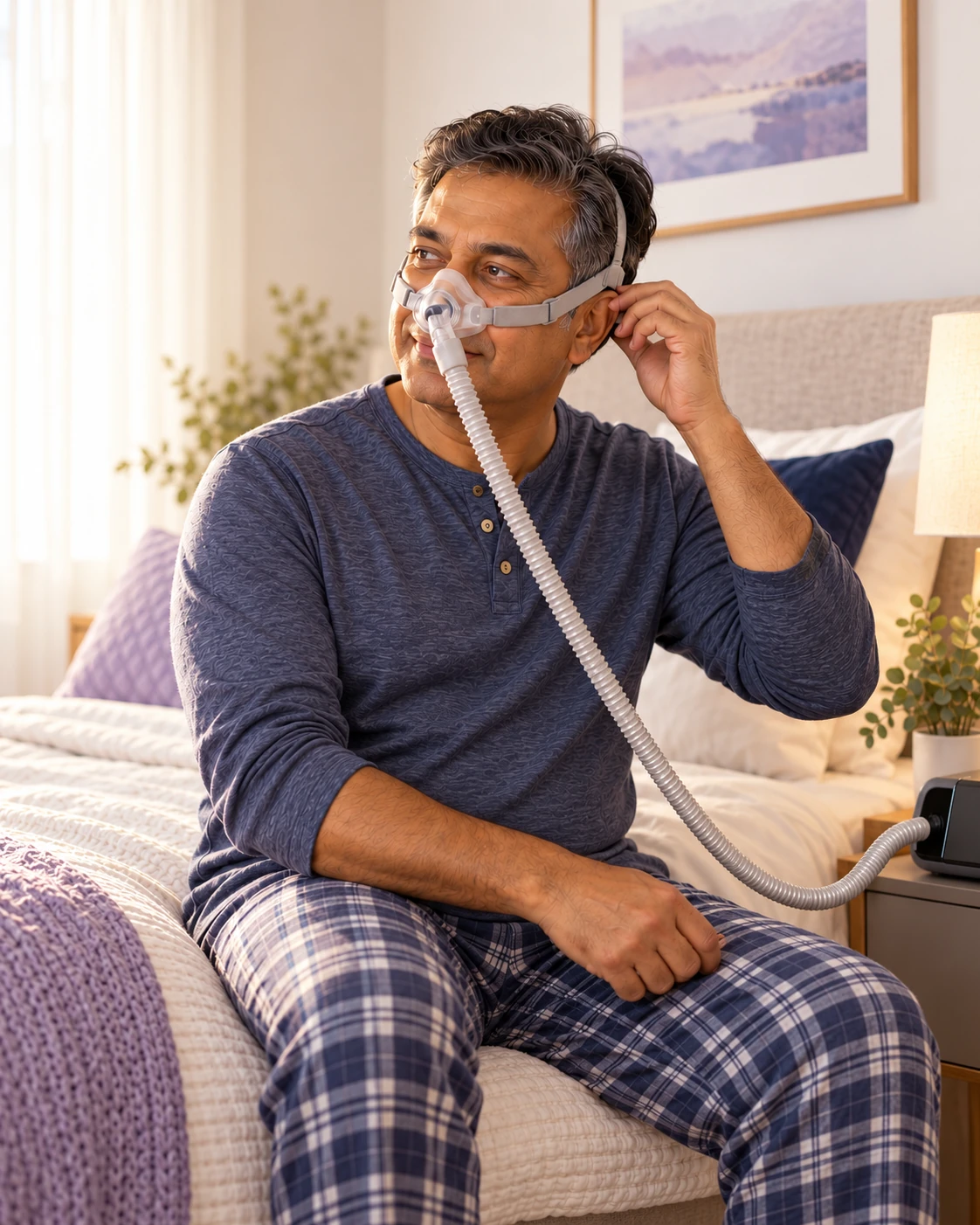
Compare nasal CPAP masks by cushion design, sizing, facial contact, mouth leak, sleep position, compatibility and the support available after fitting.
Shop nasal masks
Not sure which one? Try the mask finder.
Who might consider a nasal CPAP mask?
A nasal mask may suit someone who usually breathes through the nose and wants a broader cushion seal than nasal pillows without covering the mouth. It can be worth comparing when pillows irritate the nostrils, feel unstable or direct airflow uncomfortably, or when a full-face interface feels unnecessarily large.
A nasal mask still depends on a usable nasal breathing route. Recurring congestion, untreated nasal symptoms or mouth leak may need assessment rather than simply tighter headgear. A full-face mask may be considered when an oral route is genuinely needed, but mouth breathing alone does not identify the best mask without context.
Expert perspective
A mask should feel secure without needing to be overtightened. Persistent leaks, pressure points or dry mouth are useful signals to review the mask style, size, fit and therapy setup rather than simply trying to tolerate the problem.
Traditional and under-the-nose nasal masks
The name of a mask family does not prove where a specific cushion sits. Review photographs, instructions and the exact model before comparing designs.
An eight-step nasal mask fitting check
- Identify the exact model and design: confirm whether the cushion seals around or beneath the nose.
- Use that model’s sizing guide: brand and family sizes are not interchangeable.
- Assemble it correctly: check cushion orientation, elbow, frame and headgear connections.
- Begin with loose straps: centre the cushion before making small, even adjustments.
- Turn therapy on: a mask that looks sealed while the machine is off can behave differently under airflow.
- Lie in the usual positions: check the nose bridge or under-nose area, eye leak, pillow contact and tubing pull.
- Move naturally: turn the head and relax the jaw to see whether the seal remains stable.
- Protect comfort and venting: keep exhalation openings clear and reassess any pain, skin injury, persistent leak or excessive marks.
For more support, follow the complete CPAP Mask Fitting process.
Nose-bridge pressure, eye leaks and skin comfort
A traditional nasal cushion that sits too high, too low or under excessive tension may create pressure at the bridge or direct leak toward the eyes. Under-the-nose designs move the contact area but can still cause upward pressure, misalignment or soreness. Start by checking size, placement, cushion condition and even strap tension rather than tightening every strap.
Persistent redness, broken skin, swelling, eye irritation or pain deserves prompt reassessment. Clean the skin and mask only as directed, and use liners, creams or other products only when the mask manufacturer confirms they are compatible with the cushion and venting.
Congestion, mouth leak and dry mouth
Nasal congestion can make a nasal interface harder to tolerate, but the solution depends on the cause and may involve clinical assessment, humidification review, room conditions or mask fit. Do not start or stop medicines solely to make a mask work without appropriate advice.
Dry mouth does not prove mouth leak. Look for air escaping from the lips, repeated awakenings, device-reported leak and observations from a bed partner. Do not tape the mouth closed or change prescribed pressure based on general advice. Review persistent problems using CPAP Mask Leaks: Causes and Practical Fixes.
Sleep position, glasses, facial hair and mobility
Side sleeping can push a frame or cushion against the bed pillow. A hose that hangs over the bedside may pull the seal, while overhead routing may help some users and interfere with others. Test the intended setup while lying down rather than judging the mask only while seated.
Glasses, reading, facial hair, sensitive skin, dentures, jaw movement and the ability to remove the mask quickly can all influence a practical choice. No single feature decides the mask category; compare stability, comfort and safe handling for the individual user.
Compatibility, parts and buying in Canada
A standard-looking connection does not establish complete compatibility. Confirm the exact mask generation, cushion, frame, elbow, headgear, intentional vent, tubing connection, pressure range and any machine-specific mask setting. Do not mix similar-looking parts unless the manufacturer identifies the combination as compatible.
Before choosing a mask, confirm what is included, whether replacement cushions and headgear are available in Canada, fitting and return terms, warranty support and current Health Canada licence status. Insurance rules vary by province and private plan; ask the payer about prescriptions, eligible components, approved suppliers, replacement limits and documentation. The Insurance and Prescription Guide provides a verification checklist.
Common questions
Nasal CPAP mask FAQs
Sources and verification
- American Academy of Sleep Medicine clinical practice guideline for PAP treatment of adult obstructive sleep apnea
- American Thoracic Society workshop report on CPAP mask selection
- Health Canada Medical Devices Active Licence Listing
- Manufacturer instructions and controlled product records for the exact Yuwell mask remain the primary sources for fitting, compatibility, warnings and package details.
Next steps
Compare nasal masks with the full mask range
Test the exact cushion with therapy running in the usual sleep positions. If a nasal mask does not stay comfortable and stable, compare nasal pillows and full-face options rather than forcing one design to work.
Choose your next step
Complete guide: CPAP Buying Guide: Choose a CPAP Machine in Canada