
CPAP education and fitting support
CPAP Mask Fitting
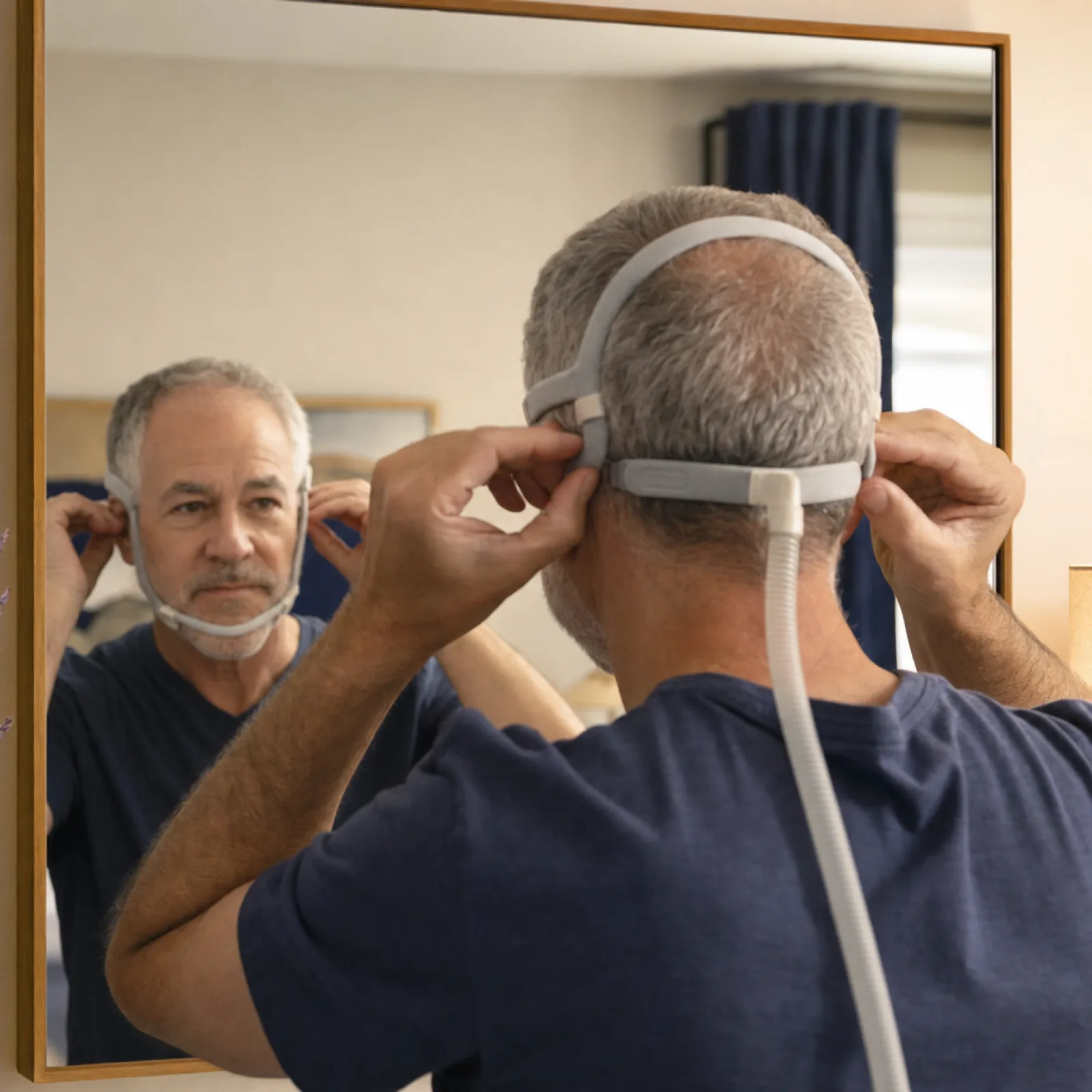
A useful fitting checks more than size: breathing route, sleep position, prescribed therapy, seal, comfort, skin contact, safety warnings and the ability to use the mask consistently all matter.
Quick answer
A CPAP mask should form a stable seal at the prescribed therapy pressure without needing excessive strap tension or causing pain, skin injury or air blowing into the eyes. Fit should be checked with the machine running and while you are lying in your usual sleep positions. A mask that is comfortable while sitting may behave differently when you move, relax your jaw or use therapy for several hours.
Which mask style might suit you?
Answer six quick questions for a suggested style and two or three masks to compare.
Find your CPAP mask in 6 questions
Answer a few questions and we’ll suggest a mask style and models to consider. This is a starting point, not a fitting; a respiratory therapist can confirm the right mask for you.
Fitting vs choosing a mask
The CPAP Mask Guide helps you compare practical buying factors, while CPAP Mask Types explains nasal pillows, nasal masks and full-face masks. This page focuses on the fitting process: how to test the mask you have, recognize why it may not be working and prepare for a professional fitting or reassessment.
What a mask fitting should consider
- Breathing route: whether you reliably breathe through your nose, experience congestion or open your mouth during sleep.
- Prescribed therapy: pressure level or range, comfort features and any device-specific fitting mode.
- Sleep position and movement: back, side or stomach sleeping, pillow contact and frequent position changes.
- Facial features and comfort: nose bridge, nostrils, jaw movement, facial hair, dentures, sensitive skin and pressure-prone areas.
- Vision, dexterity and routine: whether the clips, magnets, straps and cleaning steps are manageable.
- Safety and compatibility: mask warnings, magnetic-component precautions, tubing connection and compatibility with the prescribed device.
A step-by-step CPAP mask fitting check
- Confirm the exact mask and size. Identify the model, cushion or pillow size, headgear size and any fit template used.
- Read the instructions and warnings. Review assembly, vent location, cleaning, magnet or implant precautions and contraindications before use.
- Start with clean contact surfaces. Facial oils, skin products or a damp cushion can change the seal.
- Position before tightening. Place the cushion where the instructions show, then adjust straps evenly in small steps.
- Turn therapy on. Use the prescribed pressure or the manufacturer’s fitting function; do not judge the seal with the machine off.
- Lie down and move. Check your usual positions, turn your head, relax your jaw and notice whether a pillow pushes the mask aside.
- Locate the leak. Separate normal vent flow from air escaping at the eyes, cheeks, mouth, elbow, tubing or chamber.
- Wear it long enough to assess comfort. Look for pain, numbness, skin blanching, nostril irritation, headaches, claustrophobia or a seal that fails as the night continues.
Adjust one variable at a time. Repeatedly tightening every strap can hide the real cause and make the mask less stable.
What a good fit—and a poor fit—can look like
Do not solve every leak by tightening
Headgear should stabilize the mask, not clamp it to the face. Excessive tension can compress or distort an air-filled cushion, pull the mask out of alignment and cause soreness or skin injury. If small, even adjustments do not produce a stable seal, reassess position, size, mask style, cushion condition, mouth leak and the rest of the circuit.
Use the detailed CPAP Mask Leaks guide to identify where air is escaping. Do not change prescribed pressure to compensate for a leak without qualified guidance.
When a different mask style may be worth discussing
A different interface may be considered when the current mask cannot maintain a comfortable seal, conflicts with sleep position or eyewear, worsens claustrophobia, irritates the nose or skin, or does not suit the person’s breathing route. A smaller mask is not automatically better, and needing a full-face mask is not a failure. The best option is the one that safely supports prescribed therapy and can be used consistently.
Before changing, confirm return or fitting policies, replacement-part availability, magnetic-component warnings and compatibility. Browse the CPAP masks collection only after identifying the fitting problem you are trying to solve.
What virtual mask-fitting support can assess
A virtual fitting can review mask and machine details, observe assembly and strap position, watch for visible leaks with therapy running, compare fit in different positions and help organize a safe next step. It can also review available leak data alongside what the person actually feels.
A camera cannot measure every seal, inspect material closely, palpate a pressure area or replace an in-person clinical assessment. New skin breakdown, persistent eye irritation, severe pain, marked swelling, breathing difficulty while awake or a suspected allergic reaction needs appropriate clinical attention.
Mask fitting help
Take the mask fit quiz to find the mask style that suits how you breathe and sleep, and use the fitting check on this page.
A fitting consultation with a registered respiratory therapist is included with Nasal Mask+, Full Face Mask+, CPAP Machine+ and Complete Care+. Every mask we sell has a 30-day fit exchange.
Prepare for a fitting or reassessment
- machine brand, exact model and prescribed settings if known;
- mask brand, model, style, cushion size and headgear size;
- when the mask or cushion was first used and how it is cleaned;
- the exact location and timing of leaks, soreness or noise;
- usual sleep positions, facial hair, congestion and mouth-breathing pattern;
- photos of pressure marks or equipment assembly when safe and useful;
- recent leak or usage data from several representative nights; and
- implanted medical devices or other safety concerns relevant to mask warnings.
Medical disclaimer
This information is educational and does not replace mask instructions, safety warnings, assessment, prescription or individualized guidance from a licensed healthcare professional.