
Nasal pillow masks in Canada
Nasal Pillow CPAP Masks Canada
Compare low-profile nasal pillow masks by sizing, nostril comfort, mouth leak, sleep position, pressure comfort, compatibility and access to fitting support.
Shop nasal pillow masks
Not sure which one? Try the mask finder.
Who might prefer nasal pillows?
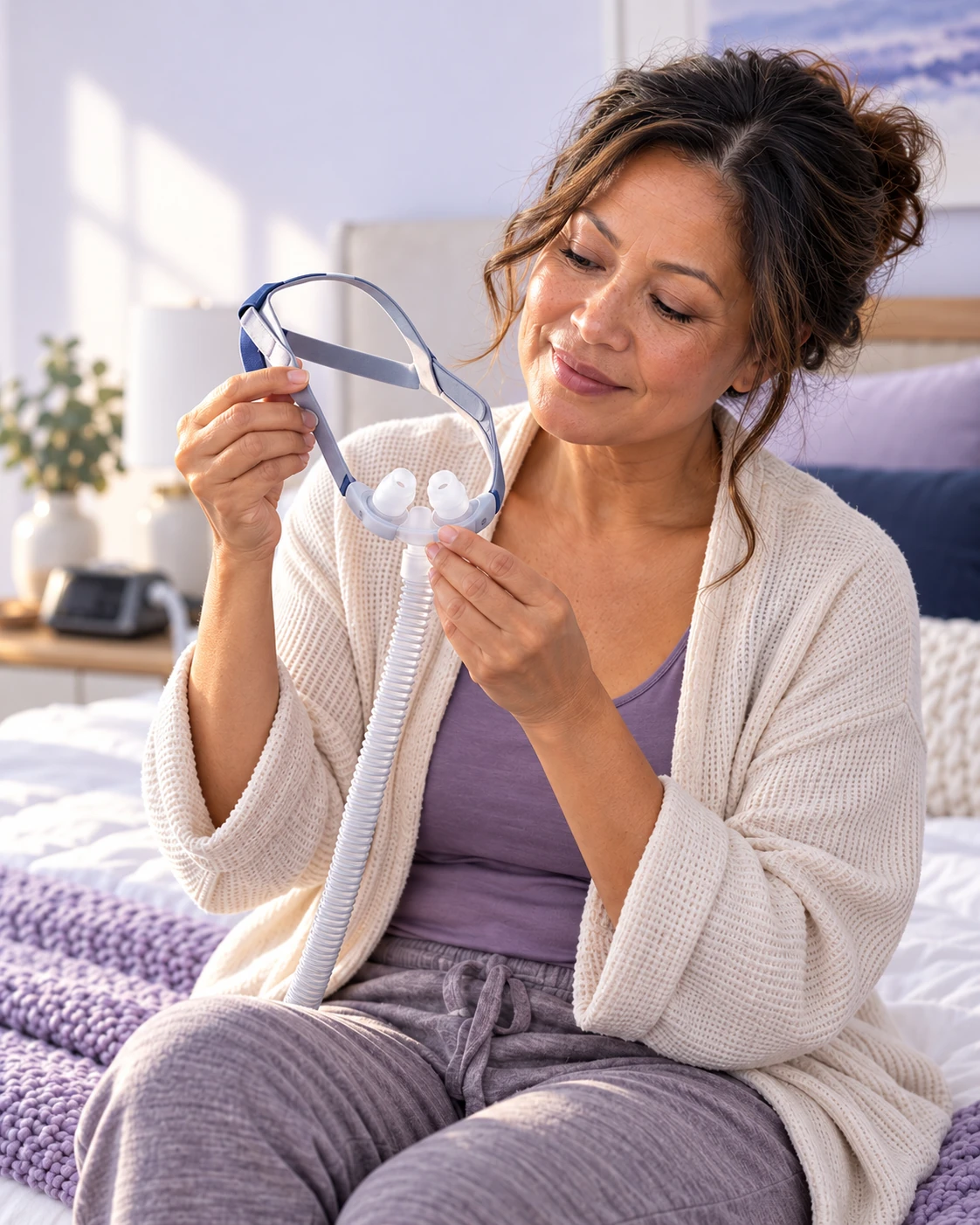
Nasal pillows may appeal to people who breathe comfortably through the nose, want less material on the face, wear glasses before sleep, read in bed or feel confined by a larger interface. Their compact footprint may also reduce pillow contact for some side sleepers. These are practical preferences, not guarantees of a better seal or better treatment.
A nasal mask or full-face mask may deserve comparison when nasal pillows repeatedly cause nostril soreness, shift during sleep, feel uncomfortable with the prescribed airflow, or when unresolved mouth leak or nasal obstruction interferes with therapy. Review the broader differences in CPAP Mask Types.
Expert perspective
A mask should feel secure without needing to be overtightened. Persistent leaks, pressure points or dry mouth are useful signals to review the mask style, size, fit and therapy setup rather than simply trying to tolerate the problem.
Nasal pillows, nasal masks and full-face masks compared
Mask type is a starting point, not a ranking. Compare fit while lying in the usual sleep position with the therapy airflow running.
A seven-step nasal pillow fitting check
- Use the exact sizing guide: sizes are not standardized between brands or product families, and the smallest pillow is not necessarily the best fit.
- Check orientation: identify left, right, top and bottom markings and attach each piece as the manufacturer directs.
- Place rather than insert: the pillows should rest at the nostril openings unless the instructions for the exact product state otherwise.
- Start with loose headgear: tighten only enough to create a stable seal. Excess tension can distort the pillows and increase soreness or leak.
- Turn on therapy: check the seal with the prescribed setup rather than judging fit with the machine off.
- Lie down and move: test back and side positions, turn the head, and check whether bedding or tubing pulls the frame.
- Recheck after several minutes: note nostril pressure, air directed toward the eyes, mouth leak, noise and whether the vent remains clear.
For a guided process, see CPAP Mask Fitting.
Nostril soreness, dryness and skin irritation
Short-lived awareness of a new interface is different from persistent pain, broken skin, bleeding or a sore that worsens. First check pillow size, angle, assembly and headgear tension. Clean the mask and skin only as directed, allow components to dry fully and do not apply oils, creams, liners or lubricants unless the manufacturer confirms they are compatible with the exact mask material.
Persistent soreness may mean the size, fit or mask style needs reassessment. Contact the equipment or sleep-care team rather than trying to make a painful interface tolerable through tighter straps.
Mouth leak does not automatically rule out nasal pillows
A nasal interface can lose therapy air through the mouth, but dry mouth alone does not prove that this is happening. Nasal congestion, humidity, medicines, room conditions and other health factors may contribute. Useful clues include leak reported by the device, air escaping from the lips, repeated awakenings and a bed partner noticing the mouth opening.
Review recurring leak with the care team. Do not tape the mouth closed, add a restraint or change prescribed pressure based on general online advice. A different size, fitting adjustment, management of nasal symptoms or another mask category may be appropriate depending on the cause. Use CPAP Mask Leaks: Causes and Practical Fixes for a source-by-source check.
Pressure comfort and sleep position
Nasal pillows are not universally unsuitable at higher treatment pressures. Some people use them comfortably across a broad prescribed range, while others notice air-jet sensation, nostril discomfort, leak or mouth opening. Pressure number alone should not decide the mask; comfort, seal, treatment data and the clinician-directed plan matter together.
For side sleeping, check whether the bed pillow pushes the nasal cushion sideways or dislodges the frame. A hose routed over the head may reduce pull for one person and feel restrictive to another. Compare the actual model in the position and setup used overnight rather than relying only on a seated fitting.
Compatibility, replacement parts and buying in Canada
A common tubing connector does not prove complete compatibility. Confirm the exact mask generation, frame, pillows, headgear, swivel, venting, tubing connection, pressure range and any machine-specific mask setting. Similar-looking replacement pillows may not fit or vent correctly.
Before choosing a mask, ask whether individual pillows, headgear and frame parts are available in Canada; what is included; who provides fitting help; and how returns, warranties and damaged parts are handled. Insurance rules vary by province and private plan. Confirm prescription, supplier, replacement interval, receipt and pre-authorization requirements directly with the payer. See the Insurance and Prescription Guide for questions to ask.
Common questions
Nasal pillow CPAP mask FAQs
Sources and verification
- American Academy of Sleep Medicine clinical practice guideline for PAP treatment of adult obstructive sleep apnea
- American Thoracic Society workshop report on CPAP mask selection
- Health Canada Medical Devices Active Licence Listing
- Manufacturer instructions and controlled product records for the exact Yuwell mask remain the primary sources for fitting, compatibility, warnings and package details.
Next steps
Compare a nasal pillow mask in context
Use the exact sizing guide and test the mask with therapy running in the usual sleep position. If nasal pillows do not stay comfortable and stable, compare nasal and full-face options rather than forcing one style to work.
Choose your next step
Complete guide: CPAP Buying Guide: Choose a CPAP Machine in Canada