
Sleep health education
Alcohol and Sleep: How a Nightcap Affects REM and Waking

Quick answer
Alcohol disrupts REM sleep even at lower studied doses, while faster sleep onset was found mainly at higher doses in a 2025 review of 27 studies.1 Avoid alcohol close to bedtime; some sleep-health sources suggest allowing at least three to four hours after your last drink.7 That interval does not guarantee unaffected sleep because amount, body size, health, medicines and individual response all matter.
Why a nightcap can feel helpful at first
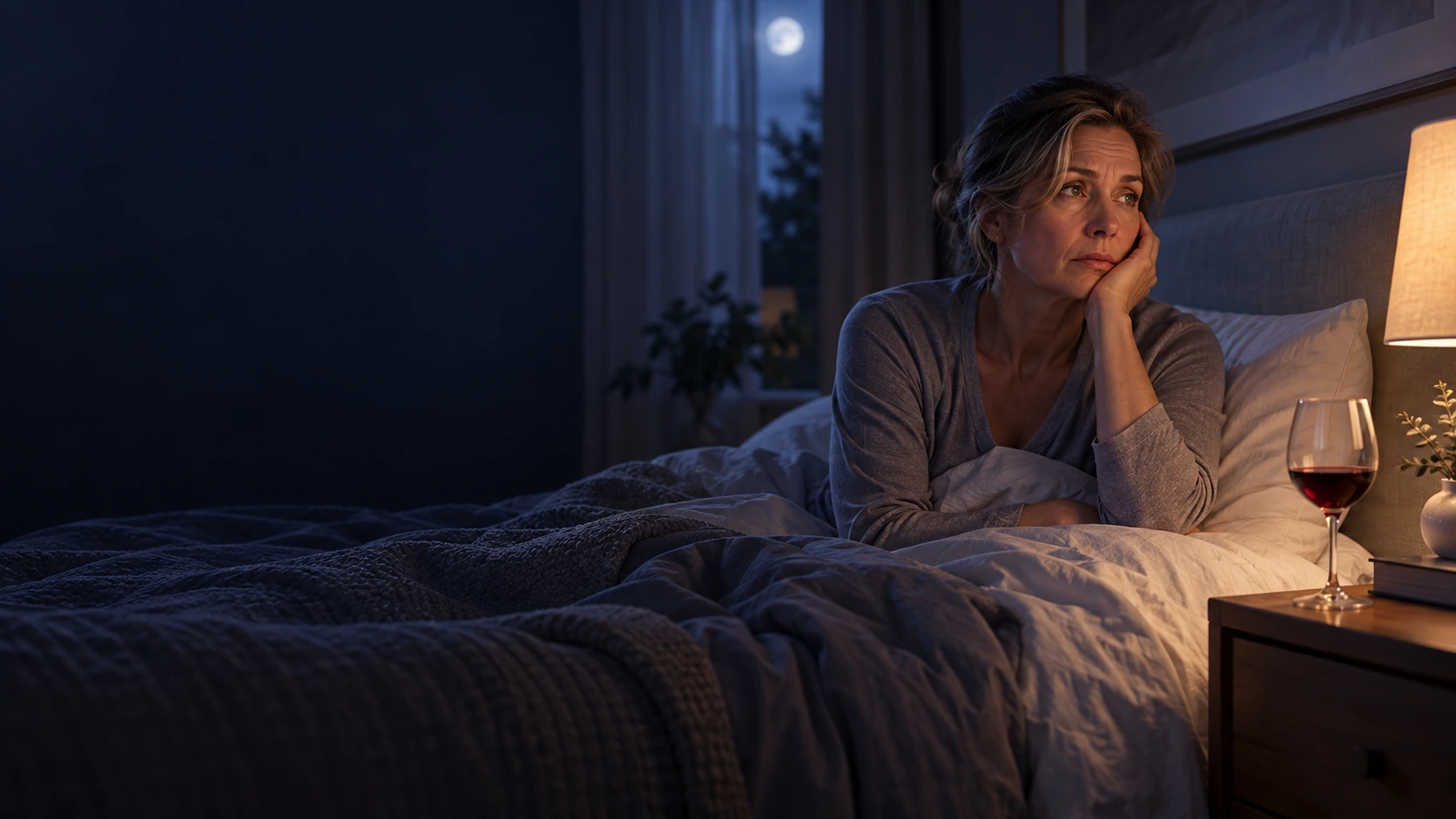
Alcohol slows activity in the central nervous system. That sedating effect can make relaxation feel easier and may reduce the time to fall asleep, especially at higher amounts. This is one reason a nightcap can seem effective in the moment.
Sleep onset is only one part of healthy sleep, however. Sleep also needs enough time, continuity, regular timing and an appropriate progression through sleep stages. A substance that makes you drowsy can still leave you waking more often or feeling less restored the next day.
Why do I wake up in the night after drinking?
Alcohol can alter sleep architecture—the pattern of rapid eye movement (REM) and non-REM sleep across the night. A 2025 systematic review and meta-analysis of 27 studies found delayed REM onset and reduced REM duration after alcohol, with greater disruption as the dose increased. REM changes appeared at lower studied doses, while faster sleep onset appeared mainly at higher doses.1
As alcohol is metabolized, its sedating effect changes and sleep may become lighter or more fragmented. Urination and thirst, reflux, snoring or obstructive breathing can also contribute. In people who drink heavily and regularly, overnight withdrawal symptoms may disturb sleep. Waking around 3 a.m. is a commonly described experience, but it is not universal and does not diagnose a specific cause.
Amount and timing both matter
People respond differently based on factors such as the amount consumed, when the last drink occurred, body size, age, sex, medications, health conditions and drinking pattern. A drink that appears not to affect one person may noticeably affect another person’s sleep.
Avoid alcohol close to bedtime. Some sleep-health sources suggest allowing at least three to four hours between your last drink and bedtime.7 This does not guarantee unaffected sleep: more alcohol generally needs more time, and individual responses vary. Drinking less, drinking earlier and including alcohol-free evenings can reduce exposure and make the effect easier to observe. Canada’s Guidance on Alcohol and Health uses weekly amounts to describe overall health risk; those ranges are not sleep-specific limits and do not promise that drinking within a range will leave sleep unchanged.2
When comparing amounts, use a Canadian standard drink rather than the number of glasses or cans. One Canadian standard drink contains 13.45 grams of alcohol.3 A large pour or strong beverage can contain more than one standard drink.
Alcohol, snoring and sleep apnea
Alcohol can relax muscles in the throat and may worsen upper-airway narrowing during sleep. Public Health Agency of Canada guidance notes that alcohol and certain medications can worsen airway blockage and may contribute to longer or more serious breathing pauses in people with sleep apnea.4
Alcohol does not diagnose sleep apnea, and snoring after drinking does not prove that someone has it. Assessment becomes more important when snoring is frequent or is accompanied by witnessed breathing pauses, gasping, morning headaches, dry mouth or excessive daytime sleepiness. Review sleep apnea symptoms or compare snoring with sleep apnea if those patterns sound familiar.
If you use CPAP or another prescribed treatment, continue using it as directed. Treatment does not cancel alcohol’s effects on sleep, alertness or medication interactions. Ask your sleep-care provider how alcohol fits with your condition and treatment plan rather than changing pressure or stopping therapy yourself.
Alcohol and medicines can be a dangerous combination
Alcohol can increase sedation and other harmful effects when combined with certain medicines. The risk can be especially serious with opioids, benzodiazepines and some prescription sleep medicines because the combination may suppress breathing and increase the risk of overdose, falls or injury.5
Do not assume an over-the-counter sleep product is safe to combine with alcohol. Check the label and ask a pharmacist or prescribing clinician about your specific medicines, including products used for sleep, anxiety, pain, allergies or mood. If you have already combined substances and someone is difficult to wake, breathing slowly or irregularly, vomiting repeatedly, having a seizure or losing consciousness, call emergency services.
Try a practical sleep-and-alcohol check
If you do not have signs of alcohol dependence or withdrawal risk, a simple one- to two-week comparison may help you see whether evening alcohol is affecting your sleep. Include several alcohol-free evenings and record:
- The number of Canadian standard drinks and when the last drink ended.
- Bedtime, estimated time to fall asleep and nighttime awakenings.
- Snoring, gasping or breathing pauses reported by a partner.
- Morning headache, dry mouth and how refreshed you feel.
- Next-day sleepiness, concentration and any effect on driving or work safety.
Look for a repeated pattern rather than judging one unusual night. A sleep record can help you prepare for a conversation with a healthcare provider, but it cannot diagnose insomnia, sleep apnea or an alcohol use disorder. For the rest of your evening routine, see how to build a bedtime routine that supports sleep and how caffeine timing can affect sleep.
Better alternatives to a nightcap
- Keep a consistent wake time as part of a broader sleep-health plan.
- Build an alcohol-free wind-down that is realistic enough to repeat.
- If insomnia persists, review the insomnia guide and ask about cognitive behavioural therapy for insomnia rather than relying on alcohol.
- Have snoring, gasping or daytime sleepiness assessed; compare snoring with sleep apnea and learn how sleep apnea is diagnosed.
When the sleep problem deserves assessment
Seek professional advice when sleep problems persist despite changing the timing or amount of alcohol, or when they affect daytime function, mood or safety. Loud habitual snoring, witnessed breathing pauses, gasping and uncontrollable sleepiness are reasons to discuss sleep apnea assessment. Learn how sleep apnea is diagnosed.
Do not use alcohol, caffeine or another substance to push through dangerous sleepiness, and do not drive when you are struggling to stay awake. Alcohol-related impairment can remain a safety concern even if you no longer feel intoxicated.
When to get help with alcohol use
Sleep disruption can be part of a broader alcohol concern. Speak with a healthcare professional if you need increasing amounts, cannot reliably cut down, continue drinking despite harm, experience memory gaps, or have concern from family or friends.
Do not abruptly stop heavy, regular alcohol use without medical advice. Withdrawal can be dangerous and may require supervised care. Urgent symptoms such as severe confusion, hallucinations, seizures or loss of consciousness require emergency help.
Could this be sleep apnea?
Healthy habits help most people sleep better, but they will not fix sleep apnea. Consider getting checked if you have any of these:
- loud snoring, or someone has noticed you stop breathing or gasp in your sleep;
- you wake unrefreshed or with a headache, even after enough hours in bed;
- you doze off easily during the day, especially while driving.
Take the 2-minute sleep apnea quiz or order a home sleep test ($165, no referral needed).
Medical disclaimer
This content is educational and does not replace assessment, diagnosis, emergency care or advice from a licensed healthcare provider.