
Quick answer
Sleep apnea is diagnosed through a clinical assessment and an appropriate sleep study. A healthcare provider reviews symptoms, risk factors, health history and medications, then determines whether home sleep apnea testing or an in-laboratory polysomnogram is suitable. Screening questionnaires can estimate risk, but they do not make the diagnosis.
Clinical assessment
Diagnosis begins with symptoms, sleep schedule, health conditions, medicines, family history and observations from a bed partner. A physical examination may identify factors that influence the airway.
The most useful history is specific rather than perfect. Note what you or a bed partner has noticed: loud snoring, pauses, gasping, frequent awakenings, morning symptoms, or daytime sleepiness. Also note when the pattern began, how often it happens, and how it affects driving, work, concentration, or mood. A sleep diary can help capture sleep timing, sleep quality, and daytime sleepiness; it gives the clinician a clearer picture than trying to remember every detail in the appointment.
Bring prior sleep-study reports if you have them and mention relevant medicines or recent changes in health. This does not mean a visitor needs to diagnose the cause before asking for help. It simply helps a clinician choose and interpret the right test in context.
Screening tools versus diagnosis
Questionnaires such as STOP-Bang and Epworth can organize risk or sleepiness, but they cannot diagnose or determine treatment by themselves.
Some smartwatches can now flag possible sleep apnea, but they are screening tools too. See can a smartwatch detect sleep apnea?
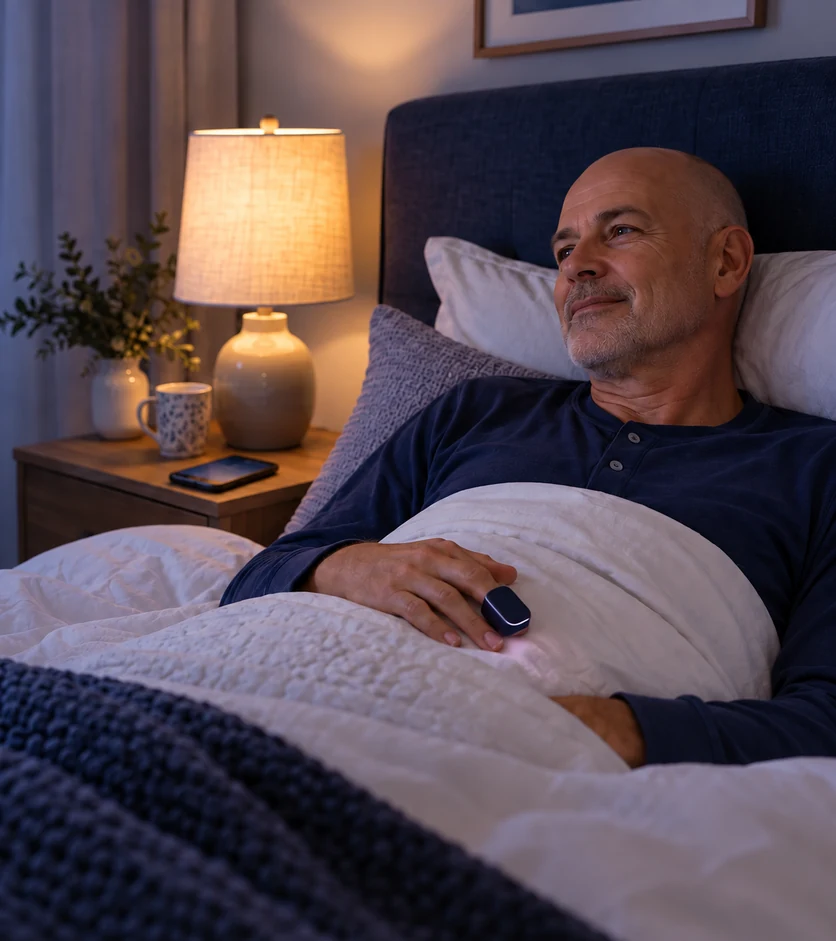
Home sleep apnea testing
HSAT may be used in selected adults with signs suggesting moderate-to-severe uncomplicated OSA. Suitability must be determined by a medical provider, and raw data require qualified interpretation.
Home testing is not a shortcut around clinical assessment. It is one diagnostic option when the clinical picture and the person’s health history make it appropriate. A home study may record breathing and oxygen-related signals, but it does not collect every signal available in a laboratory study. If the result is negative, inconclusive, technically limited, or does not fit persistent symptoms, the next step may be further assessment or an in-lab study.
Laboratory polysomnography
A sleep-lab study records brain activity, eye movements, muscle activity, breathing, oxygen and other signals. It can identify sleep time and evaluate a wider range of disorders.
Because it records sleep itself as well as breathing-related signals, a laboratory study can answer questions that a home test may not be designed to answer. The choice is not a measure of how serious someone’s symptoms are or how well they have prepared. It reflects which test is most likely to give a reliable answer for that clinical situation.
Interpreting results and planning follow-up
A sleep study is one part of diagnosis. A qualified clinician reviews the raw data and recording quality alongside symptoms, health history, sleep schedule, medicines, examination findings and the possibility of another sleep or medical condition. Automatically generated scores can miss context or artifact and should not determine diagnosis or treatment by themselves.
Follow the preparation instructions for the specific home or laboratory study. When the report is ready, ask:
Results may lead to treatment, additional testing or evaluation for another cause. Bring prior reports if you have them, but do not treat an old score or consumer-device result as a current diagnosis.
- Was the recording technically adequate?
- What did the test measure, and what could it not assess?
- Do the findings explain the symptoms that prompted testing?
- Who reviewed the raw data?
- Is the result definitive for this situation?
- What follow-up is recommended, and when?
Continue into home sleep testing
The Home Sleep Testing in Canada guide explains suitability, equipment, results, referrals and costs. See the six-step home sleep testing process or compare a home sleep test with an in-lab sleep study for more focused guidance.