
Sleep health education
Exercise and Sleep: Timing, Benefits & Tips
Quick answer: Regular physical activity is one habit that can support better sleep. Keep a sleep diary that includes exercise, bedtime and how you feel the next day to understand your own pattern. Combine activity with a consistent sleep schedule, and discuss ongoing sleep problems or exercise limitations with your healthcare provider.
Sources: CDC

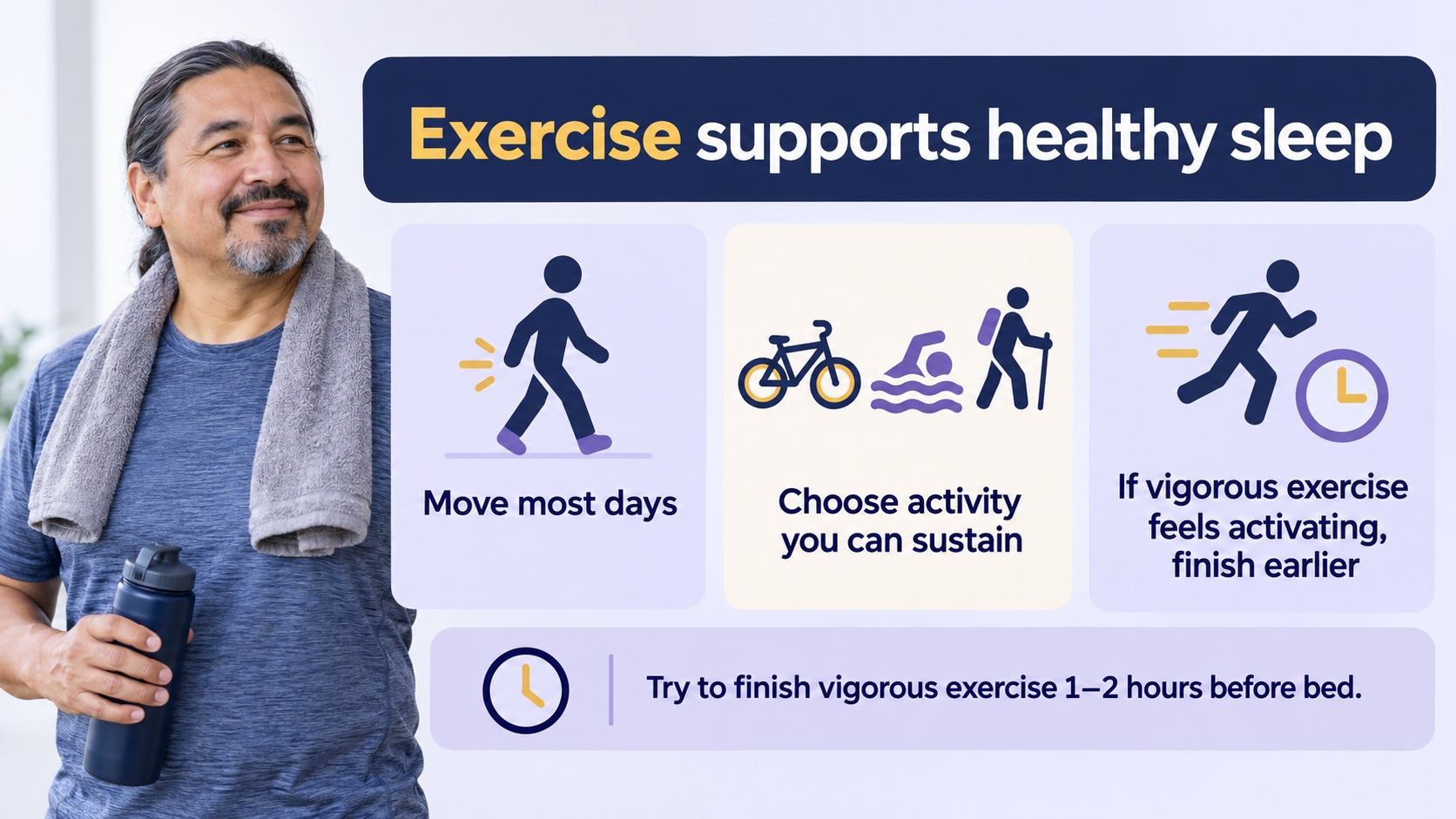
How physical activity may support sleep
Activity can influence sleep pressure, mood, stress, body temperature, circadian timing and physical health. Research reviews generally find improvements in selected sleep outcomes, but effects vary by population, exercise program and how sleep is measured. Exercise should be presented as a supportive habit, not a guaranteed treatment.
The relationship also runs in the other direction: poor or insufficient sleep can reduce motivation, reaction time and recovery. A difficult night does not mean activity is pointless, but dangerous sleepiness changes what is safe to do.
Use Canadian movement guidance as a health framework
The Canadian 24-Hour Movement Guidelines integrate physical activity, sedentary behaviour and sleep rather than treating them as competitors. For adults aged 18 to 64, the guideline target includes at least 150 minutes per week of moderate-to-vigorous aerobic activity, muscle strengthening at least twice weekly, several hours of light activity and regular good-quality sleep. Guidance differs by age, pregnancy, disability and medical condition.
These are population health targets, not a prescription for fixing sleep. Someone starting from little activity can benefit from smaller, achievable steps and should use condition- or disability-specific advice where applicable.
Morning, afternoon or evening exercise?
A systematic review found that evening exercise did not generally harm sleep in healthy participants, although vigorous exercise ending within about one hour of bedtime could impair some sleep measures. This does not establish the same cutoff for every person or medical condition.
Intensity, duration and recovery matter
Intensity changes breathing, heart rate, temperature, alertness and recovery needs. A conversation-paced walk, resistance session, interval workout and late competition do not affect everyone the same way. More is not always better for sleep: pain, dehydration, inadequate food, overreaching, injury, stimulants and emotional arousal can offset benefits.
Include easier days and recovery that fits the activity. New persistent fatigue, declining performance, irritability, elevated resting heart rate, frequent illness, pain or worsening sleep may signal that training load and recovery need review.
A two-week exercise-and-sleep check
A wearable can help record timing or trends, but consumer sleep stages and readiness scores are estimates. How you feel and function, safety, symptoms and clinical context still matter.
- Keep wake time and planned sleep opportunity reasonably stable.
- Record activity type, approximate duration, intensity and finish time.
- Note outdoor light, caffeine or pre-workout products, alcohol, pain and unusual stress.
- Each morning, record estimated sleep onset, awakenings, restfulness and daytime sleepiness.
- Change one factor—such as moving vigorous activity earlier—rather than changing the whole routine.
- Compare repeated patterns across similar days, not one night.
- Keep the timing that supports both consistency and sleep, or discuss an unclear pattern with a professional.
Exercise when you are sleep-deprived or very sleepy
Do not use exercise to “push through” dangerous sleepiness. Avoid driving to a workout or doing high-risk activity when you are struggling to stay awake, dizzy, faint or unable to react safely. Choose a safer setting or rest, and seek prompt advice when sleepiness threatens work, driving or daily safety.
Caffeine or pre-workout stimulants may temporarily increase alertness but can delay later sleep and do not make severe sleepiness safe. Read Caffeine and Sleep for timing and sensitivity guidance.
Exercise, insomnia and sleep apnea
Activity may support overall health and sleep, but persistent insomnia is not simply a failure to exercise. If sleep difficulty continues despite enough opportunity and reasonable habits, assessment and evidence-based insomnia care may be appropriate.
Exercise and weight change do not replace diagnosis or prescribed treatment for sleep apnea. Loud snoring, witnessed breathing pauses, morning headaches or excessive daytime sleepiness deserve assessment. If sleep apnea is confirmed, movement can be part of broader health care while prescribed therapy continues. Review Sleep Apnea Symptoms or CPAP Therapy as relevant.
Shift work, travel and irregular schedules
For shift workers, “morning” and “evening” on the clock may not match the biological day. Activity timing can interact with light exposure, commute safety, meals and the planned sleep period. Avoid letting exercise repeatedly reduce the already-limited sleep opportunity after a shift. The Shift Work and Sleep guide provides more specific planning context.
Make movement accessible and sustainable
Activity can include walking or wheeling, household tasks, active transportation, water exercise, adapted strength work, recreation and structured training. The best starting point respects pain, mobility, sensory needs, fatigue, finances, neighbourhood safety and available support. Shorter sessions and light activity still count toward a less sedentary day.
People who are pregnant, returning after illness or surgery, living with disability or managing heart, lung, metabolic, neurological or musculoskeletal conditions may need individualized guidance before increasing intensity.
When to seek medical or exercise advice
Seek appropriate advice before or during a new program if you have concerning chest symptoms, fainting, severe shortness of breath, uncontrolled medical conditions, significant pain, a recent operation or uncertainty about safe intensity. Stop and seek urgent care for chest pain, fainting, signs of stroke, severe breathing difficulty or another emergency.
Persistent insomnia, unrefreshing sleep, loud snoring, breathing pauses or uncontrollable sleepiness needs a broader assessment rather than a harder workout. Do not drive when struggling to stay awake.
Could this be sleep apnea?
Healthy habits help most people sleep better, but they will not fix sleep apnea. Consider getting checked if you have any of these:
- loud snoring, or someone has noticed you stop breathing or gasp in your sleep;
- you wake unrefreshed or with a headache, even after enough hours in bed;
- you doze off easily during the day, especially while driving.
Take the 2-minute sleep apnea quiz or order a home sleep test ($165, no referral needed).
Medical disclaimer
This information is educational and does not replace medical assessment, an individualized exercise plan, diagnosis or treatment advice from a qualified professional.
Choose your next step
Complete guide: Sleep Health Guide: How to Sleep Better