Sleep health education
Sleep Apnea Treatment: CPAP and Other Options
Quick answer
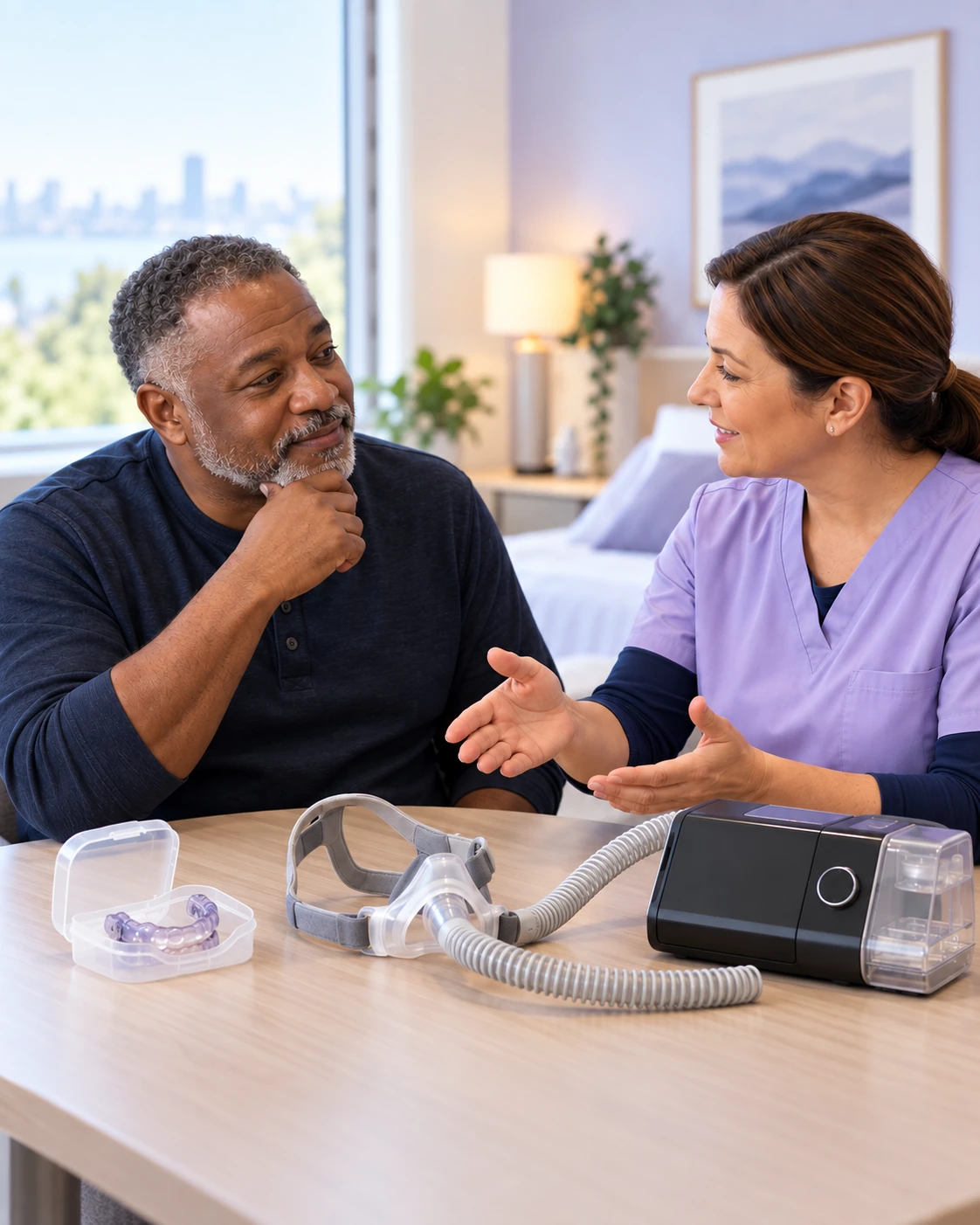
The most common and most effective treatment for obstructive sleep apnea is positive airway pressure (CPAP or APAP). Other options include a custom oral appliance, positional therapy, weight management (including Zepbound for some adults with obesity), surgery for specific anatomical problems and, for a small number of people, an implanted nerve stimulator. The right choice depends on how severe your sleep apnea is, your symptoms, anatomy and preferences, and every treatment should be checked with follow-up.
Your care journey
From symptoms to ongoing support
A clear path from recognizing a concern to choosing appropriate care and receiving follow-up support.
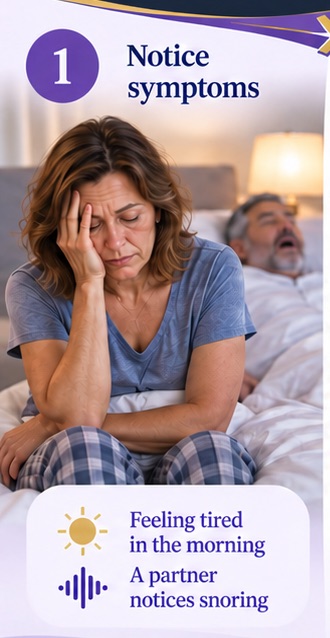
Notice symptoms
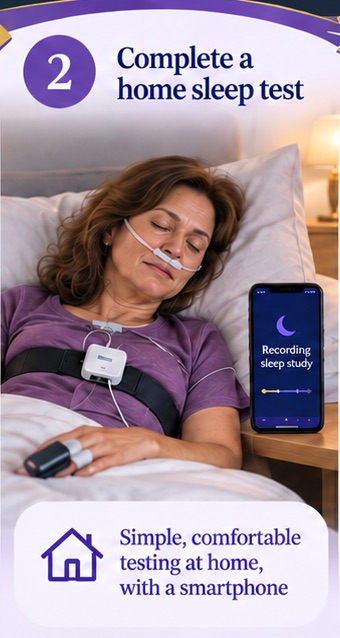
Complete a home sleep test
Review results
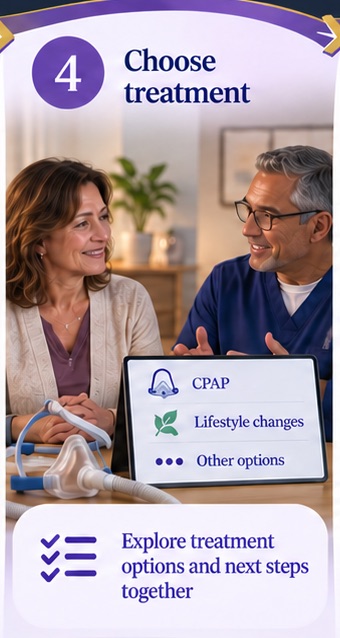
Choose treatment
Ongoing support
You do not have to figure it out alone.
How treatment is chosen
There is no single treatment plan for everyone. A clinician considers the type of apnea, event frequency, oxygen changes, daytime symptoms, cardiovascular or neurological conditions, anatomy, previous treatment experience and individual goals.
Sleep apnea treatment options compared
| Treatment | Best for | Evidence | How it is accessed in Canada |
|---|---|---|---|
| CPAP or APAP | Most adults with obstructive sleep apnea; first choice for moderate to severe | Strongest; reduces breathing events on the nights it is used | Prescription; equipment from a provider. Some provinces and most group benefit plans help pay (funding by province) |
| Custom oral appliance | Mild to moderate OSA, or people who cannot tolerate or prefer not to use CPAP | Good; usually lowers AHI less than CPAP, but many people use it more consistently | Made and adjusted by a dentist with sleep training; some extended health plans contribute |
| Positional therapy | People whose breathing events happen mainly on their back | Can help some people; works only if you stay off your back | Positional devices or wedges bought privately; confirm results with testing |
| Weight management, including Zepbound | People with overweight or obesity; Zepbound for moderate to severe OSA with a BMI of 30 or more | Strong for tirzepatide in clinical trials; weight loss alone rarely cures severe OSA | Lifestyle programs; Zepbound needs a prescription and coverage varies by plan (Zepbound page) |
| Surgery (for example tonsils, nasal or jaw surgery) | Specific anatomy, such as large tonsils, or when other treatments fail | Varies by procedure and patient | Specialist referral (ENT or oral surgeon); coverage and wait times depend on the procedure and province |
| Hypoglossal nerve stimulation (Inspire) | Moderate to severe OSA when CPAP has failed | Good in carefully selected patients | Very few surgeons in Canada; paid out of pocket. Virtual Sleep Care does not refer for it |
Treatments can be combined. For example, positional therapy or weight management may be added to CPAP or an oral appliance.
Can you treat sleep apnea without CPAP?
Yes, for some people. Mild to moderate obstructive sleep apnea can often be managed with a custom oral appliance, positional therapy or weight loss, alone or in combination. For severe sleep apnea, CPAP is usually the most reliable option, and alternatives are more likely to leave some breathing events untreated.
Whatever you choose, follow-up testing is the only way to confirm the alternative is working. If CPAP has been difficult, many problems, such as mask leaks, dryness or pressure discomfort, can be fixed; see CPAP troubleshooting before giving up on it.
Can sleep apnea be cured?
Sometimes, but for most adults sleep apnea is a long-term condition that is managed rather than cured. CPAP and oral appliances control breathing pauses only on the nights you use them. Sleep apnea can improve a lot, or go away, when its main cause is removed, such as enlarged tonsils or excess weight. Only a repeat sleep study can confirm that it has resolved.
When sleep apnea can go away
| Situation | What the evidence shows | Good to know |
|---|---|---|
| Children with enlarged tonsils and adenoids | In a trial of 464 children aged 5 to 9, sleep study results returned to normal in 79% after tonsil and adenoid surgery, compared with 46% with watchful waiting, about 7 months later. | Results were lower in children living with obesity. A follow-up assessment is still important. |
| Significant weight loss | In a long-term study of adults, losing 10% of body weight was linked to about a 26% drop in AHI (gaining 10% was linked to a 32% rise). In a 4-year lifestyle program for adults with type 2 diabetes, sleep apnea went into remission about 5 times more often than with standard education (21% vs 4%). | Remission is less likely when sleep apnea is severe. Benefits fade if the weight returns. |
| Tirzepatide (Zepbound) for adults with obesity | In the 52-week SURMOUNT-OSA trials, AHI fell by about 25 to 29 events per hour. About 4 to 5 in 10 people on the highest dose met the trials’ definition of resolution (AHI under 5, or 5 to 14 with little daytime sleepiness), compared with about 1 in 7 on placebo. | Prescription only in Canada. Results depend on continuing treatment and keeping the weight off. |
| Adults with a clear physical blockage | Surgery can resolve sleep apnea for some adults when one blockage, such as very large tonsils, is the main cause. American Academy of Sleep Medicine guidance supports discussing surgery with adults who cannot use CPAP (upper airway surgery if BMI is under 40; bariatric surgery if BMI is over 35). | Most adult airway surgery reduces sleep apnea rather than curing it, and results vary. |
| Sleep apnea that happens mainly on your back | Keeping off your back can control breathing events for some people with positional sleep apnea (see positional therapy). | This controls sleep apnea rather than curing it. Confirm it works with testing. |
Why sleep apnea can come back
Sleep apnea can return or worsen with weight regain, ageing, alcohol or sedative use, and changes in nasal breathing. Weight often returns when a weight-loss program or medicine stops. A normal sleep study after treatment is a good sign, but it is not a lifetime guarantee.
Before you stop treatment
Keep using CPAP or your oral appliance until your clinician has reviewed a repeat sleep study. Ask about retesting after you lose about 10% of your body weight, after surgery, or if snoring, breathing pauses or daytime sleepiness come back. A home sleep test can check whether your sleep apnea has improved, and our team can review the results with you.
Positive airway pressure therapy
PAP delivers mild pressurized air through a mask to help keep the upper airway open. CPAP provides continuous pressure; APAP adjusts within a prescribed range. AASM guidance supports PAP for adults with OSA and excessive sleepiness and emphasizes education and follow-up. The CPAP Therapy guide explains how treatment works, what starting therapy involves and why ongoing support matters.
Mask fit, comfort and follow-up
PAP success depends on more than the machine. Mask style and size, leaks, dryness, nasal symptoms, humidification and pressure comfort should be reviewed. Persistent problems should be addressed early rather than treated as personal failure. See the CPAP Therapy guide for the broader treatment pathway or compare practical options in the CPAP Mask Guide.
Oral appliance therapy
A custom, titratable oral appliance may be considered for some adults who prefer an alternative or cannot tolerate CPAP. A qualified dentist provides and monitors the device, while a sleep physician or responsible clinician oversees diagnosis and efficacy follow-up.
Weight management and physical activity
When excess weight contributes, gradual sustainable weight management may reduce OSA severity and improve overall health. It is not appropriate to delay effective therapy while waiting for weight change, and weight loss does not guarantee that OSA has resolved.
A prescription medicine, Zepbound (tirzepatide), is now approved in Canada for some people with obesity and sleep apnea. See medicines for sleep apnea below.
Medicines for sleep apnea
For years, no medicine was approved to treat obstructive sleep apnea itself. That is starting to change, but medicines are not a replacement for CPAP for most people.
- Zepbound (tirzepatide). In June 2026, Health Canada approved Zepbound for moderate to severe obstructive sleep apnea in adults with obesity (a BMI of 30 or more), used with a reduced-calorie diet and more physical activity (Eli Lilly Canada). In the SURMOUNT-OSA trials, people not using CPAP had about 25 fewer breathing events per hour after a year, compared with about 5 fewer on placebo. About 4 in 10 on tirzepatide (vs about 1 in 6 on placebo) ended the year with no sleep apnea, or only mild sleep apnea without significant daytime sleepiness (Malhotra et al., NEJM, 2024). It is a prescription weekly injection, and it is not studied or approved for people without obesity. Follow-up testing is still needed, and many people continue to need CPAP or another treatment. Read more about Zepbound for sleep apnea in Canada.
- AD109 (aroxybutynin and atomoxetine). An investigational pill designed to keep throat muscles more active during sleep. In a published phase 3 trial, it reduced breathing events by about 4 per hour more than placebo on average, a modest effect. In that trial, side effects led about 1 in 5 people to stop taking it (vs about 1 in 30 on placebo). The US FDA is reviewing it, with a decision expected by February 2027. It is not approved in Canada or anywhere else.
- Sultiame. A medicine that affects breathing control and is being studied for sleep apnea. A 2025 trial found dose-related reductions in breathing events of up to about 35% more than placebo (Randerath et al., Lancet, 2025). It is investigational for sleep apnea and has never been approved in Canada.
If you are interested in a medicine, talk to your doctor. Keep using your current treatment unless your care team advises otherwise.
Positional therapy
Some people have more events while sleeping on their back. Positional therapy may help selected patients, often as part of a broader plan. Effectiveness should be confirmed rather than assumed.
Managing alcohol, smoking and nasal symptoms
Limiting alcohol near bedtime, stopping smoking and addressing nasal obstruction may support treatment. These measures can improve breathing or comfort but may not be sufficient as stand-alone therapy.
Orofacial or myofunctional therapy
Exercises targeting the tongue and facial muscles may be used in selected adults or children, usually as an adjunct. Program quality and patient selection matter, and claims should remain proportionate to the evidence.
Surgical and implantable options
Selected patients may be assessed for tonsil surgery, tissue surgery, jaw advancement, bariatric surgery or hypoglossal nerve stimulation. Suitability depends on anatomy, severity, previous treatments and specialist evaluation.
Hypoglossal nerve stimulation (Inspire): an implanted device that stimulates the nerve controlling the tongue, to help keep the airway open during sleep. In the United States it is approved for moderate to severe obstructive sleep apnea (an AHI of 15 to 100) in people who cannot use or do not benefit from CPAP (U.S. FDA). In Canada it is offered by only a very small number of surgeons, usually requires that CPAP has been tried and has not worked, and is paid for entirely out of pocket; one private surgery provider lists costs of $30,000 to $50,000 or more (Surgency). In 2024, the FDA announced a Class I recall of 24 Inspire IV generators (Model 3028), distributed in the U.S. and Germany, because of a manufacturing defect that could require surgery to replace the device (U.S. FDA). Virtual Sleep Care does not refer patients for this procedure. If CPAP is not working for you, talk to your care team about adjusting your therapy and other options first.
Central sleep apnea treatment
Central sleep apnea requires a different approach that may include management of an underlying condition, medication review or specialized breathing therapy. Treatment must be directed by clinicians familiar with the cause and current guidance.
How treatment effectiveness is checked
Follow-up considers symptoms, device or appliance data, residual events, oxygen where relevant, comfort and adherence. Repeat testing may be needed after major weight change, surgery, oral appliance adjustment or persistent symptoms.
What not to do
Do not change prescribed PAP settings, stop therapy, use an unverified mouthpiece or assume symptoms have resolved without professional guidance. Seek prompt help for dangerous sleepiness or new cardiopulmonary symptoms.
To understand factors that can influence the condition, review Sleep Apnea Causes and Risk Factors. For concise answers across symptoms, testing and treatment, visit the Sleep Apnea FAQ.
Choose your next step
Complete guide: Sleep Apnea