
Sleep health education
Getting Started With CPAP: First 30 Days Guide
Quick answer
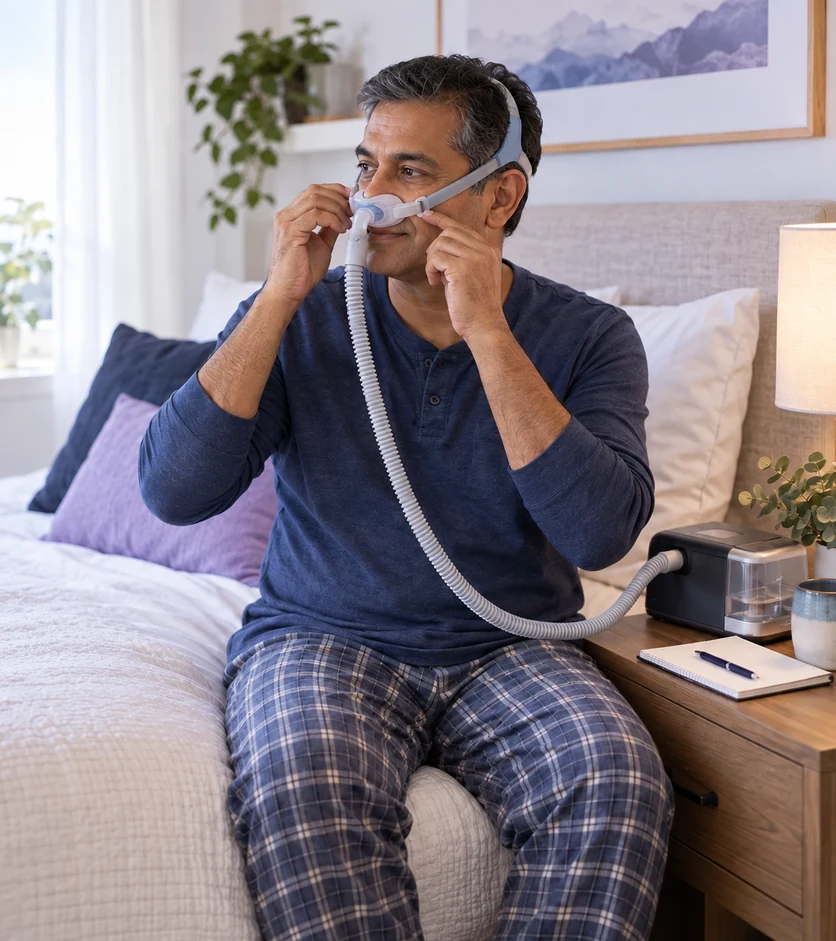
The first 30 days with CPAP are for learning the equipment, building full-night use and solving comfort problems early. Confirm the prescribed setup before night one, practise with airflow while awake, fit the mask lying down, and record specific problems alongside several representative nights of data. Do not change prescribed pressure on your own.
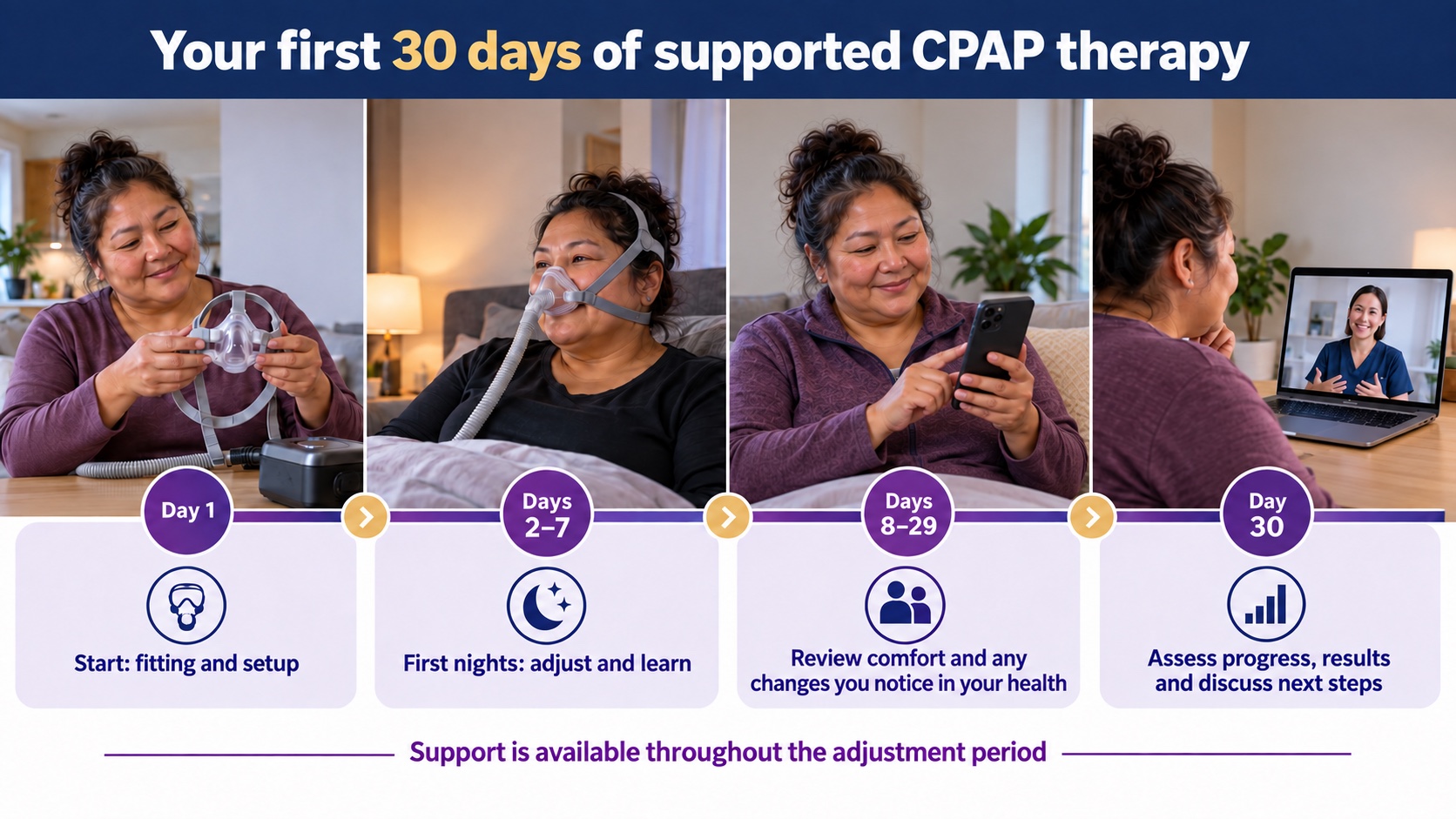
Your first 30 days with CPAP
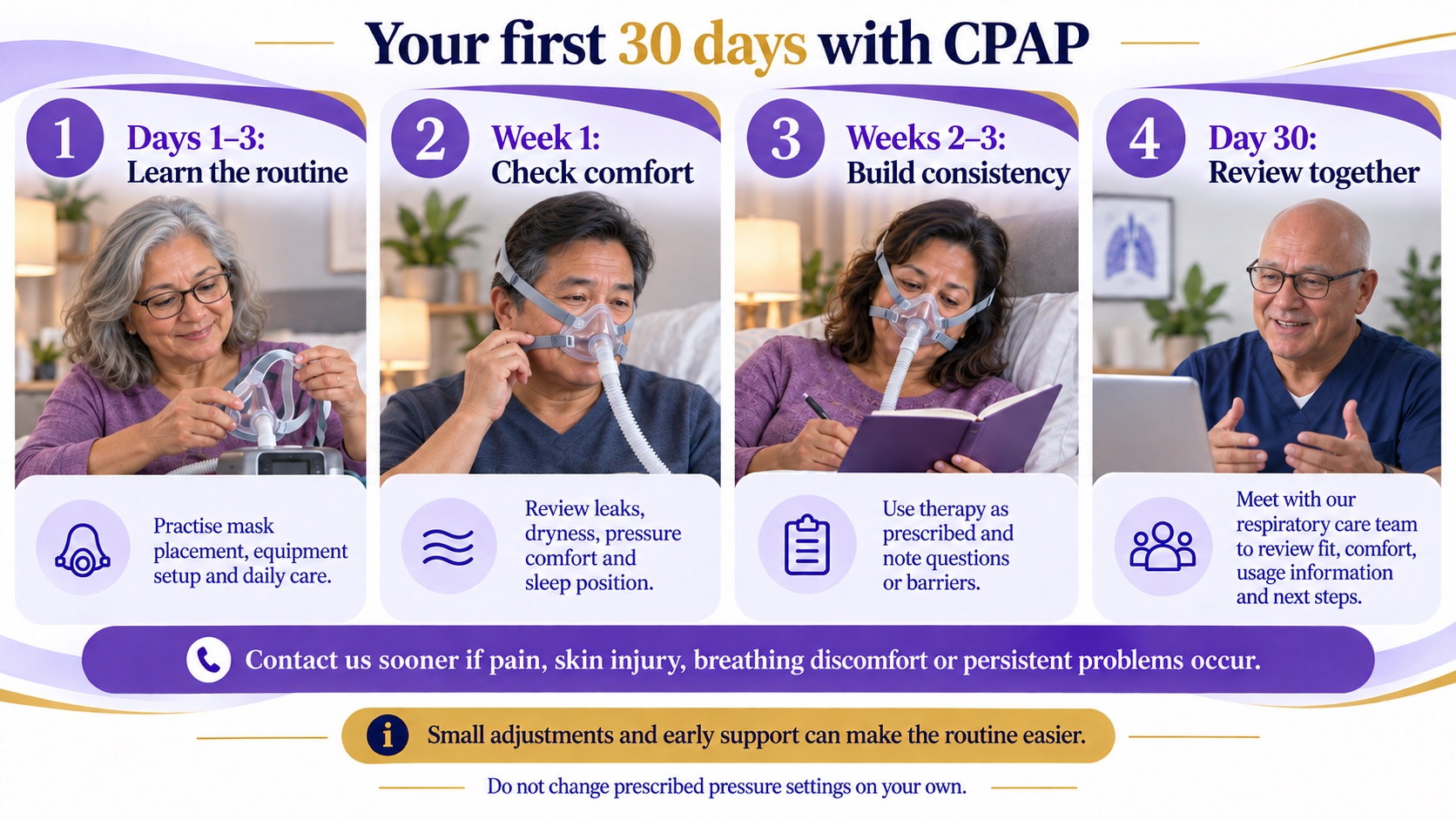
- Days 1–3: practise mask placement, equipment setup and daily care.
- Week 1: review leaks, dryness, pressure comfort and sleep position.
- Weeks 2–3: use therapy as prescribed and note questions or barriers.
- Day 30: review fit, comfort, usage information and next steps with the respiratory care team.
Expert perspective
The first weeks of CPAP are a period for learning and adjustment. Early follow-up can help identify comfort, leak or routine problems before they become reasons to stop using therapy.
Before night one: confirm the complete setup
Confirm the machine and therapy mode, prescribed settings, mask model and cushion size, tubing, humidifier, filters, cleaning instructions and who to contact. Learn how to start and stop therapy, refill the chamber safely and recognize device messages. Keep the manuals for the exact components you received.
Your first 30 days at a glance
Practise with airflow while awake
Wear the assembled mask with the device running for short periods while reading, listening to audio or watching television. This lets you learn airflow and practise calm breathing without also trying to fall asleep. If panic or marked breathlessness occurs, stop and contact the treating team rather than forcing the session.
Fit the mask in your sleep position
Fit and test the seal while lying down with the device running, because facial shape and tubing pull change with position. Straps should be secure but not painful. Overtightening can distort the cushion, increase skin pressure and worsen leaks. The CPAP Mask Fitting guide explains a structured fitting check.
Use CPAP for the whole sleep period
Use the prescribed therapy whenever you sleep, including naps, unless the treating clinician advises otherwise. Four hours is commonly discussed as an administrative adherence threshold, not a universal clinical goal or a point when treatment stops mattering. Removing the mask can leave the remainder of sleep untreated.
Track the problem precisely
Instead of recording only “CPAP was bad,” note what happened, when it started and what equipment was in use. Useful details include leak location, nasal or mouth dryness, skin marks, awakenings, bloating, pressure discomfort, device messages and morning symptoms. Record the exact mask and machine models and any safe changes already tried.
Read usage data in context
Hours used, leak and machine-estimated residual events can support follow-up, but they do not interpret themselves. Device definitions and reporting thresholds vary, and a low app score does not identify the cause of a problem. Pair several representative nights of CPAP usage data with symptoms and comfort.
Common first-month problems and safe first checks
Cleaning and equipment care
Follow the manufacturer’s instructions for the exact mask, tubing, chamber and filters. Empty and care for the water chamber as directed, use only compatible cleaning methods, and inspect parts for damage. See CPAP Cleaning and Maintenance for component-specific guidance.
Ask for help early
AASM guidance supports education when PAP begins and suggests behavioural, troubleshooting and telemonitoring-guided interventions during the initial period. Early contact is especially useful for a painful mask, large recurring leak, panic, persistent dryness, repeated removal or uncertainty about setup. Virtual follow-up can organize symptoms and remotely available data, but it does not replace individualized clinical judgment.
What to bring to follow-up
- the machine, mask and cushion names and sizes;
- the prescribed settings or prescription, if available;
- several representative nights of device data;
- a short timeline of comfort problems and symptoms;
- device messages, damaged parts or photos showing the setup; and
- questions about cleaning, supplies, coverage or the next review.
When to seek urgent help
Seek prompt medical advice for severe or worsening breathlessness, chest pain, fainting, a serious allergic reaction, significant skin injury or another urgent concern. Persistent excessive sleepiness remains a safety issue even after CPAP starts. Do not drive when struggling to stay awake.
Medical disclaimer
This content is educational and does not replace assessment, prescription or advice from a licensed healthcare provider.
Choose your next step
Complete guide: CPAP Therapy: A Complete Guide for Canadians