
CPAP machines in Canada
Auto CPAP Machines Canada
Compare auto-adjusting positive airway pressure machines, understand which features affect daily use and confirm prescription, connectivity and support details before choosing a device.
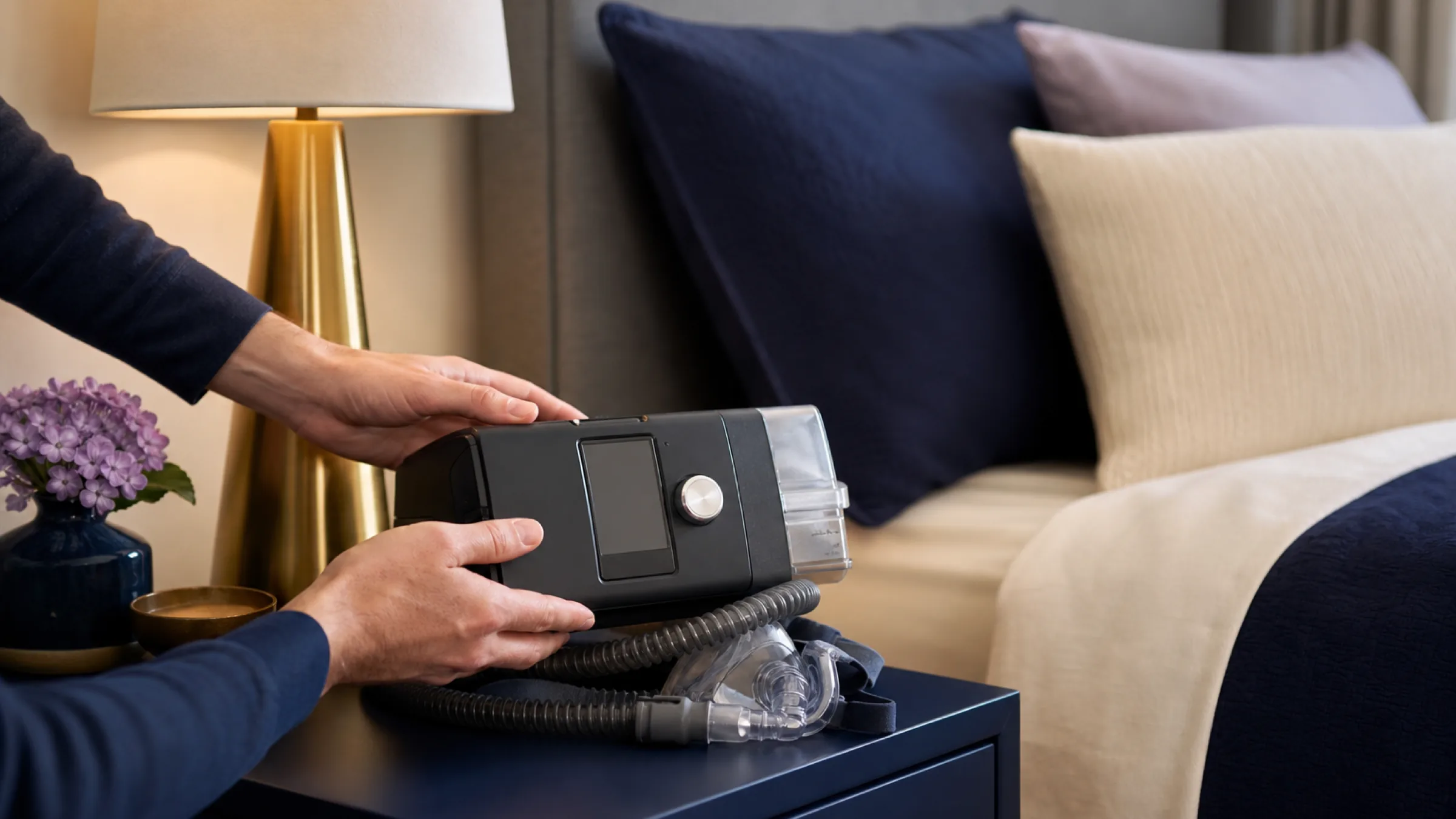
Shop auto CPAP machines
Prices are in Canadian dollars. A prescription is required for CPAP therapy.
APAP, CPAP and bilevel PAP are not interchangeable
Learn more about how positive airway pressure works and the role of follow-up in the complete CPAP therapy guide.
Expert perspective
The best equipment choice starts with the prescribed therapy and a complete compatibility check. Features and price matter, but so do mask fit, humidification, replacement-part access, warranty support and help during the first weeks of treatment.
Seven features worth comparing
- Prescribed modes and range: Confirm the device can deliver the exact mode and settings on the prescription.
- Humidification: Ask whether the humidifier is integrated, what adjustments are available and how the chamber is cleaned and replaced.
- Comfort features: Ramp and expiratory pressure relief may make therapy feel different, but settings should follow the setup plan.
- Mask and tubing compatibility: Confirm the connector, standard or heated tubing requirements and any manufacturer-specific limitations.
- Data access: Ask what the machine records, how you can view it and whether the treating team can review it remotely.
- Parts and service: Check local access to filters, tubing, water chambers, technical help and warranty service.
- Bedside practicality: Consider controls, display brightness, footprint, power requirements and sound in the room where it will be used.
Connectivity can support follow-up, but confirm the details
Wireless connectivity may make it easier to transfer usage, leak and therapy data for follow-up. It does not mean that a clinician is watching the machine continuously, that every problem will generate an alert, or that remote changes will occur automatically.
Before selecting a connected configuration, ask who can access the data, how consent and privacy are handled, whether an app or account is required, what fees apply and how information can be transferred if you change providers. Connectivity should support care; it should not replace a clear plan for questions, troubleshooting and clinical review.
Prescription, setup and Canadian device checks
The machines in this collection require a prescription. The prescription may identify the therapy mode, fixed pressure or APAP range and other setup instructions. Do not copy another person’s settings or widen a range yourself because the machine is capable of doing so.
Health Canada maintains the Medical Devices Active Licence Listing for Class II, III and IV devices. A licence confirms that the device is authorized for sale in Canada; it is not a recommendation that the model is right for every person. Licence status can change, so it should be verified against the exact manufacturer, device name and identifier when a purchase is being considered.
What should be included in the purchase?
Confirm the exact package before comparing prices. Ask whether the quoted total includes the machine, power supply, humidifier chamber, standard or heated tubing, filters, carrying case, connectivity hardware, initial setup and follow-up support. A mask may be sold separately and must be selected for fit and breathing route.
Also confirm the return policy, warranty start date, who provides warranty service in Canada and the expected cost and availability of routine replacement parts. Browse CPAP masks, review the CPAP Mask Guide or compare the broader CPAP machine collection.
Insurance, tax and receipts
Public programs and private benefit plans differ by province, policy and clinical pathway. Ask the payer whether a prescription, diagnosis, pre-authorization, approved supplier or detailed receipt is required, and whether the machine, mask, setup and supplies are treated differently. Coverage should be confirmed before purchase rather than assumed.
The Canada Revenue Agency lists a CPAP machine as a potentially eligible medical expense when prescribed, subject to its current rules and the portion not reimbursed. Tax eligibility is separate from insurance coverage; keep the prescription and itemized receipts and seek tax advice for your situation.
Common questions
Auto CPAP machine FAQs
Sources and verification
- Health Canada Medical Devices Active Licence Listing
- Health Canada guidance for buying medical devices online
- Canada Revenue Agency medical-expense guidance
- American Academy of Sleep Medicine clinical practice guideline for PAP treatment of adult obstructive sleep apnea
- Yuwell BreathCare III YH-680B user manual and Virtual Sleep Care Canadian warranty correspondence—controlled product records reviewed for this collection.
Prescription and product support
Choose a machine around the treatment plan
Use the prescription first, then compare comfort, connectivity, parts and support. A Virtual Sleep Care consultation can help clarify the purchase process and support questions but does not guarantee a particular prescription, product recommendation, insurance coverage or clinical outcome.
Choose your next step
Complete guide: CPAP Buying Guide: Choose a CPAP Machine in Canada