
Sleep health education
Understanding Your Home Sleep Test Results
Quick answer
Home sleep test results may include a respiratory event index, oxygen measurements, pulse or heart-rate information, recording quality and comments about body position or snoring. A number alone does not tell the whole story. Results should be reviewed with your symptoms, medical history and the technical quality of the recording before diagnosis or treatment decisions are made.
Expert perspective
A result should be interpreted together with symptoms, health history and recording quality. The number helps describe what was measured, but the next step comes from the full clinical picture.
How this guide differs from the AHI guide
This page is a practical walkthrough of common fields in a home sleep test report and what to bring to the follow-up conversation. For a deeper explanation of how AHI and REI are calculated and interpreted, read Understanding AHI and Sleep Study Results.
Common home sleep test report fields
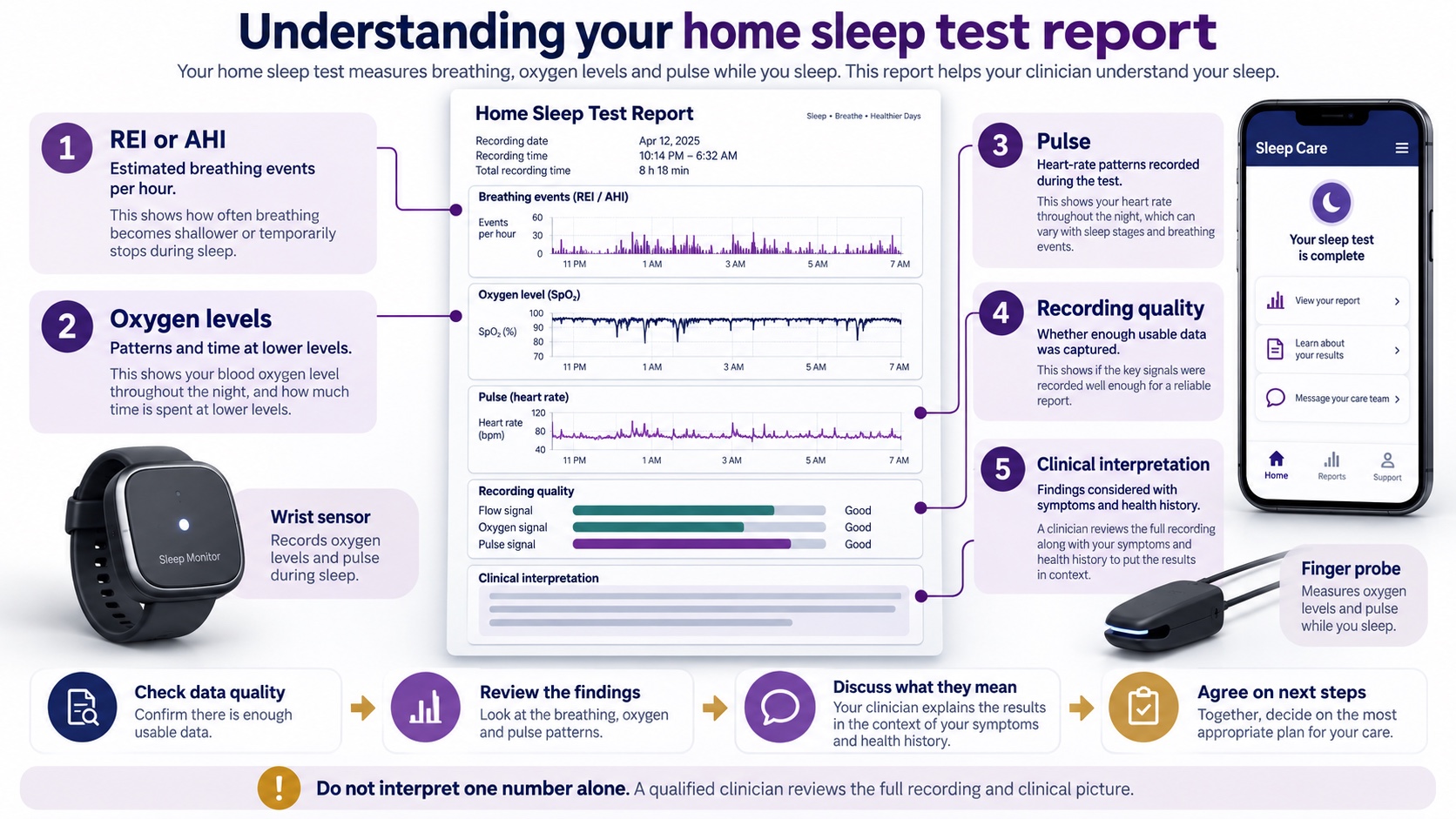
Report field | What it generally describes | What to ask
The exact fields and labels vary by device and testing service. None should be interpreted in isolation; symptoms, health history, event type and technical quality also matter.
A hypothetical report walkthrough
Imagine a report lists REI, ODI, lowest oxygen saturation, usable recording time and a note that one sensor detached briefly. Start by confirming that the study was technically adequate and what monitoring time the REI used. Then ask how the breathing-event and oxygen patterns fit together, whether the detached sensor limits confidence, whether the result explains the original symptoms and what follow-up is recommended.
This example shows a reading process, not a diagnosis. It deliberately does not assign meaning to hypothetical numbers because the full recording and clinical context determine their significance.
Technical quality
A result should indicate whether the recording had enough usable data. A technically inadequate test may need repeating.
Technical adequacy is about whether the study captured reliable information for the intended question. It is not a grade for how well someone followed instructions. If sensors detached, the night was unusually disrupted, or a device warning appeared, mention it during results review.
Read results with the ordering team
The result should be interpreted by the qualified clinician who ordered the study. The conversation may include recording quality, whether findings support obstructive sleep apnea, whether results fit symptoms, and whether more testing or follow-up is needed. A portal summary or device score is not a substitute for that interpretation.
Bring questions about symptoms, treatment options, and timing to the ordering team. Ask whether the recording was adequate, which index it uses, whether the findings explain the original concern, who reviewed the raw data and what happens if the result is negative, inconclusive or inconsistent with ongoing symptoms. A result that does not explain persistent symptoms may lead to another diagnostic step. Learn more in How Accurate Are Home Sleep Tests? and How Sleep Apnea Is Diagnosed.
Keep the result connected to the original concern
Before the appointment, note whether the night was representative, whether sensors came loose, and whether symptoms have changed since referral. This information helps the clinician decide how much confidence to place in the recording and whether any next test or care step is appropriate.
Choose your next step
Complete guide: Home Sleep Test