
Sleep health education
Who Is a Home Sleep Test For?
Quick answer
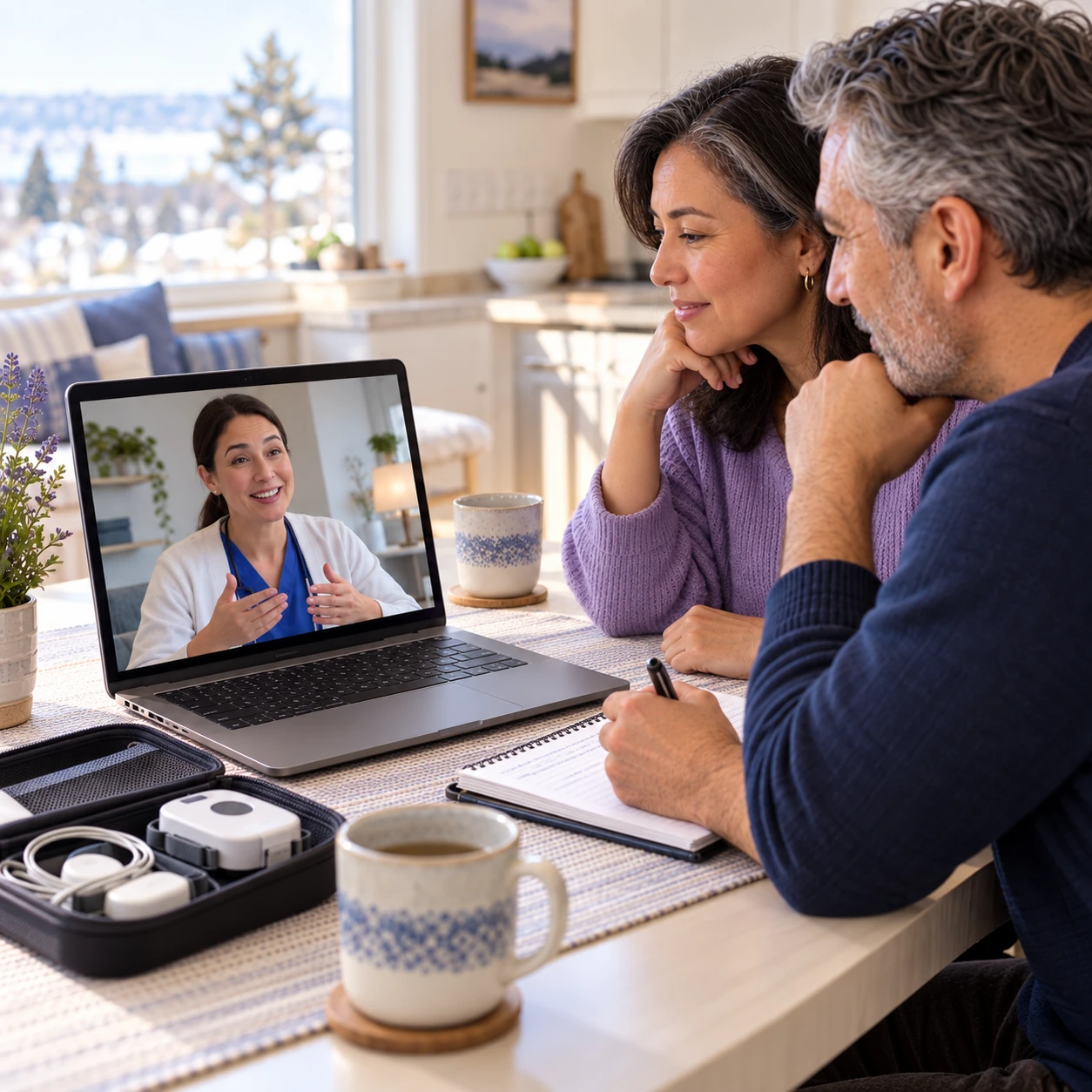
Home sleep apnea testing is generally intended for adults with signs and symptoms suggesting a higher risk of moderate to severe obstructive sleep apnea who do not have complicating conditions that make laboratory testing more appropriate. Suitability must be determined from a clinical evaluation rather than symptoms or a questionnaire alone.
Expert perspective
The right testing pathway depends on symptoms, health history and the requirements of the person’s province, prescriber and insurer. Confirm those details before testing so the clinical and administrative steps are clear.
Who commonly benefits
Adults with excessive daytime sleepiness and other strong OSA indicators, such as habitual loud snoring, witnessed apneas, gasping or diagnosed hypertension, may be considered when the overall presentation is uncomplicated.
These are examples of reasons for assessment, not a home-test eligibility score. A person does not need every sign on the list to seek care, and having several signs does not automatically mean a home test is the right test. The clinician’s task is to determine whether the pattern suggests suspected uncomplicated OSA and whether the device can answer the question reliably.
Why selection matters
Diagnostic accuracy depends partly on testing the right population. A convenient test is not helpful if it cannot adequately evaluate the person’s likely condition.
Choosing a laboratory study instead can be the more efficient path when it is likely to provide the information needed the first time. The aim is not to make every visitor fit a home-testing pathway; it is to avoid false reassurance, incomplete answers, or unnecessary repeat testing.
What a clinician considers before recommending a test
The starting point is a clinical evaluation, not a device. A clinician may ask about snoring, witnessed pauses, gasping, daytime sleepiness, sleep schedule, medications, heart or lung conditions, neurologic history, insomnia, and symptoms that could suggest another sleep disorder. The purpose is to decide whether a home test can answer the question safely and reliably for that person.
Home testing is designed for a specific use: evaluating suspected obstructive sleep apnea in selected adults. It does not measure every aspect of sleep and it does not replace the broader assessment when symptoms point to a more complex problem. A person can have significant symptoms and still need a different test or a follow-up study.
If home testing is being considered, learn how a home sleep test works and what a home sleep test measures.
When laboratory testing is often preferred
Significant heart or lung disease, neuromuscular weakness, possible hypoventilation, chronic opioid use, previous stroke, severe insomnia or concern for another sleep disorder can make polysomnography more appropriate.
This list is not meant for self-exclusion. It is a reminder to share the full health picture during assessment, including conditions and medicines that may seem unrelated to snoring. The clinician can then explain why a home test is suitable or why a laboratory study would be safer or more informative.
Compare the two settings in Home Sleep Test vs. Sleep Lab.
If a home test is not the right choice
“Not the right choice” does not mean that symptoms are unimportant or that the person cannot be helped. It means another diagnostic route may provide better information. An in-lab sleep study can record a broader set of signals and may be recommended when a home test is negative, inconclusive, technically inadequate, or not suited to the clinical picture.
Ask the ordering clinician what the planned test can measure, what it may miss, who will interpret the result, and what follow-up will occur if the result does not explain ongoing symptoms.
Suitability is revisited when circumstances change
Tell the ordering team about new symptoms, major health changes, or equipment concerns before the study is completed. The appropriate testing route can change when the clinical picture changes. A home-test recommendation is a clinical decision for a specific situation, not a permanent label.
Children and special populations
Home testing pathways for children and complex populations require separate evidence and specialist judgment. Do not apply adult eligibility rules automatically.
Screening is not diagnosis
A questionnaire, smartwatch or online symptom score may help start a conversation, but it does not determine whether home testing is suitable or diagnose OSA.
Bring consumer-device findings if they are available, but frame them as observations rather than conclusions. A report of snoring, oxygen readings, or sleep disruption may help the clinician ask better questions; it cannot replace a medical evaluation or qualified review of a diagnostic study.
A practical assessment checklist
Before the appointment, note the main concern, when it began, any observed breathing pauses or gasping, daytime sleepiness and its effect on driving or work, usual sleep schedule, relevant conditions, medicines, and prior test results. The goal is not to prove eligibility. It is to give the clinician enough information to choose the most appropriate diagnostic path.
Choose your next step
Complete guide: Home Sleep Test