
Sleep health education
CPAP Therapy: A Complete Guide for Canadians
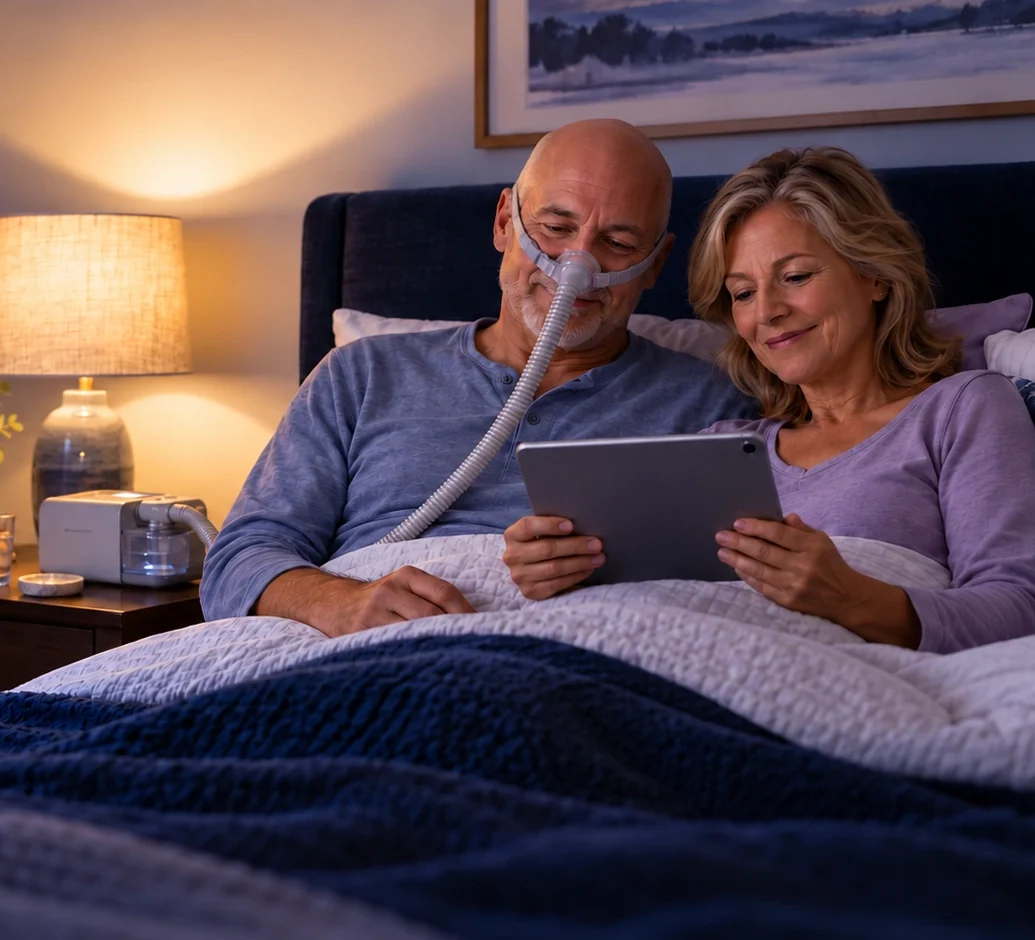
Quick Answer
CPAP therapy uses a machine, tubing and mask to deliver continuous positive airway pressure during sleep. The pressure acts like an air splint that helps prevent the upper airway from narrowing or closing. CPAP manages obstructive sleep apnea while it is used; successful treatment depends on appropriate settings, a comfortable mask, support and regular use.
Expert Perspective
CPAP works best when the prescribed therapy, equipment fit and everyday routine work together. Comfort problems are worth reviewing early because small adjustments can make treatment easier to use consistently.
What CPAP Therapy Is And How It Helps
CPAP is a form of positive airway pressure used to manage obstructive sleep apnea (OSA). A machine draws in room air and delivers it through tubing and a mask at a prescribed pressure. That pressure acts like an air splint, helping the upper airway remain open so breathing is more consistent during sleep.
CPAP does not breathe for the person, force oxygen into the body or permanently cure OSA. It treats the airway obstruction while it is being used. The machine, pressure settings, mask and follow-up plan therefore work as one treatment system; comfort or equipment problems are worth addressing rather than assuming the therapy itself cannot work.
A clinician may recommend CPAP after reviewing an objective sleep-apnea diagnosis, symptoms, sleep-study findings, health history, preferences and other appropriate treatment options. The recommendation and prescribed settings should be individualized.
CPAP, APAP and Bilevel PAP Compared
All three devices deliver positive airway pressure, but they do not deliver it in the same way. The prescribed pressure is measured in centimetres of water pressure (cm H2O). A prescribed range means the clinician has set a lower and upper limit within which an APAP machine may adjust—not that the user should choose any pressure within that range.
How AHI and REI Describe Sleep Apnea Severity
Sleep-study reports often describe OSA severity using breathing events per hour. In adults, an apnea-hypopnea index (AHI) of 5 to 14.9 is commonly classified as mild, 15 to 29.9 as moderate and 30 or more as severe. A home test may report a respiratory event index (REI) instead because it usually estimates recording time rather than measuring sleep time directly. These categories help describe the result, but symptoms, health history, oxygen findings and other clinical factors also influence treatment decisions.
To understand the condition and assessment pathway, explore Sleep Apnea, Sleep Apnea Symptoms and Home Sleep Testing.
Continue With Our CPAP Guides
This is Virtual Sleep Care’s main overview of CPAP therapy. For the next level of detail, use the CPAP Buying Guide to compare equipment considerations and the CPAP Mask Guide to work through mask selection and fit.
Benefits and Realistic Expectations
When effective and used as prescribed, PAP can reduce breathing events and improve sleepiness and quality of life for many people. Individual response varies.
The first goal is not to judge the therapy from a single difficult night. It is to establish whether the equipment, fit, settings, and follow-up plan are working together for the individual. Some people notice a change quickly; others need time and support to adjust. Ongoing sleepiness, discomfort, or a result that does not match how someone feels should be raised with the care team rather than treated as proof that therapy has failed.
Mask Comfort and Adherence
A comfortable, well-fitted mask and attention to dryness, leaks or pressure discomfort are central to long-term use.
Mask type is part of the treatment plan, not a cosmetic choice. A mask that shifts, leaks, leaves persistent pressure marks, or feels intolerable can interfere with regular use. Note the specific issue and when it occurs—for example, at the start of the night, after changing position, or on waking—so the care team can help distinguish a fit concern from congestion, dryness, or another issue.
If you are reviewing options, learn how nasal, pillow and full-face designs differ in the CPAP Mask Guide, then browse available CPAP Masks. A mask purchase should still reflect the prescribed therapy, breathing route, fit needs and any applicable safety warnings.
Support and Follow-Up
Do not change prescribed settings or stop therapy without guidance. Follow-up can address data, mask fit, humidification and persistent symptoms.
Ask who to contact for different needs: equipment setup, replacement parts, clinical questions, and results review. Follow-up is also a good time to discuss changes in health, weight, symptoms, or sleep schedule that could affect the plan. The device may record use and breathing-related information, but those data need to be interpreted with symptoms and clinical history. Bring the specific problem: when it occurs, what equipment is being used, and what has changed. Specific examples help the care team distinguish fit, comfort, congestion, or treatment-setting concerns without trial-and-error changes at home.
How Virtual Sleep Care Can Support Treatment At Home
Virtual support can reduce the need to wait for an in-person equipment visit when the issue can be addressed remotely. Virtual Sleep Care can provide video-based education, mask and equipment troubleshooting, and follow-up conversations for Canadians who may not have convenient access to a local sleep clinic. When a compatible device, informed consent and the service arrangement allow it, transmitted usage and therapy data can also help guide a follow-up discussion.
Remote data is only one part of follow-up. A Respiratory Therapist or responsible clinician still needs to consider symptoms, comfort, health changes and the limits of the available data. Virtual support is not an emergency service, does not replace required in-person assessment and does not guarantee that a particular device or treatment will be appropriate. Book a CPAP Consultation to confirm what support is available for your location and situation.
Starting and Continuing Therapy
CPAP is commonly used to treat obstructive sleep apnea, but the device, settings, mask, and follow-up plan are individualized. Early comfort issues are common and are worth raising promptly with the care team. Mask leaks, congestion, dry mouth, pressure discomfort, and uncertainty about cleaning or travel are practical concerns that can often be addressed without guessing or changing settings alone.
If a person develops significant abdominal discomfort or bloating while using PAP, or has other concerning symptoms, they should contact their healthcare provider promptly. Treatment questions should be resolved with the prescribing or sleep-care team rather than by discontinuing therapy or changing settings without guidance.
Keep the manufacturer’s instructions available for routine setup, cleaning, and replacement of parts. If a person is unsure how to care for a particular component, they should ask the equipment provider or care team rather than improvise. For travel, discuss the plan early enough to confirm what equipment and power arrangements are needed for that individual device.