
Quick answer
Prepare for a home sleep test by following the instructions supplied by your testing provider, keeping your usual sleep schedule unless told otherwise, avoiding changes to prescribed medicines without medical advice, and setting aside enough time to apply the sensors carefully. Contact the provider before testing if you are unsure about equipment placement or your health changes.
Before test night
Use the instructions for the exact device. Sensor placement and device activation differ between systems.
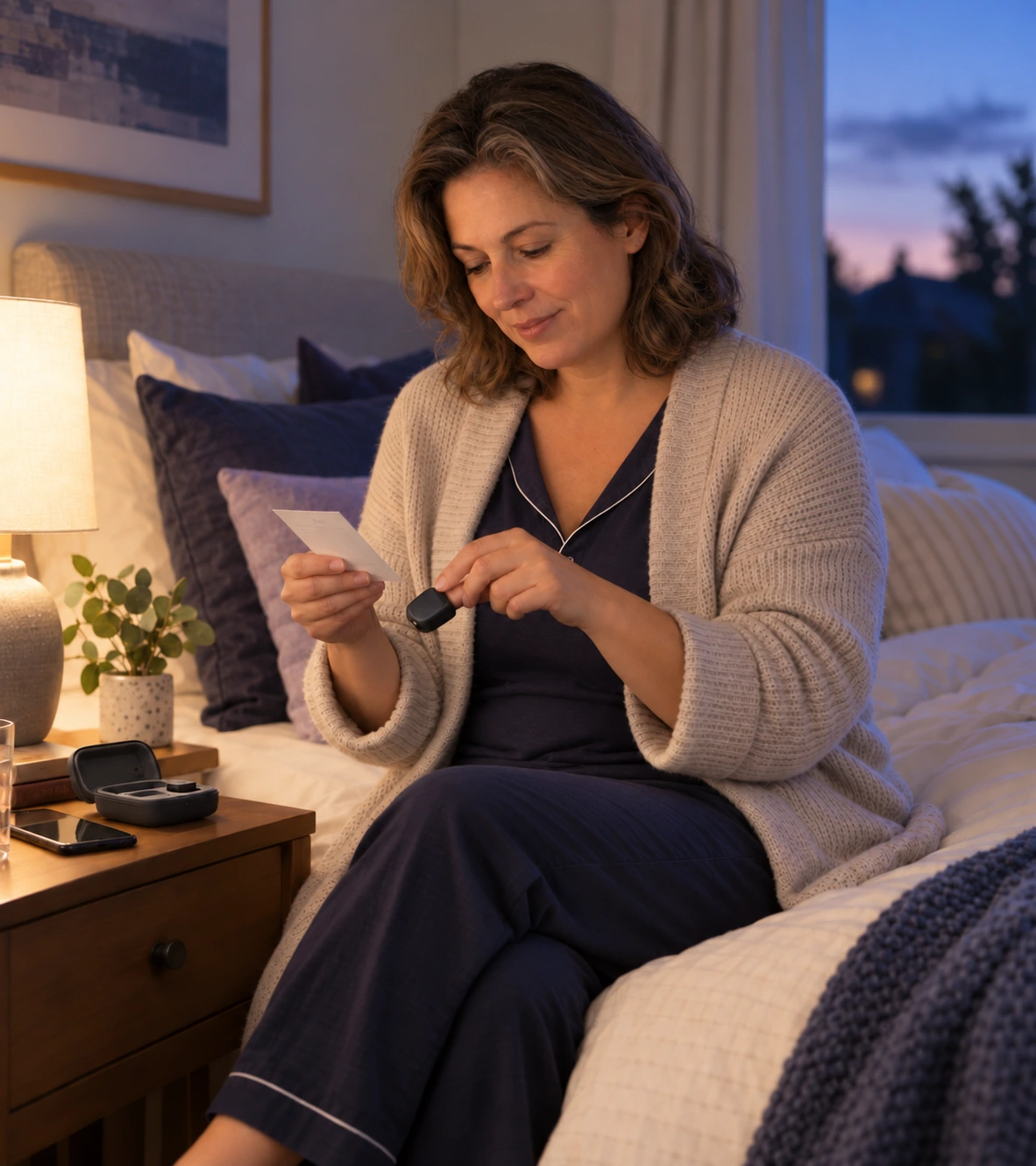
Read the instructions before the test night, confirm the planned recording and return process, and ask any questions about medicines or usual nighttime therapies. Charge or check the device if instructed, keep all supplied components together and place the written guide and support contact within reach. Know what a normal start indicator looks like and what to do if a sensor or device error occurs.
Keep your routine reasonably typical
Unless told otherwise, aim for a representative night rather than intentionally changing your sleep, alcohol, caffeine or activity pattern.
The purpose is to record what usually happens, not to produce a “better” or “worse” result. Do not deliberately stay awake, go to bed unusually early, or make unadvised changes to improve the study. If an unavoidable event makes the night very different from normal, mention it when the device is returned so the interpreting team has the right context.
Do not change medicines on your own
Continue prescribed medicines unless a clinician gives different directions. Ask ahead of time about sleep aids, oxygen or other nighttime therapies.
This includes medicines or therapies that may seem unrelated to the test. The testing team can tell you whether any individual instruction applies to your situation. Do not skip, add or change a prescribed medicine to try to influence a home-test result.
Protect signal quality
Wear the sensor snugly as instructed and avoid lotions or products on your fingers that may interfere with skin contact when the provider advises this.
Do not improvise a placement method if a sensor will not stay on or if the instructions are unclear. Contact the service for guidance when possible, then report any problem with the recording when returning the device. Accurate setup matters because a technically incomplete study may need to be repeated or followed by a different test.
After the recording
Return or upload the recording as directed. Report detached sensors, interruptions, device warnings, illness or unusually poor sleep so the interpreting team can judge whether the recording can answer the clinical question. The goal is a reasonably typical, interpretable night—not a “perfect” performance.
See the full six-step guide to how a home sleep test works and learn how long home testing can take, including setup, recording and follow-up stages.